

Cover Image: Recumbent Statue at University Chapel in Lexington, Virginia, a statue of Lee asleep on the battlefield, Jan Kronsell / public domain
Table of Contents
Every now and then, history produces a man who’s as much admired and beloved by his enemies as his friends. And sometimes the greatness of a man lies not in his victories, but in his heroism in defeat. Such a man was Robert E. Lee.
Robert E. Lee is considered by many to be the most brilliant general of America’s Civil War. But his military strategy, as inspired as it was, is not what he’s remembered for. He is remembered instead for his character – a character that reflected all the finest qualities of both his American and his Southern heritage. Lee has become in many ways a symbol – a symbol of the refinement, the honor, and the loyalty that once defined the “Southern gentleman.” He has become a symbol of our country’s ability to experience dissension, to overcome its bitterness, and emerge even stronger.
The Early Life and Family of Robert E. Lee
Robert E. Lee was distinguished almost from the moment of his birth, on January 19, 1807, for he came from the leading family of Virginia and one of the most respected and notable families in America. “I know of no country that can produce a family all distinguished as clever men, as our Lees,” said George Washington. For over a hundred years, the Lees had played a prominent role in British and American history. They had been governors, councilors, and Burgesses; had served the king and also fought in the Revolution, and sat in the Continental Congress. They had been successful planters, soldiers, and statesmen. Not one, but two Lees signed the Declaration of Independence, right under the signature of John Hancock. The same room in which they were born was the room in which Robert Edward Lee was born on January 19, 1807.
Stratford, the estate where he was born, had a great brick mansion with two huge chimneys that were the largest in America, and a promenade on the roof from which one could watch great sailing boats drifting down the Potomac River. Each of its seventeen rooms was painted a different color, and each one had an enormous fireplace. Besides the house itself were kitchens, a schoolroom, stables, vast acres of land, and in the distance, the cottages where the slaves lived.
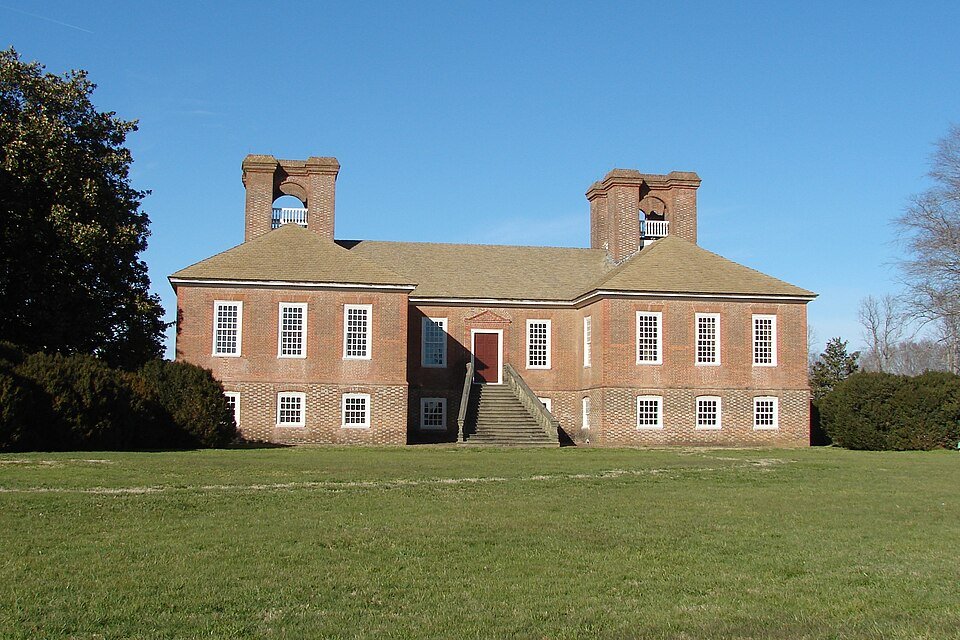
Image credit: Westwoodking / CC BY-SA 3.0 (via Wikimedia Commons)
Robert Edward, who was named after two of his mother’s brothers, was the third boy in the Lee family. His mother’s family, the Carters, were almost as prominent as the Lees and had their own elegant plantation nearby, called Shirley. Everywhere you went in Virginia, you ran into either a Carter or a Lee – Robert Edward was the descendant of two great American dynasties. His father was Henry Lee, the famous “Light-Horse Harry” who had been a hero in the Revolution, a Governor of Virginia, and a close friend of George Washington’s. It was Harry who wrote the famous eulogy to Washington: “First in war, first in peace, and first in the hearts of his countrymen.”
When Robert was four, his father lost most of the family fortune speculating, and they had to move from beautiful Stratford to an elegant, but much smaller, brick house in nearby Alexandria. It was the start of many years of so-called “genteel poverty” in which the Lees struggled to maintain their dignity while going deeper and deeper into debt. But the adversity helped form Lee’s character – his modesty, his ability to adapt and make the best of any situation, and his determination to excel had some of their roots in these early years of struggle.
Robert E. Lee was a serious child who spent much of his time in his father’s library reading books. Everybody always commented on what a good boy he was – neither his devoted mother nor his father could recall one moment of trouble with little Robert. There was a constant stream of visitors to the Lee house, many of them old soldiers who used to fight with Light Horse Harry. As he grew up, Lee was always listening to stories about great battles and heroic men, but especially stories about George Washington, the family’s idol. A formal portrait of Lee’s mother, painted around this time, shows her wearing a long necklace from which hangs a medallion with a picture of Washington. Occasionally, his father would read aloud from the book he was writing, which was a history of the Revolution and contained many effusive passages about Washington’s skill and bravery.
When Robert E. Lee was five years old, his father was attacked by an angry mob when he tried to help a friend in a fight – the mob was furious that Lee’s friend had opposed the war against the British in 1812. “Light-Horse Harry” was assaulted with clubs and knives and left for dead. Although he survived, he was never again the same man in body or in spirit. The following year, he left for Barbados, where he hoped to regain his health. But when Robert, his brothers and sisters, and his mother waved goodbye from the dock at Alexandria, it was the last time they would ever see him. For six years, the old general wandered from island to island until he finally collapsed and died. His letters home had been full of advice and wisdom that Robert never forgot, such as: “Self-command is the pivot upon which the character, fame, and independence of us mortals hang,” and “fame in arms or art, however conspicuous, is naught unless bottomed on virtue.”
From West Point to the Mexican War
Robert, still in his early teens, took over the management of the home. His mother had become an invalid, one older brother had gone off to school, and the other had joined the Navy. He was educated first in the Carter family schoolhouse with his relatives. Then he was sent to an academy where he learned Greek, Latin, and mathematics, the basic requirements for college. College, however, was beyond the family budget. So, when he was nineteen, Robert E. Lee asked for and received an appointment to the military academy at West Point. There he studied drawing, surveying, engineering, physics, chemistry, history, geography, “moral philosophy,” and the “science of war.” Although half of the cadets failed to graduate, from the beginning, Lee was in the top two or three of his class. After his first year, he was not just a student, but a teacher in the beginning classes. In his senior year, he won the most coveted prize at the Academy, and when he graduated, he had not one demerit on his entire record. Because his record was so distinguished, he was able to choose any branch of the service he wanted. He chose to engineer.
The “Marble Model” at West Point
At West Point, Robert E. Lee was affectionately nicknamed “Marble Model,” not because he was cold and aloof like marble, but because his fellow students thought he approached perfection. One of them described him this way: “No other youth or man so united the qualities that win warm friendship and command high respect. For he was full of sympathy, kindness, genial and fond of gay conversation, and even of fun, while his correctness of demeanor and attention to all duties, personal and official, and dignity as much a part of himself as the elegance of his person, gave him a superiority that everyone acknowledged.”
It was a description like many others offered of Lee – when he was in his 20s, his 40s, and all through his life.
The young officer was no sooner out of West Point than his mother died – he had always been very close to her and was her favorite son. “I owed everything to her,” he said. He settled her estate and then set out to visit her relatives throughout Virginia. He was looking forward to one of these visits in particular – The great white house on a hilltop in Arlington, where George Washington Custis, adopted son of President Washington, lived. More importantly, his daughter, Mary Custis, also lived there. Mary was a tall, pale girl, somewhat fragile and spoiled, but easy-going and warm-hearted. Robert E. Lee had known her since childhood and had been in love with her for several years. He intended to propose.
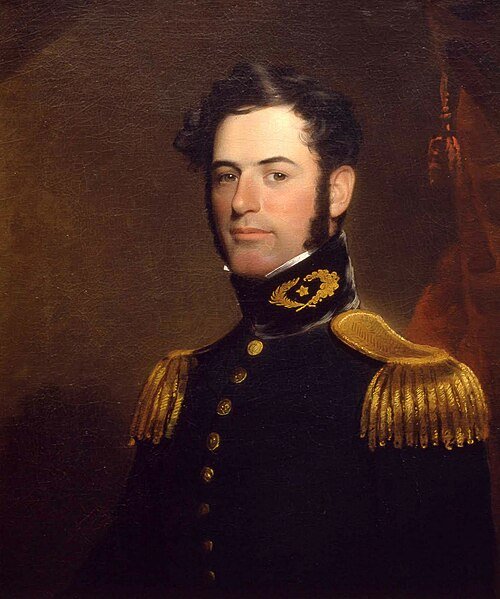
Image credit: William Edward West (1788–1857) / public domain
At first, Mary’s father protested. Robert E. Lee had an excellent name, a fine mind, and a trustworthy character; he had everything, in fact, except money. Mrs. Custis, however, approved of Lee; her daughter had her heart set on the handsome young man, and Custis himself was a wealthy man, so in the end, Lee’s poverty didn’t seem to matter much. The marriage was delayed twice – once when Lee was sent to work on coastal defenses in Georgia, a task that bored him but came in handy later on during the Civil War – and he was sent to work on Fortress Monroe, back home in Virginia. Finally, in 1831, when he was 24 years old, Lee married Mary Custis in the Custis family home at Arlington. It was a long and happy marriage, and one of historical significance. For with Mary, Lee inherited the Arlington house, with all it stood for. And what it stood for was George Washington. The house was a virtual memorial to Washington – portraits of him hung everywhere; the rooms held his china, his bookcases, and the very bed in which he died. Lee had worshipped Washington since childhood – now he began to pattern himself after his hero more and more.
The Lee family grew rapidly. First, there was a son, who was given the distinguished name George Washington Custis Lee, but whom they called simply Custis. Then there were six more children in rapid succession – four girls and two boys. The youngest boy was named Robert Edward in honor of his father. All three of Lee’s sons served under him as Confederate officers during the Civil War. Lee always enjoyed his family and suffered from his long and frequent absences from home.
Proving His Brilliance in Mexico
For the many years after his graduation, Robert E. Lee endured a series of routine military assignments that offered him little challenge and few promotions. He never complained, and he always put his full effort into each task, but inside, he was growing restless. It was nine years before he was made a captain, and even then, the title did not guarantee adventure. What he needed, as all military geniuses do, was a war. That finally happened in 1846 when the United States and Mexico battled it out for territories in the southwest. Lee had been in the army for 21 years by then and had never once seen an enemy. The Mexican War was a war in which President Polk, rallying his soldiers, claimed that “American blood has been shed on American soil.” Many politicians disagreed with him, including a Congressman named Abraham Lincoln, who demanded that Polk demonstrate on a map exactly which spot of so-called American soil he was referring to. Lee didn’t bother himself with the debates among the politicians; to him, his duty was clear. He was a soldier, and when asked to serve his country, he did so. The question was simple then – in less than twenty years, the same question would cause him torment and heartbreak.
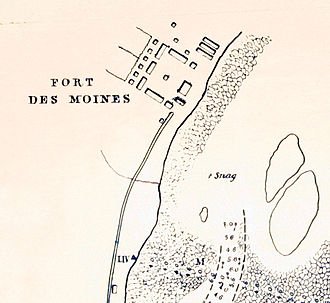
Image credit: Robert E. Lee, assisted by MC Miegs, IS Morehead,, H. Kaysee / public domain
When he was 36 years old, Robert E. Lee received his orders to report to San Antonio, Texas. During the war, Lee served as an engineering officer with Winfield Scott’s force, which fought its way to Mexico City. It was because of Lee’s engineering skill that American troops were able to cross the difficult mountain passes on the way to the capital city. His work in several battles during the war, including the capture of Veracruz, won him outstanding praise and his first reputation for brilliance. When the war was over, Mexico had given up its land in Texas, New Mexico, Arizona, California, Utah, and Nevada. General Scott wrote of this stunning success: “It was largely due to the skill, valor, and undaunted courage of Robert E. Lee…the greatest military genius in America.” Not just his skill, but his compassion had become famous during the Mexican War. His colleagues particularly remembered the time he stopped an advance to help a Mexican boy injured in the fighting. Lee always despised the way war-affected children.
When he returned from the war, Robert E. Lee was anxious to see his own children, but they had grown so much that he hugged a neighbor boy whom he mistakenly took for his own son.
The brilliance Robert E. Lee displayed in the Mexican War didn’t earn him quite the assignment he’d hoped for. The army sent him back to West Point, this time to run the school. Lee would have preferred action in the field, rather than desk work, but he performed his duties without complaint and worked hard to improve the buildings and courses at the academy. He also made it a point to spend large amounts of time with the cadets themselves. One of them, Jeb Stuart, later served as one of his best cavalry officers in the Civil War. Lee was superintendent of West Point from 1852 to 1855, when he was in his mid-40s. At the end of that time, he was made lieutenant colonel of the Second Cavalry.
Everyone who met Robert E. Lee considered him a handsome man, with a great deal of charm. He was 5 feet 10 1/2 inches tall and weighed about 170 pounds. He had a superb muscular physique, a large head, and, later in life, white hair and a white beard that only added to his dignity. What people spoke of most was how commanding his appearance was. He was intelligent and alert, always stood very erect, and was never known to smoke, drink alcohol, or swear. He was also kind, sympathetic, and had a good sense of humor. A distinguished British soldier who knew Lee once commented: “I have met many of the great men of my time, but Robert E. Lee alone impressed me with the feeling that I was in the presence of a man who was cast in a grander mold and made of different and finer metal than all other men. He is stamped upon my memory as a being apart and superior to all others in every way – a man with whom none I ever knew, and very few of whom I have read, were worthy to be classed.”
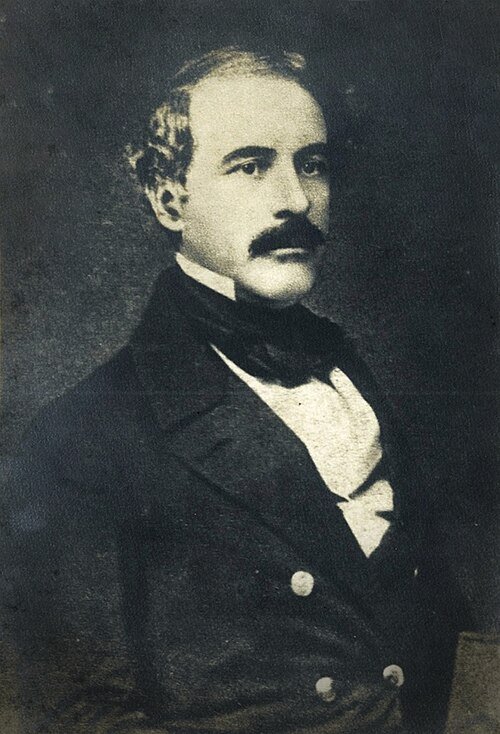
Image credit: Mathew Brady (ca. 1822 – 1896) / public domain
When his post at West Point was completed, Robert E. Lee was once again sent out into action. He was ordered back to Texas, this time to defend settlers from attacks by the Apaches and Comanches. Although he again proved his skill and bravery, these were unhappy years for Lee – he never liked being away from his family, particularly then, when Mrs. Lee was ill and steadily becoming an invalid. Lee made as many visits home as he could – and on one of these visits, he happened to be in Washington when an impassioned ex-slave named John Brown launched a raid on the arsenal at Harper’s Ferry.
Robert E. Lee did not believe in slavery – he felt it had an evil effect on masters as well as slaves. Long before, he had freed all the slaves he’d inherited from his father. But John Brown was a violent, fanatical man, a man about whom history is still undecided – many believe he was a political hero; many believe he was mentally deranged. Robert E. Lee held that belief from the beginning. So when, in 1859, at the age of 53, he was put in charge of the Marines sent to crush Brown’s rebellion, he readily accepted it as his duty. He accomplished his mission quickly, with minimal loss of life, and then returned to his regiment in Texas. As much as he longed to be sent back home, when that order came, it was under circumstances he would never have wanted or dreamed of.
A Soldier’s Agonizing Choice
The tensions that had been building between the North and the South for many years, over the issues of slavery and state versus federal rights, had now reached a climax. In 1861, Texas became the seventh state to secede from the Union, and Lee was called to Washington to await further orders. At the time, he hoped desperately that America could avoid bloodshed. He wrote: “If strife and civil war are to take the place of brotherly love and kindness, I shall mourn for my country and for the welfare and progress of mankind.” In the next months, while the country faced its biggest political crisis, Robert E. Lee would face the greatest personal crisis he had ever known. It would force him to search for his deepest and highest sense of duty, morality, and commitment.
Robert E. Lee always opposed secession. He was a moderate who was dismayed at the extremists on both sides of the North-South controversy. But this man, who didn’t believe in slavery, who admired George Washington above all others, who hated the thought of a divided union, and opposed war, found himself fighting for the rights of slave owners, and for a coalition of states that violently protested their right to secede from Washington’s Union.
On his return to Washington, D.C. from Texas, Lee received an offer from Abraham Lincoln to command the Federal army. He wrote to his sister: “In my own person, I had to meet the question whether I should take part against my native state. With all my devotion to the Union and the feeling of loyalty and duty of an American citizen, I have not been able to make up my mind to raise my hand against my relatives, my children, my home. I have therefore resigned my commission in the army, and save in defense of my native state, with the sincere hope that my poor services may never be needed – I hope I may never be called upon to draw my sword.”
Robert E. Lee grieved when he left the Federal army – he was leaving behind friends he had fought with in other wars, men he had served under, and men who had served under him. The break with his commander, General Scott, was most painful of all, for the two had become close friends. He was experiencing what thousands of others would soon experience, also, as the war pitted more friends against friends, cousins against cousins, even brothers against brothers and fathers against sons.
Soon after, when Virginia seceded from the Union, Robert E. Lee offered his services to his home state. Virginia soon joined the Confederacy, and President Jefferson Davis appointed him a general in the southern army.
Robert E. Lee had made his painful decision based on his belief that his first loyalty was to his own state, a state he had loved passionately since childhood. He felt Virginia, where Washington had been born, was fighting for the very liberty, freedom, and legal rights for which he’d also fought. To Lee, and to many other Southerners, the war was not a Civil War – it was a second Revolution, a Second War of Independence. When Robert E. Lee left the Union, to him it was like George Washington leaving the British Empire.
Commander of the Army of Northern Virginia
His first task was to repel an invasion of western Virginia, but he was unsuccessful. He was then sent to set up coastal defenses on the Atlantic, an easier task since he had done the same thing after graduating from West Point. In 1862, after Joseph Johnston was wounded in battle, Robert E. Lee became commander of the main Confederate army in Virginia, which soon came to be called the Army of Northern Virginia. He tightened the discipline, strengthened the command, improved morale, and convinced his soldiers that headquarters was in full command. The Army of Northern Virginia would become the strongest, most effective fighting unit in the whole Confederate army. The greatest Confederate victories were achieved by this group of soldiers who so deeply loved and admired their leader, Robert E. Lee.
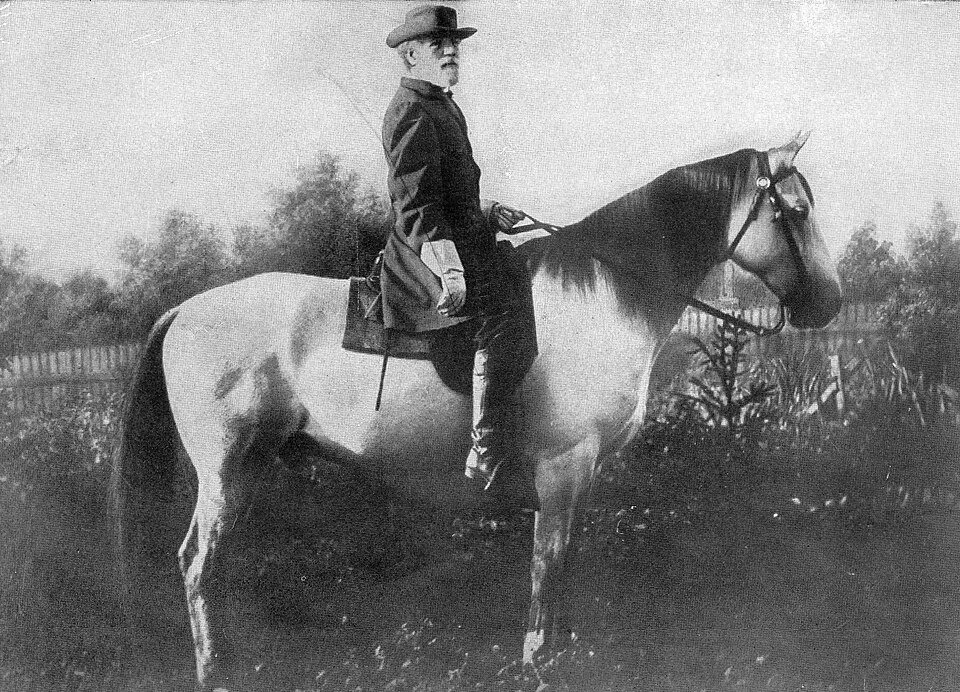
Image credit: Michael Miley (1841–1918) / public domain
Early Victories at Bull Run and Fredericksburg
When Robert E. Lee took command of the Virginian Army, the challenges were enormous, and the outlook was grim. Union troops were steadily gaining control of the entire Mississippi Valley and were even in sight of Richmond. They were only seven miles away, they were 100,000 men strong, and they were well-equipped. Lee wasted no time. A month after he received his command, he attacked the northern army outside Richmond and drove it back. A few months later, he defeated the Union at the second battle of Bull Run and chased it into Washington, D.C. Throughout the South, he became the hero of the people and the savior of the Southern cause. His soldiers developed an almost superstitious belief in his abilities. The war, everyone believed, would soon be over. Lee knew differently from the start.
Robert E. Lee followed up on his victory at Bull Run by invading Maryland. But his plans fell into enemy hands, and the first deadly battle, at Antietam, forced him to retreat again. Lee withdrew into Virginia, where he led his men in a resounding victory at the Battle of Fredericksburg. It was during this battle that Lee made the statement for which he’s probably most famous. One morning before the battle began, looking over the fog-enshrouded field and the panorama of thousands of troops in full array, Lee remarked: “It is well that war is so terrible – we would grow too fond of it.”
Chancellorsville and the Loss of Stonewall Jackson
It was in the next year, 1863, that General Robert E. Lee won his greatest battle – and suffered his greatest loss. At Chancellorsville, he was confronted with a Union army twice as big as his own. In one of the boldest moves in military history, he divided his army into three parts and encircled the enemy. The Union army was confused and lost its organization. It was driven back and suffered enormous casualties. The Southern losses were also great, but one, in particular, grieved Lee and perhaps affected the outcome of the rest of the war. Lee’s greatest lieutenant, the man he called his “right arm”- Stonewall Jackson – was mistakenly shot by his own men when he rode in front of the troops to survey the battle scene. Lee and Jackson had shared an intuitive understanding of each other in battle and had functioned together almost as one mind in two bodies. Jackson had once said that he was so devoted to Lee, he would follow him into battle blindfolded. Lee was never able to replace Jackson, and he never again achieved the success of Chancellorsville.
The Turning Point at Gettysburg
Two months after the death of Stonewall Jackson, Lee marched his troops into the North again, towards what became the most famous, the most pivotal, and the bloodiest battle of the Civil War. The date was July 1863. The place where South and North met was the fields outside of the small town of Gettysburg, Pennsylvania. It was Lee’s goal to finally put his army on the offensive, smash through the Union lines, and march towards Washington, D.C. It was his first battle without Stonewall Jackson, and his men were suffering from inadequate food and clothing supplies and sheer exhaustion. After three days of brutal fighting and tragic blunders like “Pickett’s Charge,” in which Confederate soldiers were slaughtered by the thousands, Lee was forced to admit defeat. The North had suffered 23,000 killed, wounded, or missing. The South suffered 30,000 – 30,000, which it could badly afford to lose. At the end of the battle, Lee rode up and down before his soldiers, on his beloved gray horse Traveler, commenting over and over: “It is my fault. It is all my fault.” It was the turning point of the war.
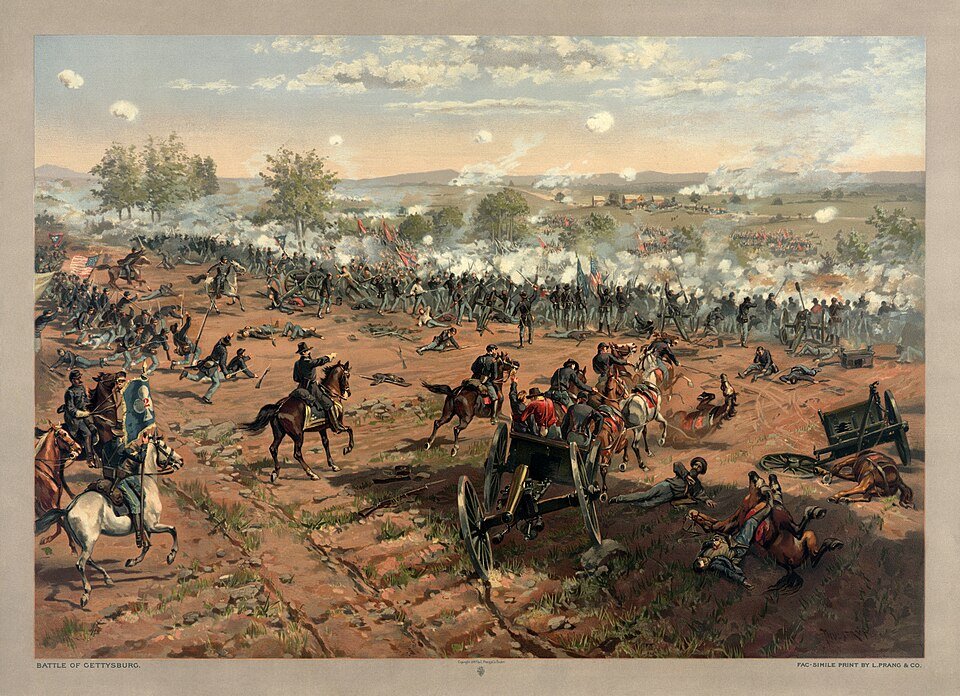
Image credit: Thure de Thulstrup (1848–1930) / Attribution: Adam Cuerden
Robert E. Lee gathered his ragged, weary, and demoralized soldiers and retreated into Virginia. To the frustration of President Lincoln, the Union didn’t pursue them…not right away. A new general took charge of the Union forces, a man Lincoln hoped would demonstrate the boldness and initiative his former generals had lacked. The general was Ulysses S. Grant, and he didn’t disappoint his Commander-in-Chief. He led assault after assault into the South, attacking Lee’s army with larger forces and guns. When the Union lost men, they were replaced with fresh recruits. When the South lost men, there were no replacements.
During one of the battles, Robert E. Lee saw one of his regiments from Texas riding to the front and started up to join them. So much affection did his men have for him that they refused to move until Lee returned to the safety of the rear.
Robert E. Lee Surrenders at Appomattox
Robert E. Lee was badly handicapped now – he had lost almost all his best officers, including Jackson, James Longstreet, and his former student, Jeb Stuart, both of whom had fought bravely at Gettysburg. Still, Lee maneuvered brilliantly. Despite his disadvantages, he inflicted heavy losses on the Union forces – but he was never able to gain the offensive. He was pushed back first to Richmond, then to Petersburg, and was forced to defend both cities against a near siege by Union forces. All around him, the cities of the South lay in ruins. Railroads were blown up. Crops were dead. His men were exhausted and near starvation. Over the next months, they steadily lost strength until, in April of 1965, Grant finally broke through the Southern lines. Lee tried to escape with his army to North Carolina, where they hoped to join forces with the rest of the Confederate army. But Grant cornered him at the Appomattox Court House and forced his surrender. When Lee made his last ride down the lines, atop Traveler, he told his army: “Men, we have fought through the war together. I have done my best for you; my heart is too full to say more.” His men crowded around him, many with tears running down their cheeks, not cheering, but silently saluting their beloved leader.
After Robert E. Lee surrendered, other Southern armies soon gave up fighting. Grant said later of Lee: “There was not a man in the Confederacy whose influence with the whole people was as great as his.”
Rebuilding the South: Lee’s Final Years
Just as Lincoln had resolved that life in the United States would proceed after the war “with malice towards none,” so had Robert E. Lee resolved. He accepted the results of the war, encouraged others to do the same, and began to construct a new life for himself. He was barred from taking office, but, hoping to set an example for other Southerners, he applied for an individual pardon. When he discovered his application didn’t include the necessary oath of allegiance to the United States, he signed one and quickly sent it along. Somehow, the oath was lost, and Lee’s pardon was refused. But in 1970, an employee of the National Archives found the oath, and Congress, after 100 years, finally granted Lee his pardon.
In his remaining five years of life after the war, Robert E. Lee dedicated himself to education and to helping rebuild the South. His first problem was his own finances – the home in Arlington had been confiscated by the government, he was without employment or income, and he worried about the future of his seven children and his wife. Even though he was offered many lucrative posts, some of them overseas, he accepted instead an offer to serve as president of Washington College in Lexington, Virginia. Today, in honor of his service, the college is known as Washington and Lee University. He raised the level of scholarship at the university and founded schools of commerce and journalism. Young students from all over the South flocked to the college, which became affectionately known as “General Lee’s school.”
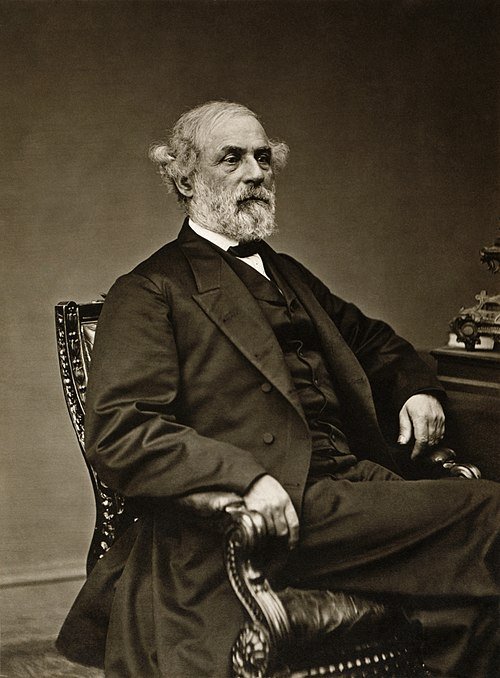
Image credit: Levin Corbin Handy (1855–1932) / public domain
Robert E. Lee’s attitude after the Civil War was critically important to the progress of the South and the healing of the nation. He urged his friends and students to keep the peace, to resist bitterness and hatred, and to, in his words, “Make your sons Americans.” Once, when he found Southern children beating a boy from the North, he stopped them and took the child into his home. Another time, when his church congregation rose in anger because a black man had taken communion out of the common drinking cup, Lee walked to the front and knelt beside the man. He addressed the congregation, saying, “All men are brothers in Christ. Have we not all one Father? ” Soon, the others followed his lead and joined the black worshipper at the altar.
Robert E. Lee did a lot of work for the church in his later years. But one day, after attending a church meeting, he walked home in a driving rainstorm. He became so ill that he couldn’t even speak. For days, he lay in bed, sometimes thinking he was back in the war. On October 12, 1870, 63-year-old General Robert E. Lee gave his last order. “Strike the tent,” he said. And then he died. He was buried in the chapel he built on the campus of Washington University, which is sometimes called “The Shrine of the South,” due to the thousands of visitors it receives every year.
The Lasting Legacy of Robert E. Lee
There are people today who love Robert E. Lee as much as he was loved in life. His birthday, January 19, is a legal holiday in most southern states. Robert E. Lee was one of the most respected soldiers and admired generals in American history, and perhaps the most capable commander of the Civil War. He was idolized by his soldiers, his students, and the entire South, which saw in him the personification of their own finest qualities. His family, which knew him more intimately than anyone else, worshipped him as much as others did. His own daughters never married because they said all other men seemed inferior to the man who had raised them.
It’s not often that a man who in one sense has fought against his country – and lost – is still considered a national hero. But Robert E. Lee is admired not just in the South but throughout the nation. His fame rests on achievements made in the face of overwhelming odds and on his outstanding personal character, which won the adoration of his army and the respect of his enemies. During the long aftermath of the war, when North and South alike struggled to rebuild and move forward, he was a constant example of fortitude and forgiveness.
Robert E. Lee was a man of many deep loyalties, all of which had to be measured against each other – his loyalty to the state, to country, to family, to northern and southern friends, to the memory of George Washington and the Declaration of Independence, and last, but not least, to his own convictions and ideals. It was evident from the start that he could not serve them all, and he could not serve one without betraying another. Reaching a decision about what course to take was a process that caused him much anguish and pain. His wife Mary said that as he labored over his choices, “he wept tears of blood.” In the end, the choice he made was based not on personal ambition or pride, but on his highest understanding of duty.
References:
- Davis, William C. (1999). The Commanders of the Civil War. London: Salamander Books Ltd.;
- Fellman, Michael (2000). The Making of Robert E. Lee. Random House.;
- Freeman, Douglas S. (1934). R. E. Lee, A Biography. Charles Scribner’s Sons.;
- Nolan, Alan T. (1991). Lee Considered: General Robert E. Lee and Civil War History
- Bunting, Josiah (2004). Ulysses S. Grant. New York: Time Books.
- Bonekemper, Edward (2014). Grant and Lee. Washington, D.C.: Regnery Publishing.
- Connelly, Thomas Lawrence (1977). The Marble Man: Robert E. Lee and His Image in American society. New York: Alfred A. Knopf.

