

Cover image: Representation of a DNA molecule that is methylated. The two white spheres represent methyl groups. They are bound to two cytosine nucleotide molecules that make up the DNA sequence. Author: Christoph Bock, Max Planck Institute for Informatics / CC BY-SA 3.0 (via Wikimedia Commons)
Table of Contents
Genomics got its start by digging into the structure of genes — basically their anatomy. Epigenetics takes a different angle. It’s built on the study of hereditary variations in how active genes are, which you could think of as gene physiology rather than gene anatomy. The main epigenetic processes — the things that regulate how active a gene is — are methylation of DNA molecules and post-translational modification of histones. These two work hand in hand, weaving together a kind of epigenetic network of events that ends up controlling whether individual genes are switched on or off. Which type of network gets set up depends on the anatomy of the gene and its promoter, plus the constant back-and-forth between outside and inside factors that together produce a characteristic epigenetic signature.
Scientists have come to appreciate just how important reversibility is here — the way these molecular marks can be both added and taken away — and that matters in pretty much every context, but especially in cancer. Research in epigenomics, the use of new epigenomic approaches in treatment, and above all the development of “smart” epigenetic drugs are all on a steep upward curve that hasn’t peaked yet. The word “epigenome,” by the way, is a parallel to “genome” — it refers to the overall epigenetic state of a cell, and epigenomics means the global analysis of epigenetic changes across the whole genome.
What Is Epigenetics?
The term also refers to the changes themselves: functionally relevant changes to the genome that don’t involve any change to the nucleotide sequence. The classic examples of mechanisms that produce these changes are DNA methylation and histone modification, each of which alters how genes get expressed without touching the underlying DNA sequence. Gene expression can also be controlled by repressor proteins that latch onto silencer regions of the DNA. These epigenetic changes can persist through cell divisions for the whole life of a cell, and they can even last across multiple generations — all without changing the organism’s underlying DNA sequence. Instead, non-genetic factors get the organism’s genes to behave (or “express themselves”) differently.
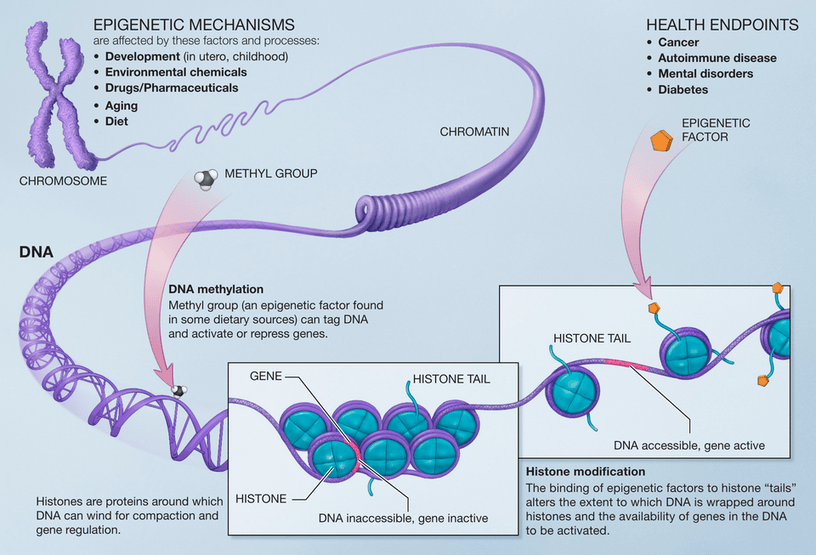
Image credit: National Institutes of Health / public domain
Until pretty recently, most of us were convinced that whether you’re susceptible to a disease comes down entirely to the hereditary information stored in your DNA. So a lot of work went into pinning down functional links between changes in the structure of DNA molecules — mutations, gene fusions that produce chimeric proteins, gene amplification that ramps up gene activity — and the development of specific diseases. This approach answered a lot of questions and, in the end, led to the discovery of genes that, when mutated, cause diseases like cystic fibrosis. But for all that progress, plenty of questions still don’t have answers. Is the bare arrangement of bases (GATC) in the DNA molecule really the master key that’s eventually going to open every lock? The day-to-day uncertainty after the Human Genome Project wrapped up was maybe captured best by Manel Esteller, director of the Cancer Epigenetics Laboratory at the National Cancer Institute in Spain, who put it this way: “It’s time to sort out this large phone book and make a few phone calls to make sure the names and addresses are related to the correct numbers.” If you take that seriously, it becomes clear that scientific curiosity and all that layered knowledge need to be pointed toward some new corners of biology.
The Story Behind the Word: Conrad Waddington
Scientists have only lately realized how big a role epigenomic structures play in how disease develops and shows up. The word itself basically means “beyond conventional genetics,” and we owe it to the developmental biologist Conrad Waddington. Born in Evesham, England, in 1905, Waddington got the ball rolling on a Department of Genetics at the Edinburgh institute as early as 1947. In just ten years, genetic research there built a reputation for being top-notch. The department itself did better than anyone expected and grew into one of the largest genetics departments in the world. During those years, Waddington was planning to set up a lab for epigenetics. He only managed it in 1965, when the Group for Epigenetic Research was officially established, with Waddington at the helm as honorary director. Unfortunately, the group didn’t develop the way he’d envisioned — his focus was mainly on embryology. The money ended up flowing toward areas of science that based their discoveries on hybridization techniques for DNA and RNA molecules, which weren’t being used in embryology back then.
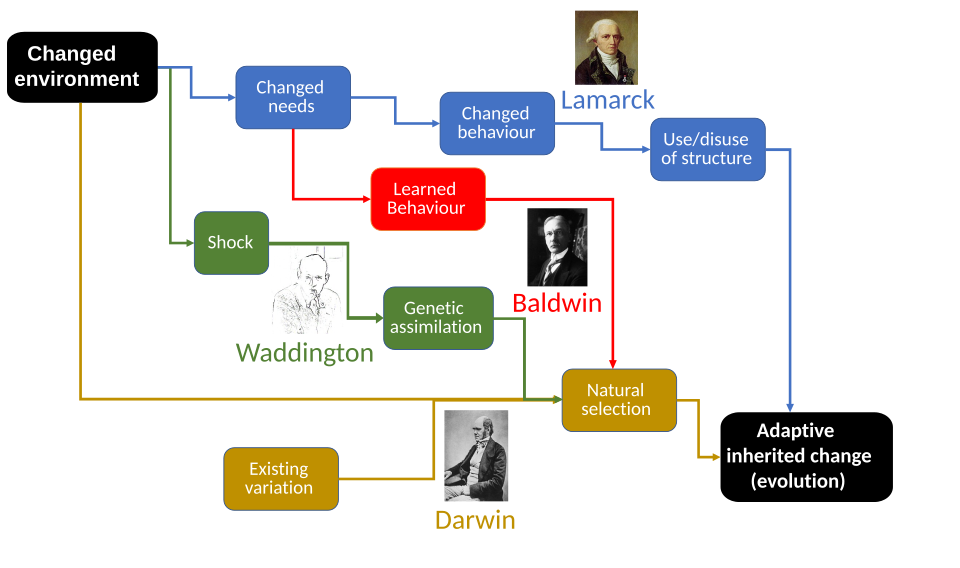
Image credit: Ian Alexander / CC BY-SA 4.0 (via Wikimedia Commons)
Waddington wasn’t like a lot of the embryologists of his day. He was a respected embryologist, sure, but he was also one of the few who really grasped how important genetics was for development — specifically, how the activity of nuclear material in the cytoplasm mattered. He floated the idea that epigenesis (the old term for embryological growth and differentiation) and preformation might actually complement each other, arguing that “… all the characteristics of an adult organism are present in a fertilized egg, but should unwind and develop …”. On that basis, he saw development as an epigenetic event: “… we could say that the epigenetic structure or epigenotype comprises a series of events that a certain tissue goes through during development. A certain organ is formed because of personal interactions of genotypes, epigenotypes and external factors.” Waddington died in 1975. His ideas, sometimes only half worked out, sat “in storage” for years — unrecognized, like a hidden treasure we’re only now rediscovering in the epigenomics of the modern era. What’s stunning is how open he was to the unknown. He came up with these hypotheses at a time when he had no technical way to confirm them — no antibodies, no recombinant DNA technology, no understanding of how genes are even built or how their activity might be regulated at all. That he managed to see, and name, something he called “epigenetics” under those conditions deserves real respect.
These days, we define epigenetics as a “hereditary and reversible change in gene function” that depends on the sequence of bases in the DNA molecule. Unlike epigenomics, which looks at the global picture of epi-events across a whole genome, epigenetics has a narrower focus — it studies specific epi-changes tied to specific genes. We know epigenetic markers get inherited both at the level of the cell and at the level of the whole organism. And we’ve figured out how important these markers are for development, for cell differentiation, and for protecting against viral genomes getting incorporated into our own. These labels — the regulators of gene activity — are crucial for flagging molecular signals that come from outside or inside factors. Under normal biological conditions, a cell has to remodel its epigenome on the fly, sometimes in a matter of seconds. That’s what lets it respond to signals telling it to quiet some genes down and crank others up. It pulls this off by adding or removing methylation labels on the DNA molecule, or by reshaping the histone octamers. Those two events are the foundation of the epigenomic response. When a cell can’t manage these two molecular moves, on the other hand, you get disease. The first paper to point out how important epigenomic changes are in cancer was published in 1983 — though nobody recognized how significant that discovery was at the time.
Epigenetic Mechanisms
The most important epigenetic mechanisms are methylation of DNA molecules, the establishment of covalent post-translational changes to histones (methylation, acetylation, phosphorylation, sumoylation), and the control of gene activity by small RNA molecules. These three mechanisms are tightly linked to setting up a cell’s own personal (epigenomic) network of signals. Within that network they complement one another and run crucial processes in the cell. They’re also vital for how the cell responds to mutagens coming from the environment.
DNA Methylation and Gene Transcription
Roughly 60% of human genes have regions in their promoter that are rich in cytosines and guanines. These regions sit in precisely defined spots in the genome and make up about 1-2% of it. They’re called “CpG islands,” and the working definition is a stretch longer than 500 base pairs where over 55% of the nucleotides carry G + C bases. In a normal, healthy cell, these regions are mostly unmethylated. The exceptions are the promoters of imprinted genes, regions of the X chromosome tied to its random inactivation, and transposon regions. In practical terms, DNA methylation — a crucial biological phenomenon — is studied mainly at the level of gene transcription. The simplest version of the story plays out on two levels: a methylated promoter means the gene goes quiet, while an unmethylated promoter means the gene stays active. That very sensitive, very precise process where cytosine gets methylated is the basic mechanism of normal development in every species. Here’s the thing: we all carry 46 chromosomes that hold all our genes, but not all of those genes are switched on all the time in every tissue. In biochemical terms, DNA methylation is the covalent bonding of a methyl group onto the 5th carbon atom of the cytosine at a CpG site.
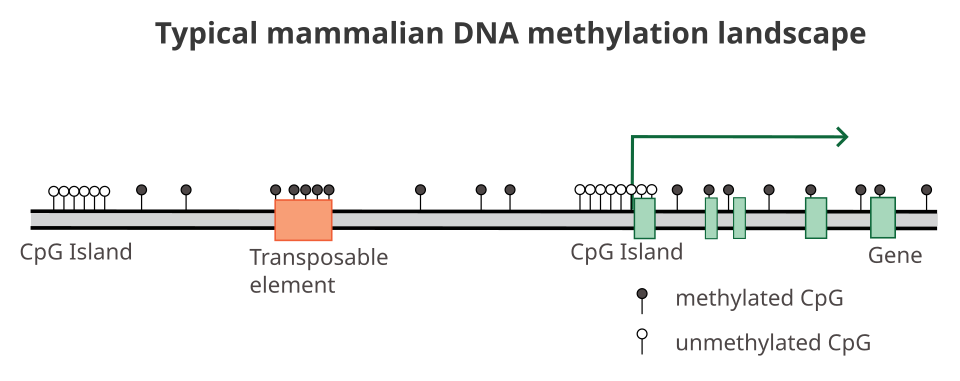
Image credit: Basesorbytes / CC BY-SA 4.0 (via Wikimedia Commons)
This process isn’t only a big deal in developmental biology. It also matters enormously for the pathology of disease, cancer in particular. Its significance has been shown in experimental setups where a transgene with different activity levels (either active or dialed down, depending on how much it’s methylated) keeps the same activity pattern across more than a hundred cell divisions. The cross-linked signals responsible for establishing the methylation pattern during early development depend on two DNA methyltransferases (DNMTs): DNMT3A and DNMT3B. These two enzymes have “de novo” methylation activity, which is exactly why they’re needed to set up the methylation pattern in the early life of an individual. (The job of faithfully copying that pattern after each round of replication, from one cell generation to the next, falls mainly to the maintenance enzyme DNMT1.) Without the de novo enzymes, life simply wouldn’t be possible — mice make the point clearly. Animals in which these enzymes were knocked down died during or after embryonic development, and the whole picture was dominated by global hypomethylation of the DNA molecule. During malignant transformation, CpG islands sitting in the promoter regions a gene needs in order to form become hypermethylated. The upshot is that tumor suppressors and other genes responsible for keeping cancer in check get silenced. There are two models that try to explain excessive promoter methylation and how it controls gene activity. The first one rests on the idea that the methylated cytosine “bulges” into a large bend in the DNA molecule and changes its conformation, which makes it impossible for the transcription factor to bind to the target CpG site. The second model brings us back to Waddington’s “network” idea, and it’s based on how methylcytosine-binding proteins (MeCP2) work. As the name tells you, these proteins bind to methylated CpG sites and form a barrier that keeps transcription factors from binding. These explanations are easy enough to follow, but in reality the process is incredibly complex and depends on a whole crowd of molecules.
Histone Modifications
Histone deacetylases are a class of enzymes that strip acetyl groups (O=C-CH3) off an ε-N-acetyl-lysine amino acid on a histone, which lets the histones wrap the DNA up more tightly. This is a crucial step in controlling gene activity. In the “simplified” biological version, histone deacetylation thickens up the DNA-histone complex. That change in shape builds a kind of barrier, so transcription factors can’t bind to their target site on the gene promoter — and the gene consequently goes quiet. But the real scenario, the one playing out at the level of epigenomic communication, is a lot messier than that. Histone deacetylation comes paired with the activation of DNA methylases, and those lead to local hyper-methylation of the DNA molecule in the promoter region. There’s a growing pile of data pointing to a lively molecular conversation between histone acetylation and DNA methylation, with information getting traded back and forth. This happens in a strictly defined cascade of events. Generally speaking, we feel kind of powerless to fully understand the rules here, because we can’t tell cause from effect. Which epigenetic process, or which molecule, should we “attack” as the main epigenomic target in cancer treatment? And if we target one particular molecule and then keep affecting signaling pathways we don’t currently even know are part of the “communication network,” how much damage are we going to do? Should the approach be different from one person to the next, from one tissue to another? We don’t have answers to these questions yet, and the hunt for them is exactly what makes this kind of research so demanding — and so compelling.
What we do know for sure comes down to a handful of remarkable studies, and we’ll mention just one. It showed that histone acetylation blocks methylation of the DNA molecule by denying DNA methylases access, and at the same time it has a positive effect on transcription factor binding — mostly thanks to heavy acetylation of histones H3 and H4. So on a global level, histone acetylation has the opposite effect from DNA methylation, and it lines up well with global transcriptional activity. That means using histone deacetylase inhibitors (HDACs) will encourage histone acetylation and, in turn, affect how methylated gene promoters are. This is crystal clear in the human prostate cancer model, looking at 131 samples of tumor tissue and 65 samples of benign but hypertrophic prostate tissue. The experiments tracked the behavior of the tumor-suppressor gene RASSF1 (Ras association domain-containing protein 1), which earlier research had shown gets silenced in malignant prostate tumors, and in other types of malignant tumors too. The study found:
- silencing of the RASSF1 gene due to enhanced promoter methylation showed up in 74% of malignant tumor samples and only 18.5% of benign, hypertrophic prostate tissue;
- the level of methylation correlated well with the Gleason score and advanced disease;
- acetylated histones and dimethylated lysine on histone 3 were bound to non-methylated promoters (H3K4m2 — dimethylation of histone 3 at the amino acid lysine, fourth in the sequence);
- using DNA methylation inhibitors (but not histone deacetylase inhibitors) changed the histone modification tied to the promoter.
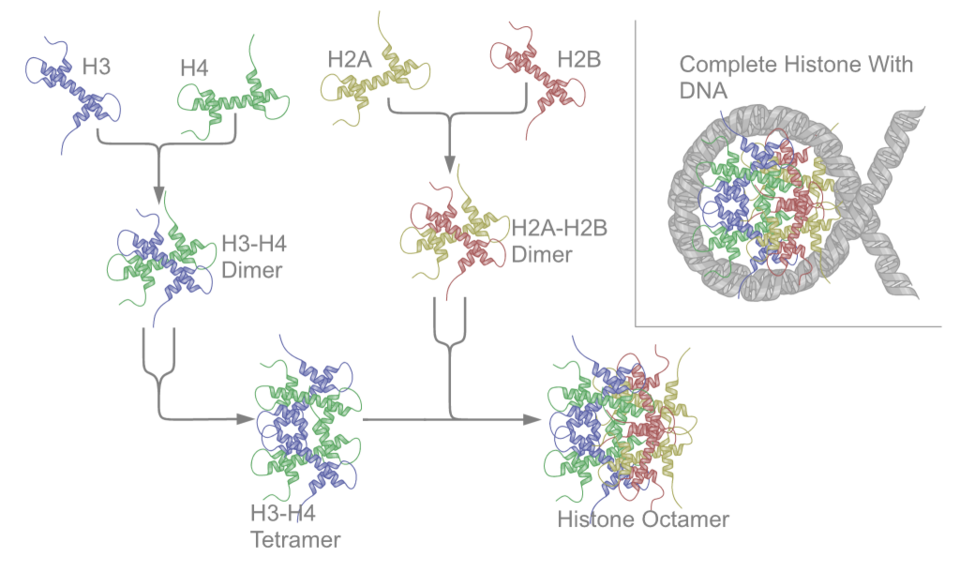
Image credit: Richard Wheeler (Zephyris) / CC BY-SA 3.0 (via Wikimedia Commons)
The last piece of information that significantly reshaped the picture of this epigenetic mosaic was striking: a drop in histone acetylation, or H3K4 dimethylation, paired with an increase in lysine dimethylation at the ninth amino acid of histone H3 (H3K9m2), plays a vital role in controlling RASSF1 gene activity. Based on that work, it became obvious that accurate communication between histone acetylation and DNA methylation is a crucial link for how a cell functions. The events that set it all in motion still haven’t been discovered. You might ask right off the bat, “Why do histone modifications even matter so much?” Well, it’s well known that the DNA molecule in eukaryotic cells is organized into chromatin. The building blocks of chromatin are nucleosomes, each containing 147 base pairs of DNA wrapped around an eight-part complex (an octamer) made up of two copies each of four histone types: H2A, H2B, H3, and H4. It’s the post-translational changes in the amino-terminal tails of those histones that decide how available the chromatin is to the transcription machinery — and therefore how active the genes are. But even here, we don’t know the exact mechanisms for setting up this cascade of events. That’s especially true when it comes to understanding the tools needed to establish, maintain, and change the patterns of CpG island methylation and histone acetylation. What is clear, though, is that the disruption of these patterns — so familiar from cancer — is reasonably well recognized at the level of descriptive phenomenology.
Epigenetic Drugs in the Clinic
Here’s where all this turns practical. Because epigenetic marks are reversible — unlike a mutation in the DNA sequence, which is basically permanent — they make tempting drug targets. If a tumor-suppressor gene has been muzzled by hypermethylation, the reasoning goes, then maybe you can un-muzzle it. And that idea has actually made it out of the lab and onto the pharmacy shelf.
The first wave of approved epigenetic drugs went after DNA methylation. Azacitidine (sold as Vidaza) got the FDA’s green light in 2004, making it the first hypomethylating agent approved for myelodysplastic syndromes — a group of bone-marrow disorders that can progress to leukemia. Its close cousin decitabine (Dacogen) followed in 2006. Both are nucleoside analogs that get built into the DNA of dividing cells, where they trap and then degrade DNA methyltransferases, so methylation gradually fades with each round of cell division.
The second wave aimed at histones instead. Vorinostat (Zolinza, also known by the chemical name SAHA) was approved in 2006 as the first histone deacetylase inhibitor, used against cutaneous T-cell lymphoma. Romidepsin came along later for the same cancer and for peripheral T-cell lymphoma. These drugs do pretty much what the name suggests: by blocking HDACs, they keep the acetyl groups on the histones, which loosens up the chromatin and lets silenced genes switch back on.
None of these are magic bullets. Responses can be slow, they usually take several treatment cycles, and so far they’ve worked best against blood cancers rather than solid tumors. But they were proof of a genuinely powerful concept — that you can treat a disease by changing how genes are read, without changing the genes themselves. There are now more than ten FDA-approved epigenetic drugs, with dozens more working their way through clinical trials.
When the Environment Writes on the Genome
One of the reasons epigenetics grabbed so much attention is that it offers a molecular route for the outside world — diet, stress, chemicals — to leave a lasting mark on how our genes behave. A couple of famous studies make this point better than any amount of theory.
The first involves a strain of mice carrying a quirky version of a gene called viable yellow agouti (Avy). Depending on how heavily one stretch of DNA near that gene is methylated, these genetically identical mice can turn out anywhere from yellow, fat, and prone to diabetes and cancer, all the way to brown, lean, and healthy. In 2003, Robert Waterland and Randy Jirtle showed that simply feeding pregnant mice a diet rich in methyl-donor nutrients — things like folic acid, vitamin B12, choline, and betaine — nudged their pups toward the brown, healthy end of that range. The mechanism was added methylation at a transposable element sitting just upstream of the agouti gene. Same DNA, different diet, different-looking animal. It’s about as clean a demonstration as you could ask for that what a mother eats can dial her offspring’s epigenome up or down.
Image credit: OpenStax / CC BY-SA 4.0 (via Wikimedia Commons)
The second comes from a much grimmer natural experiment. During the winter of 1944–45, a German blockade of food supplies to the western Netherlands, made worse by a brutal cold spell, triggered a severe famine now remembered as the Dutch Hunger Winter. Decades later, a team led by Bastiaan Heijmans went looking for people who had been in the womb during that famine. In a 2008 study, they reported that individuals exposed to starvation around the time of conception had, roughly six decades on, less DNA methylation at the imprinted IGF2 gene than their own unexposed brothers and sisters. The effect was specific to exposure early in pregnancy, which fits neatly with the idea that the earliest stages of development are when the epigenome is most impressionable. A brief food shortage, in other words, appears to have left a chemical fingerprint that lasted a lifetime.
One word of caution, since this corner of biology tends to get oversold: showing that an exposure leaves an epigenetic mark is not the same as proving that mark causes a disease, and claims about epigenetic changes being passed down across many human generations are still hotly debated. Even so, examples like these are exactly why so many researchers got excited in the first place. They hint at a biology where nature and nurture aren’t really opposites — they’re more like two hands on the same set of controls.
The Human Epigenome Project
Research in epigenomics has been flagged as a priority all over the world. The programs funded by the European Union really stand out, and national initiatives are getting more and more prominent too.
- Research into the methylation of the DNA molecule (HEP — Human Epigenome Project)
- Determination of chromatin structure (HEROIC — High-Throughput Epigenetic Regulatory Organisation In Chromatin)
- The treatment of malignancy (EPITRON, Epigenetic Treatment of Neoplastic Disease)
Research has shown that the distribution of methylated islands on the DNA molecule is unique to each individual, unique to each tissue, and unique to each of the MHC loci that were analyzed. As far back as 2004, the European Commission kicked off the establishment of the Epigenome Network of Excellence (NoE), which was conceived and partly carried out by Thomas Jenuwein (Research Institute of Molecular Pathology in Vienna), Phil Avner (Pasteur Institute, Paris), and Geneviève Almouzni (Curie Institute, Paris). The main idea was to build a networked epigenome study across Europe. The conclusion was to launch the Human Epigenome Project, with the primary goal of “… identifying all chemical changes and interrelationships between all constitutive parts of chromatin that affect the function of the DNA code, so as to better understand development, aging, the loss of control of gene activity in cancer cells and other diseases, and the impact of the environment on human health.” The project’s main task was to map the methylation islands in the DNA molecule. The bigger goal is to define epigenomic markers in specific human tissues at different stages of development. Other parts of the world treat epigenomics as a priority too. Networking distinct groups of scientists sits at the top of the biomedical priority list in Asia — the Japanese Society for Epigenetics, for instance, was founded in December 2006. In Australia, the Australian Alliance for Epigenetics started operating in late 2008.
The answers connecting the structure of genes, their anatomy, to the tendency to develop certain diseases are really just the tip of the iceberg. Multidisciplinary research aimed at uncovering the mechanisms that regulate the activity of individual genes — and at investigating the function and physiology of genes — all comes together under the name epigenetics. Unlike epigenomics, which pulls together global analyses of epigenetic changes across the whole genome, epigenetics looks at changes in specific genes and/or groups of genes within a given window of time and space.
References:
- Berger SL, Kouzarides T, Shiekhattar R, Shilatifard A (April 2009). “An operational definition of epigenetics”. Genes & Development.;
- Bird A (May 2007). “Perceptions of epigenetics”. Nature.;
- Gibson G, Muse SV (2009). A primer of Genome Science (3rd ed.);
- Russell PJ (2010). iGenetics: A Molecular Approach (3rd ed.);
- Waterland RA, Jirtle RL (August 2003). “Transposable elements: targets for early nutritional effects on epigenetic gene regulation”. Molecular and Cellular Biology.;
- Heijmans BT, Tobi EW, Stein AD, et al. (November 2008). “Persistent epigenetic differences associated with prenatal exposure to famine in humans”. Proceedings of the National Academy of Sciences.
- Dupont C, Armant DR, Brenner CA (September 2009). “Epigenetics: definition, mechanisms and clinical perspective”. Seminars in Reproductive Medicine.

