

Cover image: IBM Quantum System One in Ehningen, Germany – © IBM Research, licensed under CC BY 2.0.
Table of Contents
From Classical Computers to Quantum Computers
When the first computer was built back in the 1940s, people estimated the world would need maybe five of these powerful, massive machines at most. Eighty years later, the average family has at least five personal computers if you count mobile phones, and that’s not even including all the devices with computer processors that wash our clothes, adjust our TV picture, or calculate gas mileage in our cars. Computers have gotten way more powerful and way smaller. And to make them even more powerful, we need to keep shrinking them down. Theoretically, they’d get so small that individual components would be just a few atoms in size. That means there are limits to their development that we’re going to hit pretty soon, and that’s exactly where quantum computers come in.
Think about how much we’ve already squeezed out of silicon. Modern chips pack billions of transistors onto a piece of material about the size of a fingernail, and some of the features on those transistors are only a few dozen atoms wide. Engineers keep finding clever tricks to go smaller. But at some point, you just run out of atoms. Worse, once parts get that tiny, electrons stop behaving the way a normal circuit expects them to. They start “leaking” through barriers that should stop them cold. For a regular chip designer, that’s a headache. For a quantum physicist, it’s the whole point.
When we think about the world of the very small—the world of molecules and atoms—the laws of quantum mechanics take over. We don’t notice these laws in our everyday macro-world, but down there particles behave completely differently from what we’re used to in normal math and physics. In that tiny world, particles aren’t just particles anymore. They can act like solid little bits of matter and like spread-out waves of energy at the same time. The terms “yes” and “no” don’t really apply there, either. Instead, we talk about the probability that something is or isn’t. And actually, it can be both simultaneously. According to Heisenberg’s uncertainty principle, we can’t precisely measure both the position and the momentum of a particle at the same time (which is really frustrating for quantum physicists). Two particles can also be linked, or “entangled,” in such a way that measuring one of them instantly tells you something about the other, no matter how far apart they are. That “spooky action at a distance” even freaked out Einstein.
How Quantum Computers Work: Qubits and Superposition
The weird properties of particles that follow quantum mechanics laws are what give quantum computers their power. In all the regular computers we use every day—the ones based on semiconductor transistor technology—the basic unit of information is one bit. It can be either zero or one. Using strings of zeros and ones, you can describe all the operations and data that the computer processor will process and show us as text, video, or interactive games.
In quantum computers, the information carrier is something from the quantum world, with all its unusual properties. If we can harness these properties with the right algorithms, computational power increases dramatically. The unit of information a quantum computer processes is called a qubit (short for “quantum bit”). Its most important feature is that it can be in two states at the same time—being both zero and one simultaneously.
Here’s where it gets interesting. Two regular bits can hold one of four combinations at any given moment: 00, 01, 10, or 11. Two qubits can hold a blend of all four at once. Add a third qubit and you’re up to eight combinations. Every new qubit doubles the count. By the time you get to around 300 qubits, the number of combinations is bigger than the estimated number of atoms in the observable universe. That exponential growth is basically the engine behind all the hype.
The Coin on Its Edge: Understanding Superposition
It’s like having a coin that we’ve carefully balanced on its edge on a table, so it could fall to either side at any moment. This state of a qubit is called superposition. We won’t know what its condition actually is until we measure it at some point.
When we slap our hand on the table, the coin falls to one side and we know the result. Something similar happens when we measure a qubit. The probability of “which side it will fall on” is encoded in it when it’s prepared. The moment we measure it, the superposition collapses, and we’re left with information that we read as either zero or one. The delicate in-between state is gone for good. So the measurement gets repeated many times to figure out the probability that the qubit was carrying inside itself.
Now, the coin comparison isn’t perfect (no analogy for quantum stuff ever is). Real qubits also have a phase, and phases can add up or cancel out, a bit like ripples on a pond. Good quantum algorithms are designed so the wrong answers cancel and the right one gets boosted. So a quantum computer doesn’t just “try every answer at once” and hand you the best one, which is a pretty common misunderstanding. It uses interference to make the right answer the most likely thing you’ll see.
What Is a Qubit and How Is It Made?
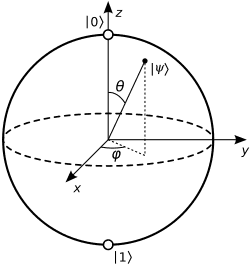
Smite-Meister / CC BY-SA 3.0 (via Wikimedia Commons)
The bits that form the foundation of our digital world are basically electrical impulses, physically speaking. They’re easy to make and easy to use. When it comes to qubits, things get way more complicated. To get one qubit, we need an object where we can achieve a superposition of two physical states.
Google and IBM have based their quantum computers on qubits created in superconducting electric circuits that are cooled to temperatures lower than those in the vast emptiness of deep space. In some superconducting designs, the direction the current flows around a tiny loop determines the qubit’s state. In the “transmon” qubits that both companies mostly use today, the state comes down to which of two energy levels the circuit is sitting in. Other companies use isolated individual atoms or ions held in an electromagnetic field in an ultra-high vacuum, where the qubit’s state is determined by their spin or internal energy levels.
And those aren’t the only options out there. Some teams build qubits out of single particles of light (photons), while others trap neutral atoms with tightly focused laser beams. Every method has its own pros and cons, and honestly, nobody knows yet which one will win out in the long run.
Fun fact: the physics that makes superconducting qubits possible got a Nobel Prize. In 2025, John Clarke, Michel H. Devoret, and John M. Martinis won the Nobel Prize in Physics for experiments from the mid-1980s showing that an electrical circuit you can literally hold in your hand could behave in a quantum way. Martinis later led Google’s hardware team for years, and Devoret has also worked with Google Quantum AI.
Quantum Noise: Why Qubits Need Extreme Cold
No matter how the qubit is made, we need to make sure it has an isolated quantum state and that we can control its properties. The tiniest change in the external environment—temperature, electromagnetic fields, or impurity atoms in the material—seriously affects the qubit and can cause errors. These errors are called quantum noise, and they represent a major problem in how quantum computers operate today. That’s why we need such extreme working conditions: temperatures close to absolute zero, where the chaotic thermal movement of particles almost completely stops, or ultra-high vacuums, where there’s practically nothing that could mess with the qubit.
To put some numbers on it, superconducting chips usually sit inside what’s called a dilution refrigerator, chilled to around 10 to 15 thousandths of a degree above absolute zero. Outer space, by comparison, is about 2.7 degrees above absolute zero. So yeah, the inside of that fridge is way colder than the space between galaxies.
The long-term fix is something called quantum error correction. The basic idea is that you spread one “logical” qubit across many physical qubits, so that if a few of them go wrong, the group can catch and fix the mistake. It’s kind of like saying something three times in a noisy room so the other person still gets the message. The catch is that it takes a lot of physical qubits to make one reliable logical qubit. For years, adding more qubits actually made the errors worse. That finally flipped in December 2024, when Google showed with its 105-qubit Willow chip that making its error-correcting code bigger pushed errors down instead of up. That was a pretty big deal in the field, and it’s one of the reasons people started talking about useful quantum machines as a question of “when,” not “if.”
Quantum Gates and Algorithms
In a classical computer, bits get processed through semiconductor transistor logic circuits. The equivalent in quantum computers are various quantum gates that qubits pass through. In some of them, qubits interact with other qubits, and the right algorithms use their quantum properties to get results much faster than regular computers can.
One example of this speed boost is how they perform searches. When we want to find something in memory with a classic computer, the algorithm running in its processor has to check the contents of all memory locations “item by item” until it finds the one with the content we want. Each entry in memory—each item—is represented by a series of zeros and ones and represents one state. Reading one state at a time from memory takes a certain amount of time, no matter how fast the computer is. A quantum computer, though, can work with many states at once and search much faster.
The best-known recipe for this is Grover’s algorithm, which Lov Grover came up with in 1996. If a regular computer has to check about a million items in the worst case, Grover’s approach needs only roughly a thousand steps. That’s a huge improvement, but it’s not magic. The speedup is “quadratic,” meaning it’s based on the square root of the number of items. For some other problems the gap is way bigger. In 1994, Peter Shor published an algorithm that can break large numbers down into their prime factors exponentially faster than any known classical method. Keep that one in mind, because it comes back later when we talk about cryptography.
Quantum Supremacy: Google vs IBM
Theoretically, the speeds we expect from quantum computers should be as much as a billion times faster than the fastest supercomputers we can build with today’s widely used technologies, at least for certain kinds of problems. In October 2019, Google proudly announced that with its Sycamore quantum computer—built on a 54-qubit chip, 53 of which actually worked during the experiment—it solved a specific math problem in just 200 seconds. According to their calculations, the fastest supercomputer would take 10,000 years to complete the same task. That meant they’d achieved quantum supremacy (basically, showing that a programmable quantum device can solve a problem no classical computer could solve in any reasonable amount of time).
Around the same time, their main competitor in quantum computer development, IBM, pushed back on this claim. IBM gave a complicated scientific explanation saying that a regular supercomputer would actually need only 2.5 days for the same task. From their perspective, quantum supremacy hadn’t been reached yet. IBM also publicly announced a development plan for its quantum computers, including the ambitious goal of building one with 1,000 qubits by 2023. Back then, the largest quantum computer IBM had produced contained 65 qubits.
IBM did hit that target, by the way. In December 2023, it unveiled Condor, a processor with 1,121 superconducting qubits. But around then the company also shifted its focus. Instead of just piling on more qubits, IBM started betting on quality: fewer errors, better connections between qubits, and chips that can be linked together. Its 156-qubit Heron processor and the 120-qubit Nighthawk (announced in November 2025) came out of that thinking, along with an experimental chip called Loon that tests the parts needed for error correction.
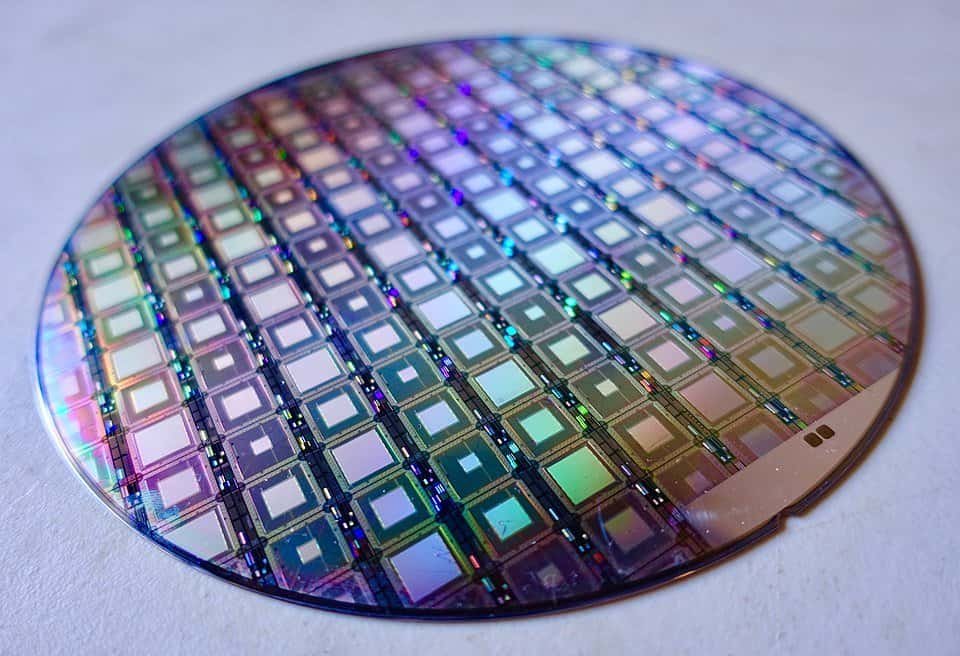
Steve Jurvetson / CC BY-SA 2.0 (via Wikimedia Commons)
Google kept going, too. Its Willow chip, revealed in December 2024, ran a benchmark in under five minutes that Google estimated would take one of today’s fastest supercomputers something like 10 septillion years. That’s a 1 followed by 25 zeros. Critics pointed out, fairly enough, that these benchmark tasks don’t really do anything useful. They’re built to be hard for classical machines, and that’s about it.
So Google tried something different. In October 2025, it published results in Nature for an algorithm called Quantum Echoes, which ran roughly 13,000 times faster on Willow than the best classical approach on one of the world’s top supercomputers. The difference this time was that the result was “verifiable,” meaning it could be checked by another quantum computer or compared against real lab experiments. Google even used a version of it to learn about the structure of two actual molecules.
IBM, for its part, had said it expected the first verified examples of quantum advantage to show up by the end of 2026, and it has been working toward that with partners. In mid-2026, IBM and the University of Chicago reported a computation that used 70 error-protected logical qubits and finished in about 15 minutes, a job that leading classical simulation methods couldn’t handle in any practical time. The company is aiming to deliver Starling, a large fault-tolerant quantum computer with 200 logical qubits able to run 100 million operations, by 2029.
Either way, quantum computer development seems to be heading in the right direction. We still need a lot more work on hardware, since current machines are still dealing with significant operational errors. For now, nobody expects quantum computers to replace ordinary computers in everyday life. We’ll use their superiority for special tasks that we can’t—and won’t be able to—perform with computers based on the technology we have now.
Quantum Computing Applications in Science and Industry
When legendary physicist Richard Feynman first introduced the idea of the quantum computer in 1982, he saw it mainly as a device we could use to successfully model atoms and how they connect in molecules. That would let us better understand their properties and the behavior of the materials they make up. The quantum computer, by its very nature, was a logical solution to this problem, because quantum phenomena at the molecular and atomic level would be modeled using a quantum system. Feynman put it pretty bluntly: nature isn’t classical, so if you want to simulate it, you’d better make the simulation quantum.
Simulating Molecules, Batteries, and New Drugs
Less than forty years later, this idea is becoming reality. Today, auto giant Daimler uses quantum computers to simulate and compare chemical compounds while searching for those that will most improve the performance of batteries for electric cars. The pharmaceutical industry also has high hopes that quantum computers will help them develop new drugs faster and cheaper. Simulating how drug molecules behave could significantly cut down the time spent in the lab doing “try until you get it right” experiments.More than forty years later, this idea is becoming reality. Auto giant Daimler (now Mercedes-Benz Group) has worked with IBM quantum computers to simulate and compare chemical compounds while searching for ones that could most improve the performance of batteries for electric cars. The pharmaceutical industry also has high hopes that quantum computers will help it develop new drugs faster and cheaper. Simulating how drug molecules behave could significantly cut down the time spent in the lab doing “try until you get it right” experiments.
Why is this so hard for normal computers? Well, the electrons in a molecule all affect each other at once, and the number of possible arrangements explodes as the molecule gets bigger. So chemists rely on approximations, and those sometimes miss exactly the stuff that matters most.
Big Data, Weather, and Industrial Optimization
Another important application area is analyzing huge amounts of data. The mathematical models we use to describe a phenomenon or system are only as accurate as the different variables we account for when calculating. When describing incredibly complex systems—like in meteorology, for example—we have to limit the number of variables and the amount of data we look at. Computers can’t process it all fast enough to give us a reasonably accurate weather forecast. If we could use quantum computers to account for much larger amounts of data and monitor more parameters, we could get extremely accurate forecasts of not just the weather but the behavior of entire climate systems.
In industry, quantum computers are being tested for optimization. Airbus has used them to work out optimal routes for aircraft takeoff and landing to reduce fuel consumption. Volkswagen has used them to find optimal routes for city buses and taxis to avoid traffic jams, and JPMorgan Chase has explored them for financial problems like pricing options and analyzing risk in the markets.
Quantum Computers and the Future of Cryptography
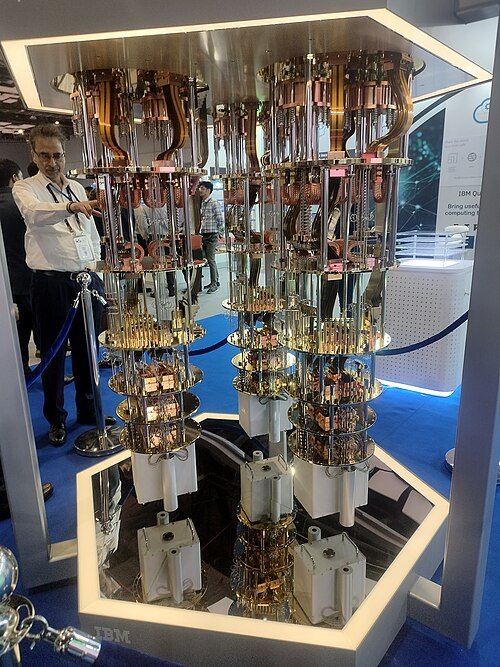
Image credit: Dev Jadiya / CC BY-SA 4.0 (via Wikimedia Commons)
Quantum computers have become a nightmare for everyone who needs to keep information secret, because a big enough machine could break most of the public-key encryption we rely on today, the kind that protects online banking, email, and pretty much every secure website. That’s where Shor’s algorithm comes back in. Systems like RSA are safe only because factoring huge numbers takes classical computers an absurd amount of time. A large, error-corrected quantum computer could do it in hours or days. That’s why cryptographers have been preparing for years for the day when someone uses a quantum algorithm to crack ciphers.
We’re not there yet. No quantum computer today comes anywhere close to breaking real-world encryption. But the estimates keep dropping. In 2025, Google researcher Craig Gidney published an estimate that a 2048-bit RSA key could be cracked in under a week with fewer than a million noisy qubits, which is a lot less than earlier estimates had suggested. That’s still far more than any machine has today, but it made a lot of security people sit up.
The good news is that a fix is already rolling out. In August 2024, the U.S. National Institute of Standards and Technology (NIST) published its first three post-quantum cryptography standards, known as FIPS 203, FIPS 204, and FIPS 205. They’re built on math problems that experts believe even quantum computers can’t solve easily. In March 2025, NIST picked another algorithm, HQC, as a backup. Tech companies have started building these into browsers, messaging apps, and operating systems, so a lot of people are already using quantum-safe encryption without even knowing it.
Some quantum computers today look like huge steampunk jellyfish, with a bunch of cables hanging under the rounded body of a metal beast. It’s hard to imagine this technology could one day fit in a device in our home or on our wrist. But it’s pretty undeniable that their application will be able to improve our world in many ways.
Qiskit: How to Try a Quantum Computer Today
And for those who want to play around with qubits today, IBM has provided access to its quantum computers via the internet. For the curious, the magic word is Qiskit. Qiskit [quiss-kit, though plenty of people say kiss-kit] is an open-source SDK for working with quantum computers at the level of circuits, operators, and algorithms. Earlier versions also let you control qubits directly at the level of pulses.
It’s written for Python, so if you’ve done even a little coding, getting started isn’t too scary. You install it like any other Python package, build a small circuit (say, two qubits that you put into superposition and entangle), and then run it either on a simulator on your own laptop or on real IBM hardware through the cloud. IBM offers a free tier with a limited amount of monthly time on actual quantum processors, which is kind of wild when you think about how these machines cost millions of dollars and sit in refrigerators colder than deep space.
If you give it a shot, don’t expect your first circuit to do anything earth-shattering. It’ll probably just spit out a bunch of zeros and ones with some percentages attached. But there’s something pretty cool about knowing those results came from real qubits sitting in a lab somewhere, balancing on the edge like that coin on the table.
References:
- Mermin, N. David (2007). Quantum Computer Science: An Introduction. Cambridge University Press;
- Akama, Seiki (2014). Elements of Quantum Computing: History, Theories, and Engineering Applications
- Nielsen, Michael A.; Chuang, Isaac (2000). Quantum Computation and Quantum Information. Cambridge, England: Cambridge University Press.
- Feynman, Richard P. (1982). “Simulating Physics with Computers.” International Journal of Theoretical Physics, 21, 467–488.
- Shor, Peter W. (1994). “Algorithms for Quantum Computation: Discrete Logarithms and Factoring.” Proceedings of the 35th Annual Symposium on Foundations of Computer Science.
- Grover, Lov K. (1996). “A Fast Quantum Mechanical Algorithm for Database Search.” Proceedings of the 28th Annual ACM Symposium on Theory of Computing.
- Arute, F. et al. (2019). “Quantum supremacy using a programmable superconducting processor.” Nature, 574, 505–510.
- Pednault, E. et al. (2019). “Leveraging Secondary Storage to Simulate Deep 54-qubit Sycamore Circuits.” arXiv:1910.09534.
- Google Quantum AI and Collaborators (2025). “Quantum error correction below the surface code threshold.” Nature, 638, 920–926.
- Google Quantum AI and Collaborators (2025). “Observation of constructive interference at the edge of quantum ergodicity.” Nature, 646, 825–830.
- Gidney, Craig (2025). “How to factor 2048 bit RSA integers with less than a million noisy qubits.” arXiv:2505.15437.
- National Institute of Standards and Technology (2024). FIPS 203, FIPS 204, and FIPS 205: Post-Quantum Cryptography Standards.
- IBM Quantum (2025). IBM Quantum Development & Innovation Roadmap.
- The Nobel Prize in Physics 2025. NobelPrize.org.

