

Cover image: The Procession Picture, c. 1600, showing Elizabeth I borne along by her courtiers – Attributed to Robert Peake the elder / public domain
Table of Contents
Few rulers have shaped a nation the way Queen Elizabeth I shaped England. Born into scandal and danger, she rose to become the most celebrated monarch in English history, presiding over a Golden Age of exploration, art, and power. But her path to the throne began with a tragedy — the execution of her own mother.
The execution of Anne Boleyn, Elizabeth’s mother
In the year 1536, in England, a slim and beautiful 29-year-old queen named Anne Boleyn was led to the green before the Tower of London, where a small crowd of spectators waited to witness her execution. She was quiet and calm and made no attempt to resist the guards who led her to her gruesome fate. But inside she was confused and stunned; she had been quite sure her husband, King Henry VIII, would change his mind at the last minute. He didn’t. Henry had once loved Anne Boleyn passionately. He’d loved her so much that he’d been willing to shock all of England by leaving the Catholic Church so he could divorce his first queen, Catherine of Aragon. He then established a separate church, the Church of England, with himself as the head. As head of his own church, he then sanctioned his divorce and his marriage to Anne Boleyn.
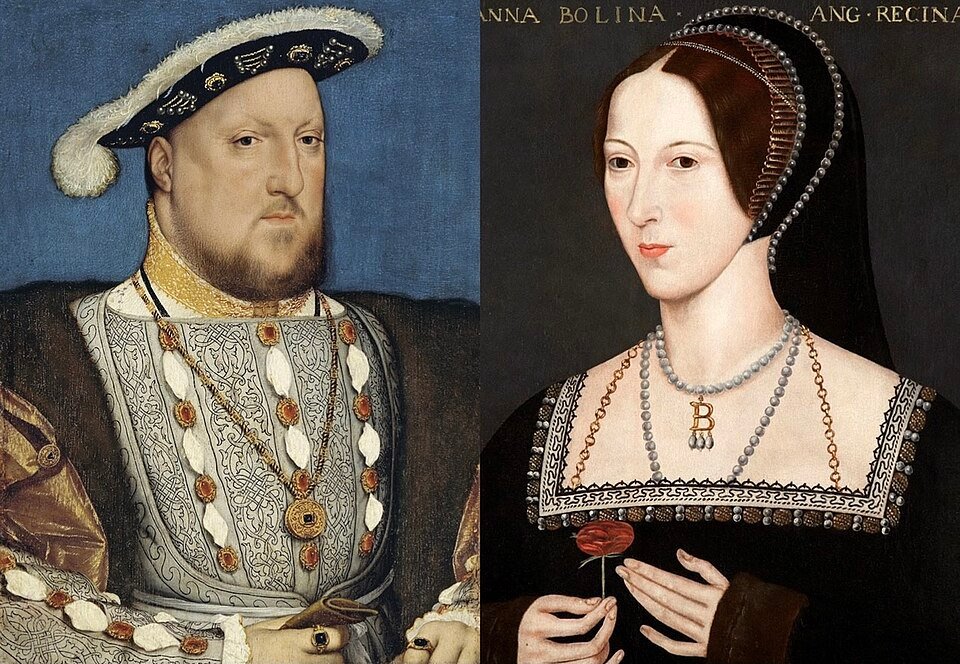
Image credit: Dancingtudorqueen / CC BY-SA 4.0 (via Wikimedia Commons)
Now, Henry had become disenchanted with that marriage. He desperately wanted a male heir, and Anne had failed him. Instead, a few months after their marriage, she gave birth to a daughter, Elizabeth Tudor. Henry was so outraged he refused to attend the child’s christening. Then, after a series of miscarriages, the only son Anne was able to deliver was stillborn. Henry VIII was convinced his marriage was cursed and set his eyes on a new, younger woman named Jane Seymour. But he knew he couldn’t divorce Anne without making a fool of himself – at the time of their marriage, he’d publicly stated, as head of the Church of England, that the marriage was permanent and binding.
King Henry was not a man to be deterred by obstacles of any kind. He decided to destroy Anne’s reputation instead, drumming up false charges of adultery and treason. Several innocent men were tortured until they agreed to confess to affairs with the queen. One of the accused was her own brother. There was a trial; the queen was found guilty and sentenced to die.
For her death by beheading, an expert executioner from Calais was called in. Instead of using an ax, as was the practice in England, he would use a sword. Anne was grateful the king had approved the sword, which she found more refined than an ax. She said, perhaps with some irony: “The King has been very good to me. He promoted me from a simple maid to a marchioness. Then he raised me to be a queen. Now he will raise me to be a martyr.”
When Anne arrived at the green, she refused to be blindfolded. The executioner found her so charming and was so unnerved by her lovely expression that he persuaded someone to distract her, so his task would be easier. Then, when she was looking elsewhere, he stole silently up behind her and completed his grim work.
Shortly before her execution, King Henry had visited Anne in her cell in the Tower of London and offered her one last chance: if she agreed to divorce him, to exile herself and her daughter to France, and give up the child’s rights to the throne, he would let her live. Anne Boleyn had refused. She preferred an honorable death to a life of disgrace. More importantly, she had no intention of depriving her daughter Elizabeth of her legitimate birthright. She believed the child would be a queen someday, and she believed she would be a great queen.
With that conviction and faith, Anne Boleyn sacrificed her life. She did not do so in vain. Elizabeth Tudor grew up to become Elizabeth I, queen of England, the most famous monarch in the country’s history. Her achievements in exploration, the arts, and international and domestic politics were so outstanding that her period of reign has ever since been called The Golden Age of England.
Elizabeth Tudor’s childhood and education
Things didn’t look so golden for Queen Elizabeth in that year of 1536. She was barely three when her mother was executed, but no one knows how it affected her; she never mentioned her mother for the rest of her life. Nevertheless, she seemed to learn an important lesson from the treachery that led to her mother’s death and which was such an integral part of England’s royal history. As queen, and even as a young woman, she was known for her cautious and secretive manner and her ability to neutralize potentially dangerous situations.
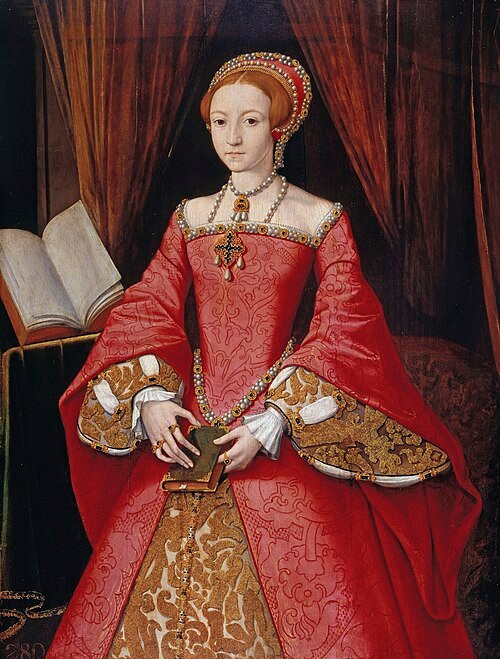
Image credit: Presumably William Scrots / public domain
The day after Anne Boleyn was executed, King Henry VIII married Jane Seymour, and Elizabeth was sent away to a castle in the country. She was under the care of a governess, who complained that the child was neglected by the King and there wasn’t even enough money to buy her clothes. But the neglect lasted only a year – by then Jane Seymour had given birth to a son, Edward, and the king was feeling so happy and benevolent that he summoned Queen Elizabeth back to the palace. Now there were three children – baby Edward, Elizabeth, and her older half-sister, Mary. Mary was the product of King Henry’s marriage to his first wife, Catherine of Aragon. Because he had divorced Catherine, he considered Mary illegitimate and claimed she had no right to the throne. Mary was a Catholic, as her mother had been. Elizabeth was a member of the Church of England, her father’s own creation. All three children would eventually be monarchs.
Back home at the palace, Queen Elizabeth – motherless and ignored by her indifferent father – found solace in books and studying. She was a brilliant student who mastered several languages, the Bible, history, mathematics, geography, and most of the important literature of her time. Her tutor, with sexism typical of the age, said that “Her mind has no womanly weakness; her perseverance is equal to that of a man, and her memory long keeps what it quickly picks up.” When Elizabeth was fourteen, King Henry died, and the crown was passed on to King Edward, who was nine years old. Edward died of consumption only six years later, and the crown went to Elizabeth’s half-sister, Mary Tudor. It was the beginning of a reign that would forever darken England’s history books and earn the queen the nickname Bloody Mary.
Mary I’s reign and the persecution of Protestants
Mary was 37 years old when she became queen. She was a fanatical Catholic who came to the throne with one obsessive goal: to avenge her mother, Catherine of Aragon, the wife King Henry had divorced; and to restore the Roman Catholic Church.
Mary wasted no time. She abolished the Church of England that Henry had established. She banned Protestant prayer books. She revoked the divorce of her parents. And then she launched a brutal and systematic program of oppression and persecution against England’s Protestants. Hundreds of Protestants were burned at the stake. When the Archbishop of Canterbury was tied up and the stakes set afire, he thrust his hands into the flames first, because he had used them, under torture, to sign a document renouncing his Protestant faith.
Mary tried to make Queen Elizabeth worship as a Catholic, but she could never tell if she had been successful. Elizabeth was too cagey. When it was time for Mass, Queen Elizabeth would be too ill to attend. But then she would write to Mary and ask for ornaments for her chapel. Next, she would show up for Catholic service, but she would take on an expression of intense suffering. Queen Elizabeth, as she would do with people all her life, managed to keep Mary guessing.
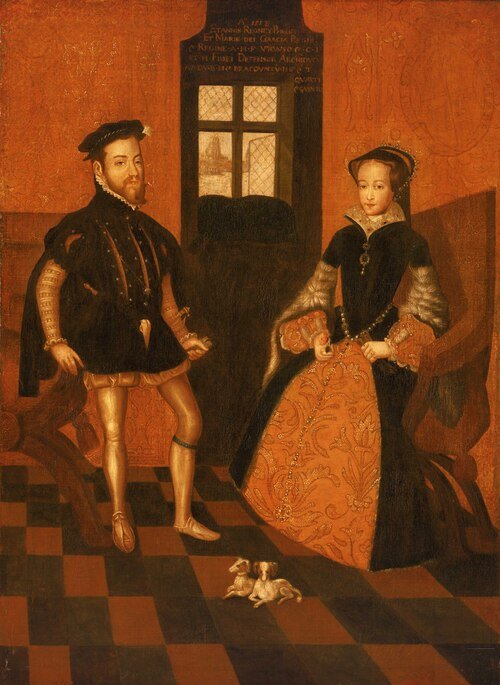
Image credit: British school, probably after Lucas de Heere / public domain
Meanwhile, the English public was thinking more and more favorably of Queen Elizabeth and less favorably of Mary. Not only was Mary annihilating Protestants, but she was considering marriage to Philip II of Spain, and Spain was England’s greatest enemy. Spain, which also ruled Austria, Holland, and South America, was the most powerful country in Europe. Mary was already half Spanish – if she married a Spaniard and had a child, the heir to the throne of England would be three-quarters Spanish, more than the public could bear. But Elizabeth – Elizabeth was one hundred percent pure, unadulterated English.
Mary was unhappily aware of the public sentiment towards her half-sister. When a rebellion broke out in Kent, she accused Queen Elizabeth of conspiring with the rebels and had her taken prisoner. While imprisoned, Elizabeth scratched into the windowsill: “Much suspected of me, Nothing proved can be, Quoth Elizabeth, Prisoner.” A year later, when the rebellions quieted down, Mary called Elizabeth back to court, where they seemed to become friends again. Then Mary alienated her public even further by getting involved in her husband’s war against France, losing, in the process, the last piece of English territory on the continent of Europe. When Mary died a few years later, England was at one of the lowest points in its history. It had no prestige abroad. There was strife at home. The treasury was exhausted. The throne automatically went to Queen Elizabeth, and as it did, the hopes of the English people soared. Queen Elizabeth didn’t fail them – by the end of her reign, England would be the wealthiest, most powerful nation in the world.
Queen Elizabeth I is crowned queen
The red-haired, golden-eyed, radiant Queen Elizabeth was crowned queen in Westminster Abbey in 1559 when she was 25 years old. She wore white, crimson, and gold robes and left her long hair streaming free down her back. Afterward, she rode through the streets of London, through the cheering crowds, chanting “Time. Time has brought me here.” Ships on the River Thames fired cannons in salute and guns responded from atop the Tower of London. The bloody reign of Mary was ended.
Elizabeth I’s religious settlement
As queen, Elizabeth’s first act was to end the religious discord. She once again made the Church of England, founded by her father, the official state church, thereby pleasing the majority of England’s citizens. She issued an official English prayer book that combined both Catholic and Protestant texts so all would be satisfied. And although she enacted laws that were pro-Protestant and reduced the power of Catholics, under Queen Elizabeth there was no persecution of either Catholics or Protestants. In the 45 years of Elizabeth’s reign, fewer people died in religious conflicts than in the three years Mary was queen. In all that time, Queen Elizabeth burned only four men at the stake, and although that seems like four too many by today’s standards, by the standards of the 1600’s it was almost negligible. The four who died were Anabaptists, believers in total social equality, a concept that would have meant their deaths in any Christian country of the time. England’s religious conflicts were temporarily resolved, giving the country time to heal, grow, and prosper.
A capable young queen and her advisor William Cecil
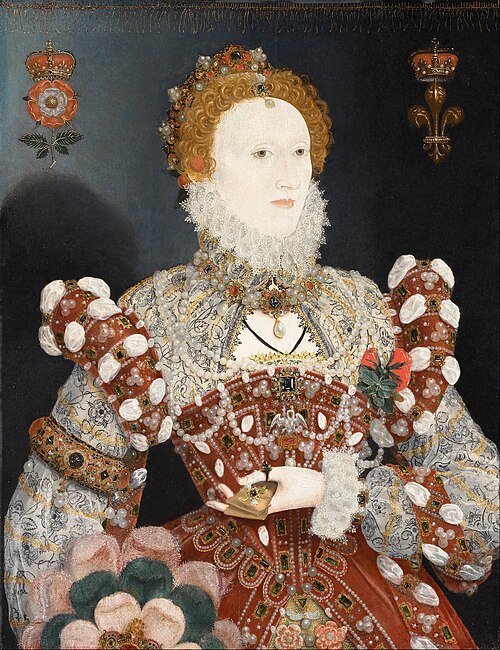
Image credit: Nicholas Hilliard (called) (1547 – 1619) / public domain
In her first year, Queen Elizabeth also made brilliant appointments that had much to do with her later success. The most important of these was Sir William Cecil, her chief advisor, who worked with her through her entire reign. She gave Cecil’s opinions the utmost respect and consideration, but in the end, all decisions were made by her alone. An envoy who met her early during her reign said: “She gives her orders and has her way as absolutely as her father did.” People often compared Elizabeth’s temperament to her father’s, as she did.
She refused to allow Parliament, or the public, to discredit her based on gender, saying: “I know I have but the body of a weak and feeble woman, but I have the heart and stomach of a king, and of a king of England, too.”
Young as she was, Queen Elizabeth immediately proved herself a competent and capable monarch. One nobleman described her this way:
“All her faculties were in motion, and every motion seemed a well-guided action; her eye was set upon one, her ear listened to another, her judgment ran upon a third, to a fourth she addressed her speech; her spirit seemed to be everywhere, and yet so entire in herself as it seemed to be nowhere else.”
The Virgin Queen: why Elizabeth I never married
It wasn’t long before the English developed genuine affection and regard for their new queen, whom they called “Good Queen Bess.” And she seemed to have genuine regard and affection for them. What frustrated everybody was her lack of affection for any particular male. All her advisors and most of her subjects were anxious for Queen Elizabeth to marry. If she didn’t marry and produce an heir, the throne would go next to her cousin, Mary Stuart, known as Mary Queen of Scots. And Mary was a Catholic. The English feared another reign of terror like the one of the first Mary, Elizabeth’s sister.
But Queen Elizabeth was as clever about the husband issue as she was on every other issue. She promised her advisors she would consider marriage. For years she encouraged dozens of royal suitors, often playing them against each other. She flirted, she granted and rescinded favors, she basked in their attention, she never said no, and she never said yes. But in the end, she never married. Well aware of what marriage had meant for her mother, she chose instead to reap the political rewards of remaining single. Her entire life, Queen Elizabeth was very proud of her well-preserved chastity. As a result, she was known the world over as The Virgin Queen.
The queen’s character and her love for Robert Dudley
Queen Elizabeth may have been a virgin, but there was certainly nothing cold or puritanical about her. She was coquettish and vain, had her father’s fiery temper, spent a fortune on her lavish wardrobe and jewels, loved to dance, was a skilled sportswoman with a particular taste for falconry and stag hunting, and was a scholar and a charming conversationalist. She could also, when the occasion arose, swear like a sailor. Furthermore, she was pretty, as her mother had been – flaming hair, fair white skin, and golden eyes. Men were attracted to her, not just for her position, but for who she was.
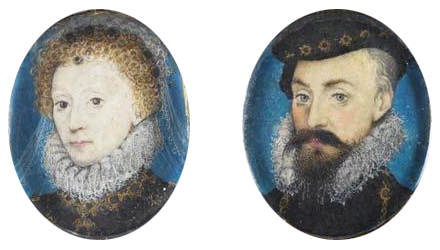
Image credit: Nicholas Hilliard (1547–1619) / public domain
Even a woman committed to virginity can fall in love, and Queen Elizabeth fell in love several times. Her first lover and truest love was a handsome commoner named Robert Dudley, who also happened to be a married man. The romance lasted for many years until Dudley’s wife died under mysterious circumstances; she was found at the bottom of a staircase with a broken neck. No one saw the accident, and historians now believe Mrs. Dudley committed suicide. But at the time, there was gossip that Dudley had murdered her. If Queen Elizabeth had ever considered marrying him, the scandal put an end to it. Although the romance continued for several years, Dudley eventually remarried, and Elizabeth, angry at first, later forgave him and even made him an earl – the Earl of Leicester. When Elizabeth was once very ill with smallpox and not expected to live, she was said to have sworn that she loved the Earl deeply but, God as her witness, “nothing improper had ever passed between them.” It was critical to Queen Elizabeth that she always have an absolutely untarnished reputation in matters of the opposite sex.
Queen Elizabeth treated her lovers with affection and generosity, but she never allowed them to forget her position. Once, when Dudley stepped over the line, she was heard to say: “God’s death! My Lord, I will have here but one mistress and no master.” Queen Elizabeth was too bright not to realize that a husband, even a commoner, would try to usurp some of her power. But more importantly, as she said many times, she considered herself to be the bride, the mother, and the daughter of England.
Elizabeth I and Mary, Queen of Scots
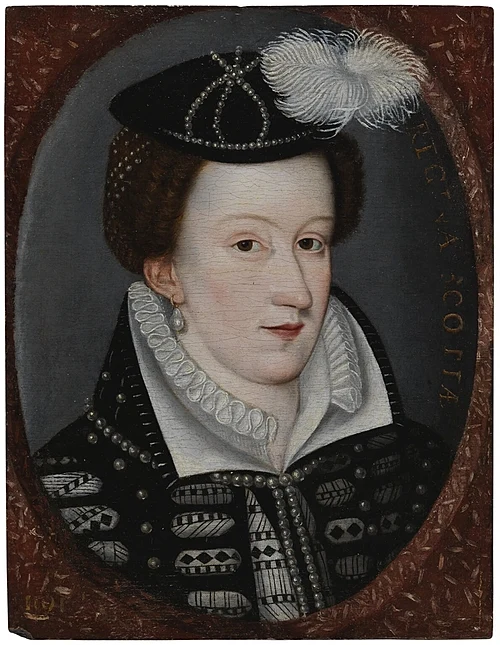
Image credit: National Portrait Gallery / public domain
In 1566, when Queen Elizabeth was 33, her cousin Mary Queen of Scots gave birth to a son and heir. Elizabeth was filled with anguish; she feared that a male heir would strengthen Mary’s claim to the throne. That claim was already a fairly strong one because Mary was a not-so-distant relative of Henry VII. But the little male heir was only the start of Elizabeth’s problems. Two years later, Mary’s Protestant subjects forced her to give up her throne, and her husband, an ambitious English Lord, deserted her. So Mary moved to England. There, powerful Catholic leaders persuaded her to join their plot to overthrow Elizabeth and make Mary queen. As Elizabeth was being excommunicated from the Catholic Church, Mary Stuart’s followers were raising questions about the Queen’s legitimacy. She was born out of wedlock, they claimed; therefore, she had no right to the crown. Queen Elizabeth responded by having Mary imprisoned. Yet even with Mary under arrest, the charges and plots continued. Elizabeth never visited Mary in prison, so afraid was she that her determination would falter. Her advisors tried to persuade her to have Mary executed, but for twenty years Elizabeth refused. Then, in 1587, when she was 54 years old, she was finally forced to make the fateful decision. Letters were found proving Mary’s involvement in a plot to kill Elizabeth. She was tried and convicted, and Parliament petitioned Elizabeth to have her executed. There were many petitions to save Mary’s life, including one from her son, James VI of Scotland. Elizabeth responded by writing to him: “By saving of her life they would have had mine. Do I not make myself a goodly prey for every wretch to devour?” At first, Elizabeth hesitated to sign the warrant for Mary’s death, but the pressure on her was too great. She signed the warrant, but then she refused to give the order to have it sent. A council of her closest advisors then decided to take matters into its own hands. They had the order relayed to the prison, and Mary was executed three days later. When Queen Elizabeth found out, she was horrified. It’s said that she wept bitterly and claimed she never intended the order to go through. Later, she imprisoned the messenger who delivered it. Some say this was a performance to appease the Catholic monarchs of Europe who were sure to be outraged by the execution. Others say it was typical of Queen Elizabeth to stall for time by signing the warrant, while meanwhile trying to find a solution that pleased everyone. It may be that all views are right. It may be that she knew in her heart what she had to do, and still abhorred it. Mary was a woman and a queen like her. There was undoubtedly much sympathy along with the fear, and much regret along with the reprisal.
When Mary was led to her execution, she held a crucifix and a prayer book and two rosaries hung at her waist. Guards found her little pet dog huddling among her skirts and had to forcibly remove him. Mary fell to her knees in prayer and was then asked to lay her head on the block. When the severed head was held up for all to see, its lips were still moving. After she was dead, her dog ran back and lay himself down against her body until, covered with blood, he had to be removed once again and washed.
Mary Queen of Scots was gone, but a new enemy rose to take her place. Spain began preparing to invade England.
Elizabeth I and the defeat of the Spanish Armada
There had been tension between Spain and England for many years. While Spain had been colonizing the New World, England had been raiding its galleons and gaining power over Spanish trade routes. In 1588, when Queen Elizabeth was 55, the famous Spanish Armada set out from Lisbon and headed towards England. King Philip of Spain, who had once proposed to Queen Elizabeth and been rejected, had one simple goal: to defeat Elizabeth’s forces and proclaim himself king. Philip, a Catholic, would then reinstate the Catholic Church as the official state religion.
News that Spain’s 130 warships were on their way reached Queen Elizabeth quickly. The news also reached her that there was a vast army waiting in the Netherlands to be picked up by the Armada.
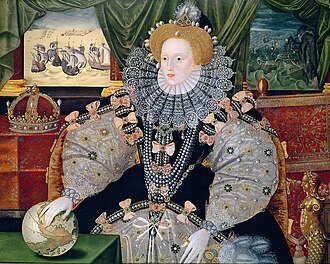
Image credit: Formerly attributed to George Gower (1540–1596) / public domain
England had no army; Queen Elizabeth always released it in times of peace. Furthermore, England’s navy was only half the size of Spain’s. To add to these disadvantages were occult prophecies that had predicted 1588 would be a fateful year. Popular astrologers and scholars had declared it was the final year of the historical cycle that began with Christ’s birth. And that year there had been an eclipse of the moon that coincided with the start of Elizabeth’s own ruling sign, Virgo. All of this influenced the queen. But what influenced her the most was her own consistent desire for peace. As a queen, Elizabeth had studiously avoided international conflicts and war. She had chosen to remain as detached as possible from the intrigues and hostilities of other European nations. Always, she had tried negotiation and appeasement first. This time, she knew her choice would have to be different. England would have to defend itself.
Queen Elizabeth refused to be discouraged by what seemed to be overwhelming odds against her. She knew the English ships were smaller and quicker. They were also longer and could carry more guns. And her officers and men were exceptionally skilled. First, she levied an emergency tax and gathered the funds to finance an army, under the direction of her long-time friend Robert Dudley, the Earl of Leicester. Then she marshaled her best navy captains – Sir Francis Drake, Sir John Hawkins, and Charles Howard, whom she made commander of the fleet.
As the notorious Armada sailed closer and closer, she visited her troops in person, dressed in full armor over a velvet white dress and mounted on a white horse. She told them: “I have always placed my strength in the loyal hearts of my subjects. I am resolved to live or die among you, to lay down for God, for my kingdom, and for my people, my honor and my blood, even in the dust.”
It had been five centuries since England had been invaded, but its people had not lost their spirit nor their valor. The English met the Armada in the English Channel and fought aggressively for a week. But when the Spanish fleet reached Calais, it was virtually unharmed. Commander Howard sent eight fire ships crashing into the anchored Spanish fleet, and several ships went up in flames. The Spanish panicked, and in the battle that followed, the English sank several more ships. It was a stunning and surprising victory. The Spanish Armada fled for home, but it was driven by gales into the North Sea. Many more ships were wrecked in the storm, and by the time the mighty Armada limped into port in Spain, only 67 of the original 130 ships had survived.
The Spanish Armada had been defeated. From that point on, the power of Spain, which for many years had seemed invincible, began to decline. Overnight, England had established itself as a major naval power and had assured its survival as an independent Protestant nation.
England’s war with Spain continued until after Elizabeth’s death, but never again was the security of the island threatened, and never again did any European country consider England anything less than a formidable opponent.
The people of England were jubilant over their victory and the courageous leadership of their “Good Queen Bess.” Queen Elizabeth too was jubilant, but her joy was shattered a week later by the death of Robert Dudley, the Earl of Leicester, and her friend for over thirty years. For the rest of her life, she kept his last letter, written only a week before he died, in a box under her bed. Across the envelope, she had scrawled “His last letter.” She was said to take the letter out and weep over it for many years after his passing.
Queen Elizabeth I’s later years and the Earl of Essex
Queen Elizabeth was now almost 56, and she was lonely. She attached herself to the Earl’s stepson, Robert Devereaux, Earl of Essex, a charming but ambitious 21-year-old, who distinguished himself in many battles but was known for his rashness as much as his bravery. Elizabeth fairly doted on the handsome young Earl. He proposed to her several times, and always she put him off. Devereaux became more and more resentful, and the arguments between them escalated. The impulsive Earl developed a habit of ignoring the queen’s commands and taking charge of matters himself. When he disobeyed her orders while trying to subdue a rebellion in Ireland, Elizabeth had him put under house arrest. Essex then came up with the extraordinary idea of capturing the Tower, the City of London, and the Court at Whitehall, and taking Elizabeth prisoner to force her to give him the position of Lord Protector. He even bribed the actors at the Globe Theater to put on a production of Shakespeare’s Richard II, a story about a rebellion against an unfit monarch. Elizabeth finally lost her patience and summoned Essex to court to defend himself. Essex never showed up. Next, Elizabeth sent the Lord Keeper to bring him to court, but Essex took the Keeper’s men prisoner. It was too much for even the patient and often forgiving Elizabeth. Hiding her emotions, she said only: “He has, at last, revealed what was long on his mind.” Essex was declared a traitor and was executed at the Tower shortly after. Queen Elizabeth had sanctioned the death of her last suitor and the son of the man she had most loved.
The Golden Age of England: art, exploration, and Shakespeare
Elizabeth’s final years were truly the Golden Age of her reign. Under her leadership, England broadened its trade and exploration, while at home, there was a flowering of cultural and artistic talent. The English explored the coasts of South and North America, establishing their first colonies in the New World. Sir Walter Raleigh founded one in what is now the state of Virginia, named after Elizabeth, the “Virgin Queen.” The scholars, musicians, and poets who graced this age are too numerous to mention, but writers alone included Edmund Spenser, poet; Francis Bacon, essayist; Christopher Marlowe, author of Doctor Faustus; Ben Jonson, dramatist; and William Shakespeare, poet, playwright, and the greatest writer in the English language. Today the term “Elizabethan Age” still evokes creative genius and the highest intellectual and artistic achievements. Queen Elizabeth herself was their greatest patron, and many of Shakespeare’s plays were performed at her request, at court. It’s believed that the play Twelfth Night was written expressly for her. She also kept a court orchestra and encouraged artists and portrait painters, many of whom used the Queen herself as their subject. This, she delighted in, for one of Queen Elizabeth’s character flaws was her great vanity.
As she grew older, Queen Elizabeth began to despair at the passing of time. She took to wearing red wigs and thick white make-up. Finally, when even the wigs and make-up couldn’t conceal her age, she ordered all mirrors in the palace removed. She was, said Sir Walter Raleigh, “a lady surprised by the time.” A nobleman who had visited her in these later years wrote a description of his Queen: “The many evil plots and designs have overcome all her Highness’ sweet temper. She walks much in her chamber, and stamps with her feet at ill news, and thrusts her rusty sword at a time into the air in a great rage. The dangers are over, and yet she always keeps a sword by her table.”
The death of Queen Elizabeth I
In 1603, when she was 70 years old, Queen Elizabeth came down with a cold and fever. Instead of taking to bed, as the doctors advised her, she began to put her affairs in order. She named her successor – James Stuart, the son of Mary, Queen of Scots, whom she’d ordered executed sixteen years before. Unlike his mother, James was a Protestant. Then Queen Elizabeth sent for the Archbishop of Canterbury so he could prepare her for death. She died in her sleep a short time later on March 24, 1603.
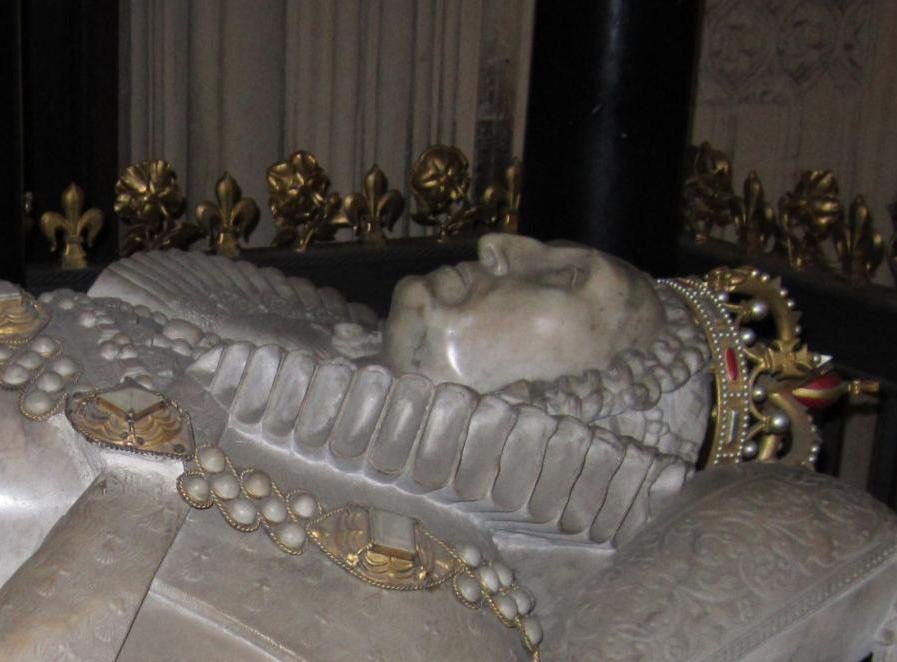
Image credit: Jacob Truedson Demitz for Ristesson History / public domain
Many of the thousands of English who came out to mourn her passing had been born and raised under her reign – Queen Elizabeth was the only monarch they had ever known.
In her last great speech, made two years before her death, the Queen had told her people: “There will never be a queen that will sit in my seat with more zeal to my country, care for my subjects, and that will sooner with willingness venture her life for your good and safety than myself. For it is my desire to live nor reign no longer than my life and reign shall be for your good. And though you have had, and may have, many princes more mighty and wise sitting in this seat, yet you never had, nor shall have, and that will be more careful and loving.”
Queen Elizabeth I’s legacy
For the most part, history has confirmed Elizabeth’s own view of herself…even though by modern standards, the Golden Age of Queen Elizabeth was not entirely golden. In some ways, it was almost barbaric. Rivals were tortured, assassinated, or executed; there were masses of the poor whose quality of life never improved, conditions were unsanitary, and the mortality rate was high. Yet despite these conditions, which were so typical of the times throughout the world, Elizabeth’s contributions were immense.
She gave her country a welcome period of peace and prosperity. She mediated hostilities with other countries and engaged in war only for self-defense. By quickly resolving the religious tensions between Protestants and Catholics at home, England avoided the civil wars that ravaged other European countries. In restoring peace, Queen Elizabeth created an atmosphere in which England was able to experience its own late Renaissance, where the arts and human thought were able to flourish.
She took the throne at one of England’s most desperate hours when there was division and no unified sense of purpose. It was Queen Elizabeth who created a national identity for England. She transformed it from a small, unimportant country into a world power; she built it into a major cultural center; she made it a nation of greater tolerance and harmony. These remain some of England’s defining characteristics even today. As an individual, she also personified what came to be her country’s greatest attributes – she was educated and literate; she was careful but courageous; she sought peace but fought valiantly when peace was unattainable. She defined England not just through her actions but through her very personality. Few monarchs have so shaped and formed their country’s character and future as did Good Queen Bess. And few women have had the chance to prove that in cleverness, courage, and inspired leadership; they are surely equal to men.
References:
- Jones, Norman. The Birth of the Elizabethan Age: England in the 1560s (Blackwell, 1993);
- Borman, Tracy. The Stolen Crown: Treachery, Deceit, and the Death of the Tudor Dynasty. Atlantic Monthly Press 2025
- Elizabeth I (2002). Elizabeth I: Collected Works. University of Chicago Press;
- Doran, Susan (1996), Monarchy and Matrimony: The Courtships of Elizabeth I, London: Routledge,
- Susan M. Felch, ed. Elizabeth I and Her Age (Norton Critical Editions) (2009);
- Collinson, Patrick. “Elizabeth I and the verdicts of history,” Historical Research, Nov 2003
- Dunn, Jane (2003). Elizabeth and Mary: Cousins, Rivals, Queens. London: HarperCollins.
- Guy, John (2004), My Heart is My Own: The Life of Mary Queen of Scots, London and New York: Fourth Estate
- McLaren, A. N. (1999). Political Culture in the Reign of Elizabeth I: Queen and Commonwealth, 1558–1585. Cambridge University Press.

