

Cover image: Smallpox vaccine and equipment for administering it – James Gathany / public domain
Table of Contents
The history of vaccines is really the story of how we learned to beat diseases that once killed millions — and it kicks off with a piece of good news that kind of got lost in everything else going on. Thanks to the long-term implementation of the polio vaccination program (polio), a serious disease that claimed thousands of young lives, the World Health Organization announced on August 25 that the African continent has finally been freed from this plague. Since no recent cases of the disease have been reported over the past three years, it was officially confirmed this summer that we have eradicated poliovirus across all 47 African countries.
The news of historical significance for the Black Continent is only the latest confirmation – amid the pandemic of the new infectious disease Covid-19 – that one of the masterworks of civilization, artificial immunization, is still of fundamental importance for human life and health. Collective vaccination has freed the global population from many consequential diseases in the last two centuries, and the world is still today, on the threshold of the third decade of the 21st century, placing all hopes in scientists who are developing some new, sophisticated vaccines to stop the coronavirus.
Where the history of vaccines begins
Immunization dates back centuries. The first attempts to vaccinate against smallpox (caused by the variola virus) were recorded in the 16th century, in China and India, by variolation (inoculation) – inhaling the powder of dried scabs in people suffering from deadly smallpox. This practice reached Western Europe in the early 18th century but proved to be perilous because, sometimes, instead of protecting against disease, it caused new infections.
Edward Jenner and the first real vaccine
A safer way of inoculation was discovered in the 18th century by the English physician Edward Jenner, a doctor in Berkeley in Gloucestershire, whose experiments are today considered pioneering steps in immunology and preventive medicine. Namely, Jenner noticed that local milkmaids, who often got sick from cowpox, then a relatively common and mostly benign infection, also showed immunity to smallpox.
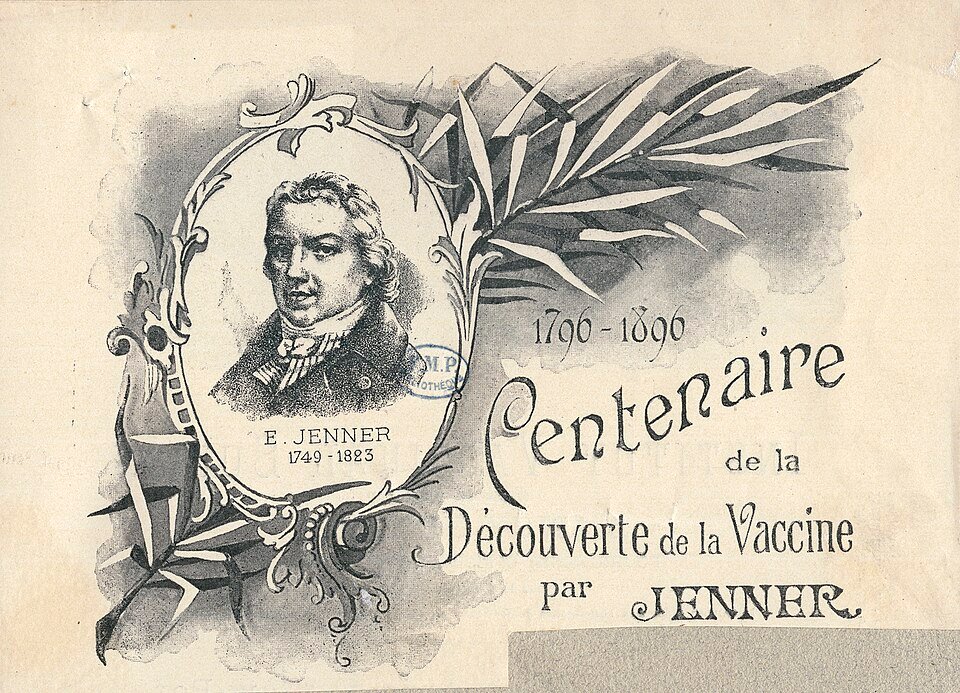
Image credit: Bibliothèque interuniversitaire de Santé
Jenner established the procedure of vaccination by introducing material from a cowpox vesicle on Sarah Nelmes, a milkmaid, into the arm of a boy named James Phipps. Two months later he inoculated the boy with smallpox, and the disease did not develop. In 1798 Jenner published An Inquiry into the Causes and Effects of the Variolae Vaccinae, which created widespread interest. He distinguished ‘true’ and ‘spurious’ cowpox (which did not give the desired effect) and developed an “arm-to-arm” method of propagating the vaccine from the vaccinated individual’s pustule. Early attempts at confirmation were confounded by contamination with smallpox, but despite controversy within the medical profession and religious opposition to the use of animal material, by 1801 his report was translated into six languages and over 100,000 people were vaccinated. The term vaccination was coined in 1800 by the surgeon Richard Dunning in his text Some observations on vaccination.
How vaccination spread around the world
In 1802, the physician Helenus Scott vaccinated dozens of children in Bombay. In the same year Scott penned a letter to the editor in the Bombay Courier, declaring that “We have it now in our power to communicate the benefits of this important discovery to every part of India, perhaps to China and the whole eastern world”. Subsequently vaccination became firmly established in British India. A vaccination campaign was started in the new British colony of Ceylon in 1803. By 1807 the British had vaccinated more than a million Indians and Sri Lankans against smallpox. Following a smallpox epidemic in 1816, the Kingdom of Nepal ordered smallpox vaccine and requested the English veterinarian William Moorcroft to help in launching a vaccination campaign.
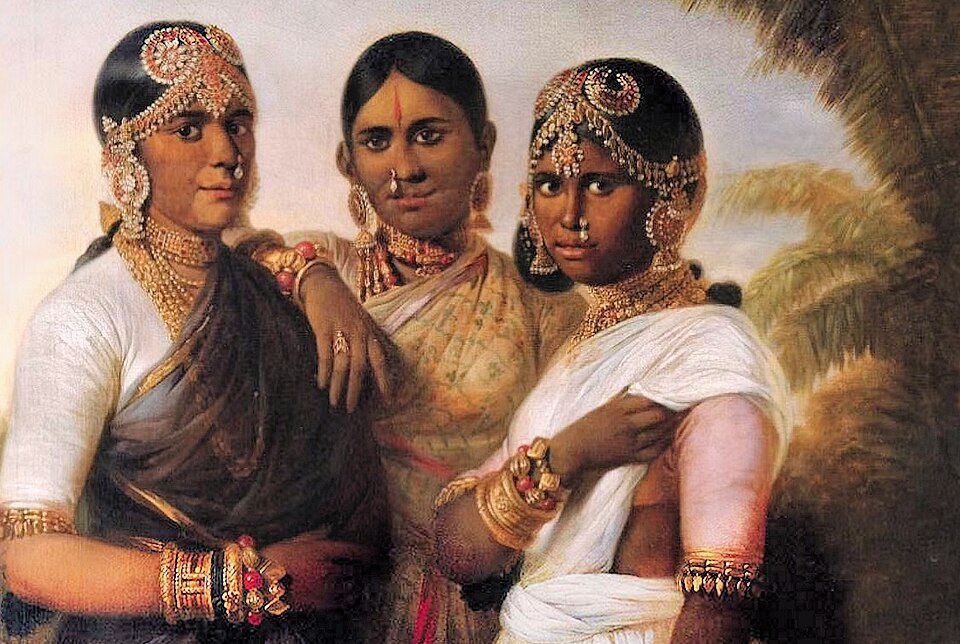
Image credit: Thomas Hickey, 1805 / public domain
In the same year, a law was passed in Sweden to require the vaccination of children against smallpox by the age of two. Prussia briefly introduced compulsory vaccination in 1810 and again in 1815, but decided against a compulsory vaccination law in 1829. A law on compulsory smallpox vaccination was introduced in the Province of Hanover in the 1820s. Following a smallpox epidemic in 1837 that caused 40,000 deaths, the British government initiated a concentrated vaccination policy, starting with the Vaccination Act of 1840, which provided for universal vaccination and prohibited variolation. The Vaccination Act 1853 introduced compulsory smallpox vaccination in England and Wales. The law followed a severe outbreak of smallpox in 1851 and 1852. It provided that the poor law authorities would continue to dispense vaccination to all free of charge, but that records were to be kept on vaccinated children by the network of births registrars. It was accepted at the time that voluntary vaccination had not reduced smallpox mortality, but the Vaccination Act 1853 was so badly implemented that it had little impact on the number of children vaccinated in England and Wales.
The end of smallpox
Smallpox is the first disease caused by a viral infection, which has been globally eradicated by vaccination. However, it took over 200 years from the first, Jenner’s inoculation, for the disease, which lasted for 3,000 years and decimated humanity, to be completely eradicated by implementing the world vaccination program. We diagnosed the last known case of smallpox on October 26, 1977, in Merca, Somalia. The World Health Organization declared smallpox eradicated in 1980.
Pasteur and the rise of modern vaccines
Unlike smallpox, which enabled human immunization against a related and far more dangerous human disease, some infectious diseases are fatal to both animals and humans, and alternative ways of immunization against such viral and bacterial infections were sought during the next century. Less than a hundred years after Edward Jenner started vaccination, the French microbiologist and chemist Louis Pasteur improved it with an alternative method. When a boy was injured by an angry dog, Pasteur saved his life in 1885 by injecting him with the rabies virus for 13 days, but in a very weakened form. The therapy proved successful, and Pasteur called the applied drug a vaccine against rabies. Thanks to Pasteur, the terms vaccine and vaccination later became common names for a series of preventive therapies against infectious diseases in which weakened living or dead viruses and bacteria are used as agents. A vaccine against cholera was developed by Waldemar Haffkine in 1892, a vaccine against typhoid fever in 1896, and the development of the plague vaccine began in 1897.
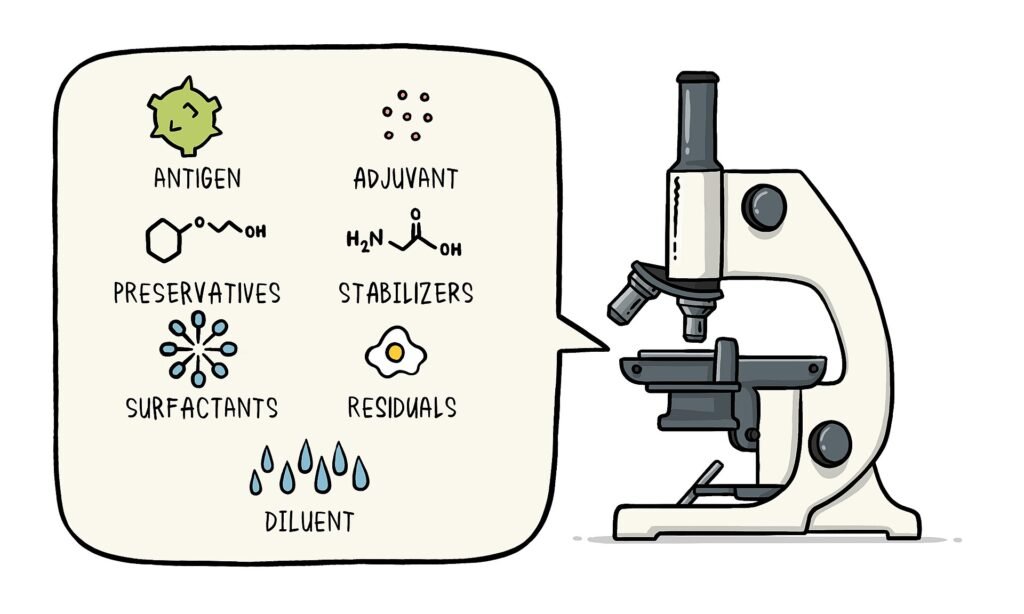
Image credit: World Health Organization / CC BY-SA 3.0 (via Wikimedia Commons)
During the 19th century, scientists realized that immunization could be achieved by using a dead virus or bacteria, as well as by using a weakened pathogen. In the first case, the organism that comes into contact with the dead virus will recognize it during a “live” attack, while the weakened virus is harmless and allows the organism to “train” the immune defense against the same virus in full force.
A hundred years of the BCG vaccine
Advances in science in the first half of the 20th century led to the development of several new vaccines: against the great cough or whooping cough 1914, against tuberculosis 1921, against now-forgotten diphtheria 1926, tetanus 1938, influenza 1945, and against mumps 1948. Like their predecessor and compatriot Louis Pasteur, two Frenchmen, bacteriologist Albert Calmette and veterinarian Camille Guerin, developed a vaccine against the disease – the famous BCG (Bacillus Calmette-Guerin), which was first used, similarly, with the help of a weakened tuberculosis bacillus, exactly one century ago.
The science behind BCG
The history of BCG is tied to that of smallpox. By 1865 Jean Antoine Villemin had demonstrated that rabbits could be infected with tuberculosis from humans; by 1868 he had found that rabbits could be infected with tuberculosis from cows, and that rabbits could be infected with tuberculosis from other rabbits. Thus, he concluded that tuberculosis was transmitted via some unidentified microorganism (or “virus”, as he called it). In 1882, Robert Koch regarded human and bovine tuberculosis as identical. But in 1895, Theobald Smith presented differences between human and bovine tuberculosis, which he reported to Koch. By 1901, Koch distinguished Mycobacterium bovis from Mycobacterium tuberculosis. Following the success of vaccination in preventing smallpox, established during the 18th century, scientists thought to find a corollary in tuberculosis by drawing a parallel between bovine tuberculosis and cowpox: it was hypothesized that infection with bovine tuberculosis might protect against infection with human tuberculosis. In the late 19th century, clinical trials using M. bovis were conducted in Italy with disastrous results, because M. bovis was found to be just as virulent as M. tuberculosis.
Albert Calmette, a French physician and bacteriologist, and his assistant and later colleague, Camille Guérin, a veterinarian, were working at the Institut Pasteur de Lille (Lille, France) in 1908. Their work included subculturing virulent strains of the tuberculosis bacillus and testing different culture media. They noted a glycerin-bile-potato mixture grew bacilli that seemed less virulent, and changed the course of their research to see if repeated subculturing would produce a strain that was attenuated enough to be considered for use as a vaccine. The BCG strain was isolated after subculturing 239 times during 13 years from a virulent strain on glycerine potato medium. The research continued throughout World War I until 1919, when the now avirulent bacilli were unable to cause tuberculosis disease in research animals. Calmette and Guérin transferred to the Paris Pasteur Institute in 1919. The BCG vaccine was first used in humans in 1921.
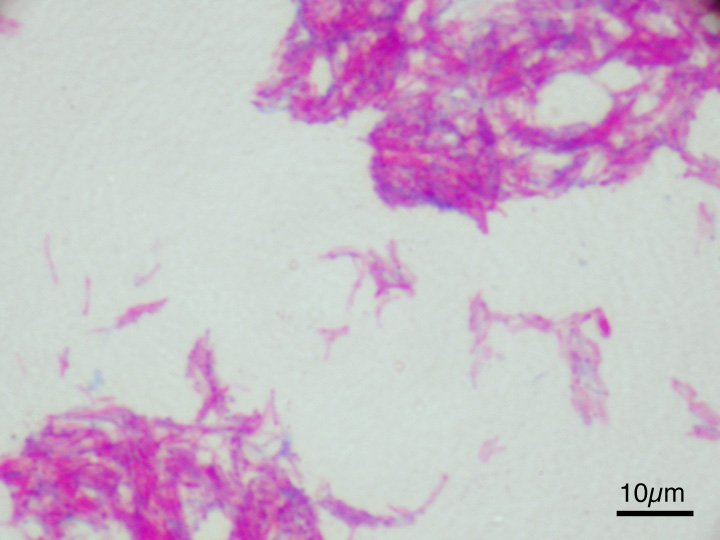
Image credit: Y tambe / CC BY-SA 3.0 (via Wikimedia Commons)
The Lübeck tragedy and a rocky start
Public acceptance was slow, and one disaster, in particular, did much to harm public acceptance of the vaccine. In the summer of 1930 in Lübeck, 251 infants were vaccinated in the first 10 days of life; almost all developed tuberculosis and 72 infants died. It was subsequently discovered that the BCG administered there had been contaminated with a virulent strain that was being stored in the same incubator, which led to legal action against the manufacturers of the vaccine.
Dr. R. G. Ferguson, working at the Fort Qu’Appelle Sanatorium in Saskatchewan, was among the pioneers in developing the practice of vaccination against tuberculosis. In 1928, BCG was adopted by the Health Committee of the League of Nations (predecessor to the World Health Organization (WHO)). Because of opposition, however, it only became widely used after World War II. From 1945 to 1948, relief organizations (International Tuberculosis Campaign or Joint Enterprises) vaccinated over eight million babies in Eastern Europe and prevented the predicted typical increase of TB after a major war.
Many studies have linked BCG to an unexpectedly large reduction in overall mortality in vaccinated children under the age of five, and this year it has been linked to some form of protection against more severe forms of Covid-19, in countries where it has been mandatory for decades.
The first combination vaccine
Before we developed the diphtheria vaccine in the 1920s, the disease was one of the deadliest infectious diseases in history and one of the leading causes of death in young children. It was fatal in adults in five to ten percent of cases, but a significantly higher mortality rate was recorded in the youngest. Epidemics that occurred in the United States and Europe before vaccination had a mortality rate of up to 40 percent.
Physiologists developed the first diphtheria vaccine during the second decade of the 20th century, based on the work of the German microbiologist Emil von Behring. In Germany alone, over 50,000 children die of diphtheria each year. Behring, who discovered an antitoxin, an anti-diphtheria serum, in 1890, received the first Nobel Prize in Medicine in 1901 for this serum therapy. As early as 1891, Behring recorded the first successful use of serum in a child with diphtheria, but in the next few years, the therapy did not give the expected results, since the antitoxin was not applied in sufficient concentration. With the advancement of this medicine, during the first two decades of the 20th century, a vaccine was developed which finally started the successful immunization of children. In the late 1940s, widespread routine administration of the vaccine led to a large drop in diphtheria.
Tetanus and whooping cough
The vaccine against tetanus, an acute infection with the neurotoxin bacterium Clostridium tetani, was developed in 1927 and belongs to the so-called toxoid vaccines that contain inactivated bacterial toxins. The first inactive tetanus toxoid of the mentioned bacterium was discovered and produced in 1924. A more effective, so-called adsorbed version of the vaccine, developed in 1938, proved very effective in preventing tetanus during World War II.
Whooping cough (pertussis) was noticed in the Middle Ages as a disease that mainly affects newborns and small children, and sporadically older children and adults. In the early stages, similar to the common cold, this highly contagious bacterial infection later has a very characteristic cough as a symptom. It is followed by high mortality – according to statistics from the 20th century, up to 10 percent. So far, two vaccines have been designed to fight whooping cough, one in 1939 and the other in 1981, but neither has eradicated the disease, and both have been accompanied by fear of side effects. This previously well-controlled disease has begun to return, in some countries, in cycles every two to five years. There are several hypotheses about the reasons for that, among others, that the vaccine has less effective long-term protection, which declines after five to 10 years.
The first combined vaccine for pediatric use, licensed in 1947, comprised diphtheria and tetanus toxoid vaccine. Two years later, the vaccine against whooping cough was added to this mixture, and since 1949 it has been used as a DTP (diphtheria-tetanus-pertussis) formulation, which is still used today.
Fighting influenza and polio
Research into the possibility of developing a flu vaccine began only in 1933, a full 15 years after the catastrophic pandemic of the influenza A virus (Spanish flu) in 1918; the isolation of such tiny particles as nanometer viruses had to wait for the discovery of more advanced microscopic technology. After the isolation of the influenza virus (type A) in 1933, the American virologist and epidemiologist T. Francis and his British colleague W. Smith transmitted the virus to mice, and in 1935 Smith and F.M. Burnet separately discovered that the influenza virus could be bred on the membrane of fertilized hen eggs. The discovery of this procedure, which is still used today for the production of most influenza vaccines, then enabled researchers to study the characteristics of the virus and to later develop inactivated (dead) vaccines.
In 1936, the first antibodies to influenza virus infection were isolated, and in 1940, the influenza B virus. In the meantime, T. Francis and J. Salk, leading researchers at the University of Michigan, developed the first inactivated influenza vaccine with US support. The Army joined the research after the tragic experience of losing many soldiers during the 1918 pandemic. While this first vaccine contained only inactivated influenza A virus, a bivalent vaccine with both strains of influenza virus was developed in 1942 after the discovery of type B virus. The first approved inactivated influenza vaccines, which were used by the American army in the Second World War, have been used in the civilian population since 1945. The first attenuated live flu vaccine was approved in 2003.
Taking on polio: Salk and Sabin
The poliovirus, which has plagued the world since ancient times, is characterized by attacking only humans. It can damage movement control neurons and cause partial or complete paralysis. In the first decades of the 20th century, it appeared in major epidemics in the United States and Europe. Among his victims was US President Franklin D. Roosevelt, who was diagnosed with polio in 1921, at the age of 39. In 1938, Roosevelt founded the National Foundation for Infantile Paralysis. Poliomyelitis was almost completely eradicated in the second half of the 20th century, thanks to the research work of two Americans, Dr. Jonas Salk and Dr. Albert Sabin. Salk’s vaccine, approved in 1955, is based on a dead poliovirus (inactivated in formalin), while Sabin’s, which replaced it in 1962, used a weakened strain of the virus. The development of these vaccines resulted in the first modern mass vaccination against the disease.
Dr. Salk began testing his IPV (inactivated polio vaccine) in 1953, on himself, his wife and three sons, and on a few former patients with polio. The initial results were promising, and in 1954 the first large clinical trial of the vaccine was started on more than a million participants. It was also the first so-called “double-blind” placebo-controlled trial, which would later become the standard in vaccine development. But a few weeks later, reports of vaccinated children rose – as many as 250 fresh cases. The investigation showed that in part of the pharmaceutical industry, in the Cutter laboratories, there was a failure in production and that, instead of the “dead”, a live strain of poliovirus was found in their vaccines. Namely, the state did not prescribe regulations intended for vaccine manufacturers, which changed quickly after the Cutter Incident.
Dr. Salk’s professional rival, virologist Dr. Albert Sabin, considered the inactivated viral vaccine dangerous and worked on a vaccine made from an active but weakened virus. By 1963, Sabin had developed an oral vaccine based on live viruses for all three types of poliovirus. Sabin’s version of the vaccine was cheaper and easier to produce, and in the United States it soon supplanted the Salk vaccine. In 1972, Sabin donated his weakened strains of the vaccine virus to the World Health Organization (WHO), which increased the availability of the vaccine in underdeveloped countries, making Sabin’s OPV (oral polio vaccine) crucial in reducing the number of polio cases in the world.
Pushing polio to the brink of eradication
Thanks to mass vaccination in the mid-1950s, the incidence of poliomyelitis declined rapidly in many industrialized countries. The member states of the Pan American Health Organization in 1985 set a goal to eliminate poliomyelitis from the Western Hemisphere by 1990 and implemented a strategy that included expanding vaccination coverage and strengthening surveillance of suspected cases, using additional actions such as national immunization days (vaccination from house to house). In 1994, the International Commission confirmed that we had achieved the goal. Following the example of the American continent, in 1988 the WHO launched an initiative to eradicate poliovirus from the entire planet, with the target year of 2000. A coalition of international organizations implemented the initiative, including the WHO, the United Nations Children’s Fund (UNICEF), the CDC, Rotary International, the Bill and Melinda Gates Foundation, and Gavi (Global Alliance for Vaccines and Immunization). Until then, polio caused by poliovirus had affected hundreds of thousands of people in over 125 countries. Thanks to immunization, by 2019, that number had been reduced to only 125 cases, which is a decrease of over 99 percent compared to 1988. The Global Polio Eradication Certification Commission declared type 2 poliovirus eradicated in 2015, and type 3 poliovirus eradicated in 2019.
New vaccine technology
In the sixties of the last century, vaccines against measles, mumps, and rubella were developed, and three viruses were caused by infectious diseases. In the United States, the first two measles vaccines – one live attenuated, and one inactivated – from different manufacturers, were approved for use in 1963. Four years later, the first vaccine against mumps was approved, developed by the famous American microbiologist Maurice Hilleman. He was the creator of 40 vaccines, including eight that are part of the recommended vaccination program in the United States. After the first (weakened live) rubella vaccine was licensed in 1969, Hilleman developed a combination of live attenuated measles, mumps, and rubella vaccines in 1971 as part of a unique, safe, and effective MMR vaccine.
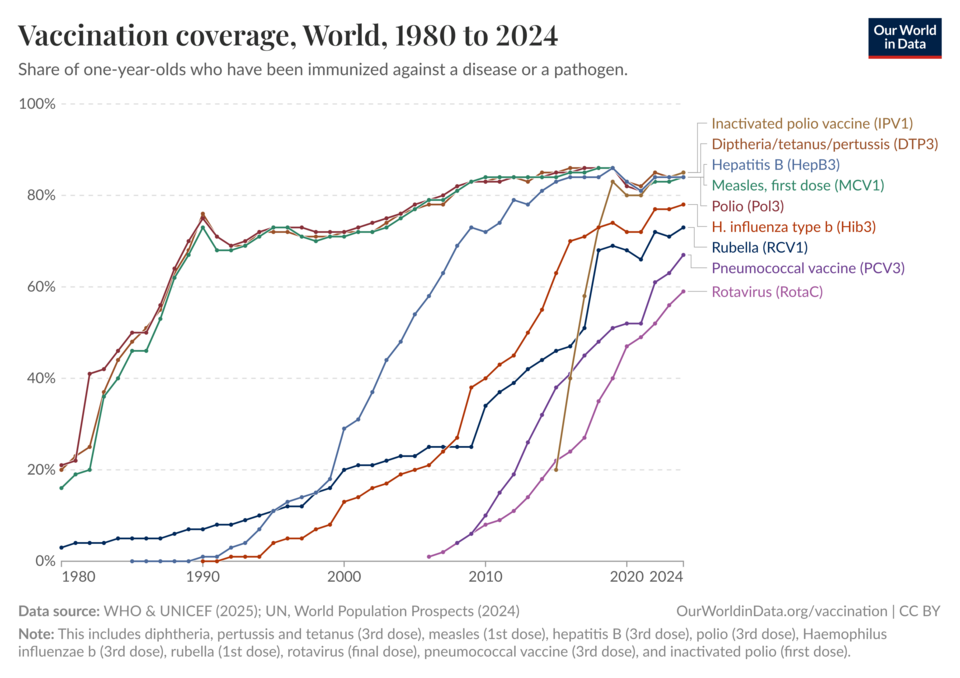
Image credit: Our World in Data / CC BY-SA 4.0 (via Wikimedia Commons)
Using just a piece of the pathogen
In the second half of the 20th century, researchers realized it was unnecessary to use a complete virus or bacterium as a vaccine, but that a part of them could also serve that purpose. It has been shown that it suffices to use an extracted protein from a pathogen, which can also teach the immune system to recognize and kill the virus or bacterium from which it originates. With viral diseases, vaccines against hepatitis B (from 1981), herpes zoster, and human papillomavirus (HPV) have been developed with this technology, and in bacterial diseases, vaccines against diphtheria, tetanus, and whooping cough. Also, in the mid-1980s, the first vaccine developed by genetic engineering, based on recombinant DNA (rDNA), which was obtained by laboratory gene recombination, was approved. Thus, in 1986, the first recombinant hepatitis B vaccine was developed.
Hib, HIV, HPV, and Ebola
The vaccine against Haemophilus influenzae type b (Hib), the main cause of invasive bacterial meningitis and pneumonia in children, was the first of a new class of protein-polysaccharide vaccines, which increase the immunogenicity of bacterial polysaccharides by so-called protein carrier conjugation. An additional advantage of conjugated vaccines is their ability to provoke immune memory and reduce the proportion of asymptomatic carriers of bacteria, which gives a distinct collective immunity. Before introducing this so-called conjugate vaccine, the deadly bacterium, despite antibiotic therapies, claimed thousands of children’s lives. According to the WHO, since introducing the Hib vaccine, bacterial meningitis from Hib has practically disappeared in large parts of Europe, America, and Australia.
In the early 1990s, the first experimental evidence was recorded that a protective vaccine against HIV-1, the predominant virus in AIDS patients, could be developed. Although no human vaccine has been developed, hope has been raised that a stage of protection in chimpanzees has been provided by a recombinant vaccine based on the HIV-1 gp120 antigen, and aluminum salt as an adjuvant. Two decades later, the human vaccine marked RV144 completed a phase III clinical trial whose results, reported in 2009, showed small signs of protective efficacy in humans. Although the results were very modest, they were, after a series of unsuccessful projects, a great incentive for further efforts to develop HIV-1 vaccines. It has been 40 years since the US Centers for Disease Control (CDC) registered the first cases of HIV, which has spread to over 75 million adults, adolescents, and children, and claimed the lives of over 32 million people worldwide. The countries hardest hit by the AIDS pandemic are the countries of sub-Saharan Africa.
Thanks to technological advances that have made it possible for the laboratory to produce particles similar to the human papillomavirus (HPV), a vaccine was developed in the last decade of the 20th century to prevent cancer associated with HPV. The major obstacle to the earlier development of the protective HPV vaccine was that this virus could not be grown in the laboratory, so it was not possible to develop a classic vaccine based on a weakened live or dead virus. However, in 1991, immunologist Ian Frazer used the then relatively new technology of gene expression in cell culture to create so-called HPV16 virus-like particles (VLPs), which are the riskiest of the HPV viruses with regard to cancer.
Two years ago, we licensed the Ebola vaccine. It is a recombinant rVSV-ZEBOV vaccine. During an extensive vaccination program in the Democratic Republic of the Congo, the vaccine has been shown to provide a high level of protection. Before vaccination, unfortunately, thousands of people lost their lives in the catastrophic Ebola epidemic in 2014 and 2015.
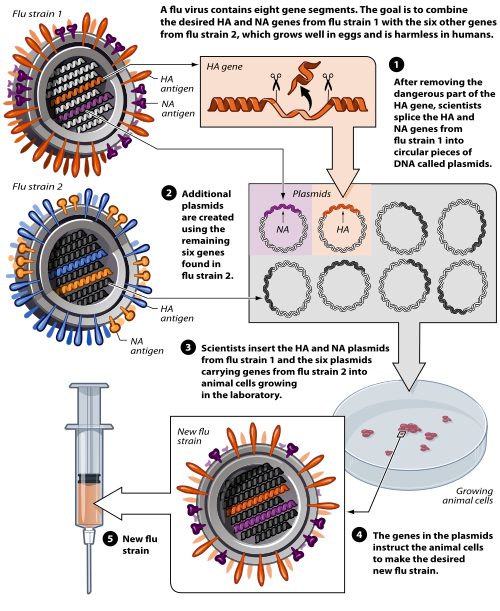
Image credit: Mouagip / public domain
The rise of “fast” vaccines
Since genomes are easily decoded, we have designed vaccines based on the extraction of RNA or DNA from pathogens and injection into the body. These parts of the genetic material inform the cell how to produce protein, otherwise part of the pathogen, but in such a way that it cannot cause disease in the body but sensitize it and stimulate an immune response. Thanks to a new scientific discipline, synthetic biology (SynBio), scientists can download virus sequences from the Internet and chemically synthesize them into a vaccine. Also, synthetic genes enable the design of individualized cancer vaccines for specific DNA sequences of a patient’s tumor.
The American magazine “Nature” writes on that occasion that the H1N1 flu pandemic from 2009 was – at least until 2020 – the fastest global effort in the development of a vaccine, but again not fast enough to stop the pandemic. To speed up the process, U.S. scientists (from Novartis, the J. Craig Venter Institute, and Synthetic Genomics) have used synthetic biology techniques to devise a way to turn genetic sequence data from a new virus into a vaccine candidate – in just a few days. Instead of using killed or weakened viruses, the researchers carefully designed RNA segments that would “teach” the cells in the body to make a protein that mimics part of the target virus and prepare the immune system to attack the real virus if it appears as an aggressor.
In March 2013, when three cases of infection with an extra strain of bird flu appeared in China, the already mentioned team of American researchers immediately took action. They downloaded virus gene sequences from the Internet and, within a week, chemically synthesized genes encoding vaccine antigens and developed a fully synthetic RNA-based vaccine. That vaccine candidate quickly proved safe and immunogenic. By the end of that year, Novartis had already begun mass production of the vaccine, allowing the U.S. government to build up a strategic vaccine reserve. Fortunately, that strain of flu did not cause a pandemic. But the rapid development, clinical trials, and stockpiles of effective synthetic bird flu vaccines, according to Nature magazine, have laid the groundwork for today’s efforts to respond to the COVID-19 outbreak as quickly as possible, including the very rapid development of protective vaccines.
References:
- Lombard M, Pastoret PP, Moulin AM (April 2007). “A brief history of vaccines and vaccination”. Revue Scientifique et Technique.;
- “Immunization: The Basics”. Centers for Disease Control and Prevention. 22 November 2022.
- “Herd immunity (Herd protection) | Vaccine Knowledge”;
- Hall E, Wodi AP, Hamborsky J, Morelli V, Schillie S, eds. (2021). Epidemiology and Prevention of Vaccine-Preventable Diseases
- Carroll AE (17 September 2015). “Not Up for Debate: The Science Behind Vaccination”;
- Gellin B (1 June 2000). “Vaccines and Infectious Diseases: Putting Risk into Perspective”;
- Ramsay M, ed. (2013). “Polio: the green book, chapter 26”. Immunisation against infectious disease

