

Cover image: John T. Daniels, public domain
Table of Contents
Otto Lilienthal and the Dream of Human Flight
The Wright Brothers achieved the first powered flight in 1903, but the road to that historic moment began long before them — with a man in Germany who spent twenty years sketching birds.
In a small town in Germany, a man named Otto Lilienthal had been studying and sketching birds for about twenty years. He had dozens of notebooks, all filled with drawings of different birds in flight, of birds, rising, soaring, and landing. There were drawings of the wings of birds too – in various positions, from different angles, overviews, and close-ups. Lilienthal wasn’t an ornithologist; he wasn’t even a scientist. He was a man, like men throughout the ages, who was obsessed with flying. Lilienthal thought that if he observed birds closely enough, someday he’d be able to build a machine that could soar through the air just like they did. Most people thought Lilienthal was crazy – they said that if humans were meant to fly, God would have given them wings. But Lilienthal wasn’t the first to dream of a flying machine. Ever since the ancient Greeks, with their mythical story about Icarus and his waxwings, humanity had dreamed of ways in which it could travel through the air. Back in the 1400s, Leonardo da Vinci had been among the first to draw a model of an airplane. But many years had passed since anyone else had taken the idea as seriously as da Vinci did. That would change when two brothers from Dayton, Ohio set out to achieve what da Vinci had only drawn — the first powered flight in history.
In 1891, after years of careful study, Lilienthal constructed a crude machine similar to a glider. He thrust his arms into some padded tubes and held fast to a crossbar. Then he ran and took off, steering himself by moving his body forward, backward, and side to side. To the delight and amazement of the crowds that came to watch, Lilienthal was able to hover in the air for a while and then make a complete turn. After five years of practicing with his new machine, he decided he was ready for the big step – he was going to build a motor for his glider.
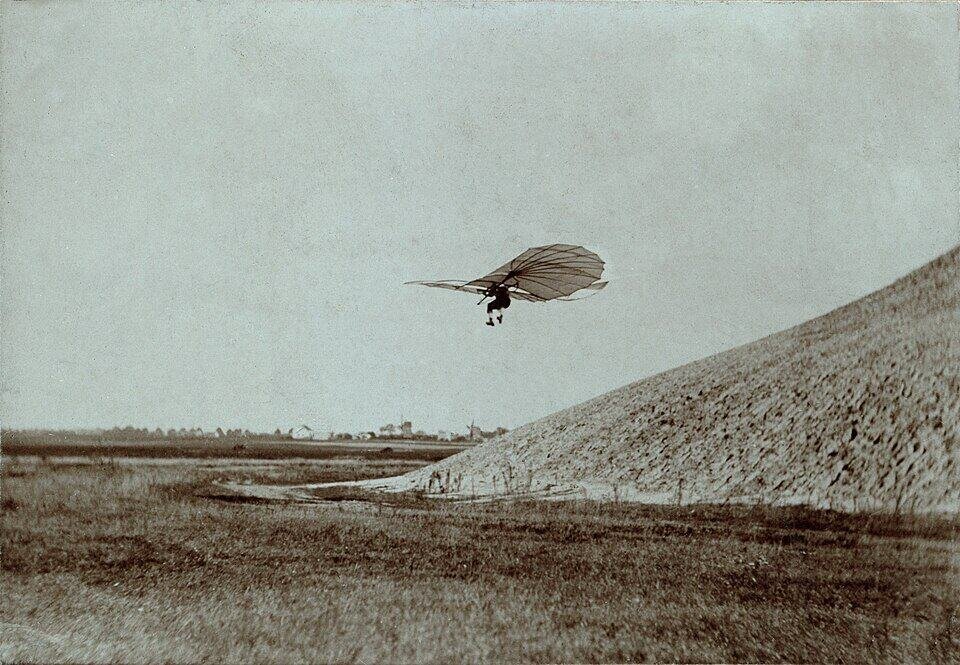
Image credit: Unknown author, public domain
Lilienthal made a small motor, installed it, and announced to the world in 1896 that he was ready. On a summer day, while a crowd watched and held its breath, he took off from the hills outside of Berlin and soared fifty feet into the air. Then the wind stopped. And the motor stalled. And Lilienthal fell crashing to his death. Inscribed on his gravestone was his favorite expression: “Sacrifices must be made.”
Now the public was more skeptical than ever. Lilienthal’s death was only further proof that man wasn’t meant to fly, and any denial of that fate would end in tragedy. People belonged on the ground, and on the sea, but not in the air. This, however, wasn’t the way two young men in America saw it. In Dayton, Ohio, they read the morning news about Lilienthal’s last experiment out loud to each other. They had heard about “the flying man” before – they were fascinated by his work and they were distressed by his death. Right then and there, they made a resolution. They, Wilbur and Orville Wright would finish what Lilienthal had started.
Who Were the Wright Brothers?
Early Life and Entrepreneurial Spirit
Wilbur and Orville were brothers and they did almost everything together, even though there was four years difference between them. Wilbur was born first, April 16, 1867. Orville was born on August 19, 1871. The boys were born in the middle of a family of five children – they were the third and fourth. Their father was a Protestant bishop and a man who believed in encouraging the interests and hobbies of his children. When he saw his two middle sons were interested in anything mechanical, Mr. Wright bought them a toy helicopter made of bamboo, cork, and paper that was propelled by rubber bands. It was one of their first toys and one of their first inspirations. Right away they set out to build their own toy helicopters, but they discovered the bigger they made them the harder it was to get them to fly. As boys, and as adults, the two were so close that Wilbur once said they “lived together, played together, worked together, and in fact thought together.”
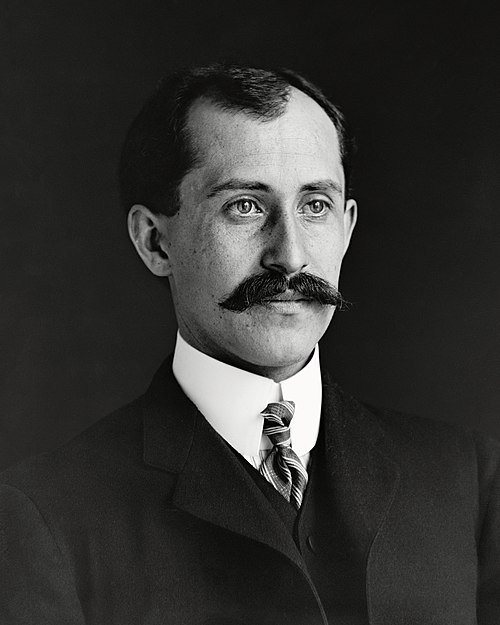
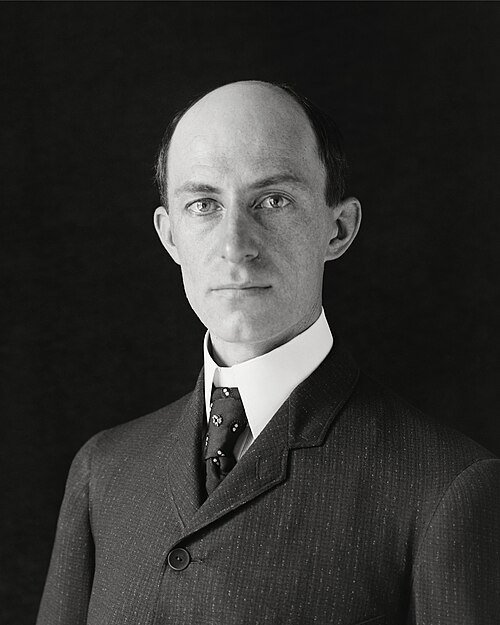
Image credit: Orville Wright and Wilbur Wright (credited as photographers), public domain
Orville was an entrepreneur from an early age. First, he collected scrap metal to sell for extra spending money. When he was only six, he collected bones, which he sold, to a fertilizer factory. Both boys earned pocket money by making homemade mechanical toys. During summers Orville worked for a printer and by the time he was 18, he was a skilled typesetter and was publishing his own weekly newspaper. Neither boy ever received a high school diploma. Wilbur didn’t show up for his commencement exercises, and Orville stayed at home his last year and pursued his own course of subjects. Mr. Wright wanted Wilbur to follow in his footsteps and become a preacher. But both Wilbur and Orville had discovered some anti-religious writings that appealed to them, and both had lost their interest in the church. This persisted into adulthood – they did most things together, and together they declined to attend church.
In 1889 – when Wilbur was 22 and Orville was 18 – their mother died. The two set out on their own, or rather together, and started a printing shop called Wright and Wright. They built their own press and began publishing, among other things, a very progressive weekly journal for black readers. Their eighteen-year-old friend, Paul Laurence Dubar, the only black student at their high school, edited it. A few years later, when Dubar began submitting reams of poetry to the Wrights, they sent the work on to a publishing house. It was the beginning of Dubar’s transformation from an elevator operator, who earned a dollar a week, to a nationally acclaimed writer of poetry and short stories.
The Bicycle Shop and a New Challenge
The printing shop was doing well but the Wright brothers, always fascinated by mechanical devices, found themselves drawn to a popular new American craze – the two-wheeled bicycle. Bicycles had just caught the public fancy when Orville and Wilbur decided to open their own shop for the repair, rental, and sales of two-wheelers. It was the right time and the right idea. The shop was so successful they had to move twice to larger quarters. Eventually, they decided to manufacture their own bikes. They built their own tools to work with and even invented a safety brake for the bikes. Then they delighted everyone in town by building a tandem bike and peddling down the city streets together. By then, Wilbur was 26 and Orville was 22. Both were mechanical geniuses – both loved a challenge – and both were hard workers. In some ways, however, they were different.
Wilbur vs. Orville: Two Brothers, One Vision
Orville, the younger Wright, was outgoing and talkative. He loved parties and social gatherings. Wilbur was quiet and aloof. After they’d become successful, Wilbur was once asked to give a speech at a public gathering. He slowly rose to his feet and said: “I know of only one bird that talks – the parrot. And it is not a good flyer.” Orville was excitable and sometimes lost his temper but Wilbur was calm and levelheaded. Orville was fun-loving and dressed in fancy clothes, but Wilbur was serious and dressed conservatively. They even looked different, although both had blue-gray eyes. Wilbur was tall and slim, Orville a little shorter and rounder. Wilbur was handsome, if severe-looking, with a cleft chin and a receding hairline. Orville had a pleasant but unremarkable face and thick curly hair. Sometimes he wore a mustache. And though they’d both rejected the church, there were traces of their religious upbringing: Neither smoked nor drank, they always observed the Sabbath, and neither ever married. They were so puritanical that they grimaced if men around them swore or made sexual innuendos. And their minds were so naturally connected that sometimes they’d begin humming or whistling the same tune at the same time. The bicycle business was booming by the time Wilbur and Orville picked up their morning paper and read about the death of Otto Lilienthal. It was just the right timing for a new challenge.
From Observation to Engineering: The Science of Flight
Studying Birds and Building Gliders
Once they’d taken up the gauntlet of manned flight, the Wright brothers forged ahead with the same thoroughness and dedication they applied to everything else. First, they wrote to Europe for a copy of Lilienthal’s book. No matter that it was in German – they simply taught themselves the language. Then they read everything they could about aeronautics, even sending to the Smithsonian for a reference list. They had no interest in the hot air balloons or airships so popular in Europe. From the beginning they knew exactly what they wanted to accomplish: they wanted to build a heavier-than-air flying machine, with an engine and propellers that could carry a human being. Like Lilienthal, Wilbur and Orville took up the study of birds. If, while working in the bicycle shop, one spotted a flock of birds flying by he would yell “Birds!” and the other would come running. They’d watch until the birds disappeared from view, then they’d spend the rest of the day discussing the birds’ wings and how the birds balanced themselves. On weekends, they’d lie on their backs in the hills outside of Dayton and watch the buzzards swooping overhead. After a while, they began to make small machines, which they flew in the air like kites.
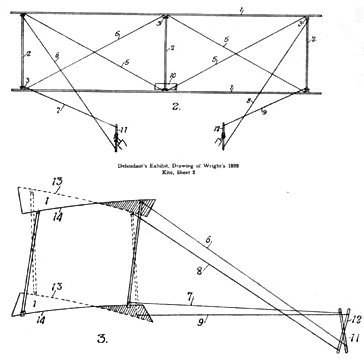
Image credit: Orville Wright, public domain
Three years into their studies, the Wright brothers discovered the missing key in all previous attempts to fly: control. From their study of birds, they’d established three priorities for their flying machine: it must be able to bank to one side or the other; to climb or descend; to steer right or left – and it must be able to perform these operations all at one time. No one before had concentrated on mechanisms for keeping the machine level, for turning or circling it, or for helping it rise and descend. They’d never thought beyond the task of just getting the machine into the air. And so they’d failed. Wilbur and Orville had no intention of failing.
The Wind Tunnel Experiments
With the profits from the bicycle shop to support them, they began building gliders and gradually experimented with different controls. Early on, they realized they would also have to find a place to fly – some outdoor location where the winds were just right and the hills were just high enough to try out their new machines. They sought the advice of others who had experimented with gliders and narrowed their choice down to the coast of North Carolina. Then they asked the U.S. Weather Bureau for input and received a list of locations known for their strong, steady winds. They included: Fremont, California, Elmira, New York, and Kitty Hawk, North Carolina. Kitty Hawk was. They began their experiments on an isolated beach in Kitty Hawk in the year 1900, as a new century was also taking flight. William McKinley was President; there were 8,000 automobiles in America; and Sigmund Freud had just released his masterpiece The Interpretation of Dreams, which included some thoughts about dreams of flying.
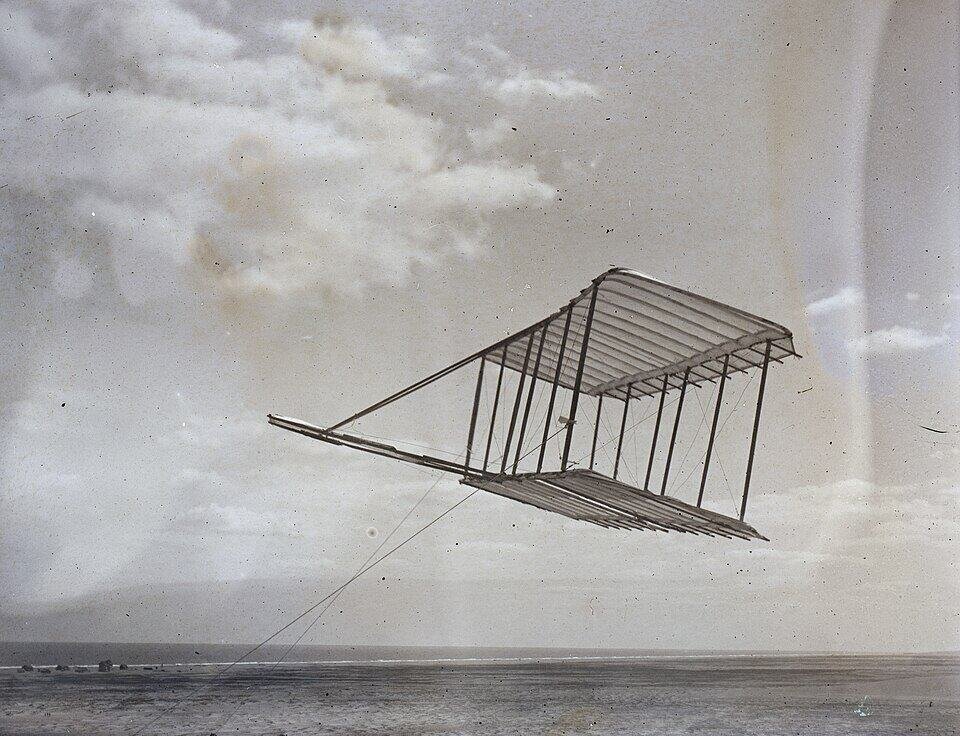
Image credit: Wright brothers, public domain
For their first experiments, the Wright brothers tried lying down in their bi-plane shaped “soaring machine” as they called it because they thought there would be less wind resistance that way. The first machine was a glider, with a rudder in front so they could control the direction of it. One of them would stretch out on a lower wing and hold on. Their first experiments disappointed them – the glider didn’t have the lifting power they had hoped for. They went home and studied the results of their flights and decided the problem was in the shape of the wings. To correct the problem, they built a 6-foot wind tunnel in their shop and tried out over 200 sets of miniature wings until they found a design that worked. Their tests in the wind tunnel enabled them to make the first reliable tables of air pressure on curved surfaces. They said later: “We saw that the calculations upon which flying machines had been based were unreliable and that all were simply groping in the dark…we decided to rely entirely on our own investigations. We had taken up aeronautics as a sport. We reluctantly entered upon the scientific side of it, and we soon found the work so endlessly fascinating that we were drawn into it deeper and deeper.”
The First Powered Flight at Kitty Hawk (1903)
Building The Flyer
With the new tables made from their research, the Wright brothers could design a machine that would fly. They built a new glider based on their discoveries and set out for Kitty Hawk and another series of experiments. This new glider was far more capable than any other glider before it and solved most of the problems of balance that had plagued previous flights. The experiments with the new wings were so successful that Wilbur and Orville decided the time had come to build their first powered airplane. They had more than 700 successful glider flights behind them when they took on this new challenge. They constructed a bi-plane with a total wing area of 400 square feet. The right-wing was four inches longer than the left to give additional lift over the area of the motor. Their use of movable parts in the wings, to help direct the craft, was one of the most important advances in aviation. Like the wings of the buzzards they’d observed in Dayton, the wings on their plane could be twisted to control a roll or bank. The engine, which Orville designed, they had to build themselves. No automobile company would accept the challenge. With the help of a friend, they built a light 12-16 horsepower engine and a propeller. When the “soaring machine” was completed the Wright brothers christened it “The Flyer.” Its wings were 40 and 1/2 feet long and the whole craft, pilot included, weighed 750 pounds. Building it had cost the Wright brothers less than one thousand dollars. On December 17, 1903, they were ready to show The Flyer to the world.
December 17, 1903: 12 Seconds That Changed History
When they arrived back in Kitty Hawk, the Wright brothers had to wait out a series of bad storms before they could schedule a flight. While they waited, they corrected some last-minute defects. They were confident and anxious to prove themselves. They knew the plane’s design was sound and its control system efficient. They also knew they had become skilled pilots – this expertise in aerodynamics and in flying was what set Wilbur and Orville Wright apart from almost all other men who had tried to fly before them.
Finally, the skies parted and the Wright brothers scheduled their first flight. They extended a general invitation to the people of Kitty Hawk to come and watch. Exactly five people and one dog were willing to brave the cold December wind to see the machine fail, which is what they fully expected would happen. Orville and Wilbur refused to wear coats to shield themselves from the cold – they wanted to be as light and flexible as possible. Orville took control of The Flyer and glided along a sixty-foot launching track, while Wilbur watched from nearby. Forty feet down the track; the plane rose ten feet into the air, traveled 120 feet, and landed. The entire flight had taken 12 seconds. For the first time in history, a machine carrying a human being had lifted itself into the air by its own power and had landed intact. At the time, Wilbur was 36 years old and Orville was 32. One of the spectators on the beach that day snapped a now-famous photo just as Orville was lifting into the air, but very few newspapers reported the event. Even those that did wrote inaccurate stories. One said that Orville had flown straight upward for twelve seconds.
There were three more flights that day, with Wilbur and Orville taking turns at the controls. On the last flight, Wilbur piloted The Flyer for 852 feet in the air and remained aloft fifty-nine seconds. Shortly after he landed, a strong gust of wind knocked the machine over, severely damaging it. The brothers took it back to Dayton, where they repaired it in a few days, and then stored it in a shed behind their bicycle shop. It remained there for thirty-four years and Wilbur and Orville never again tried to fly it. They were already looking ahead to a new and better machine.
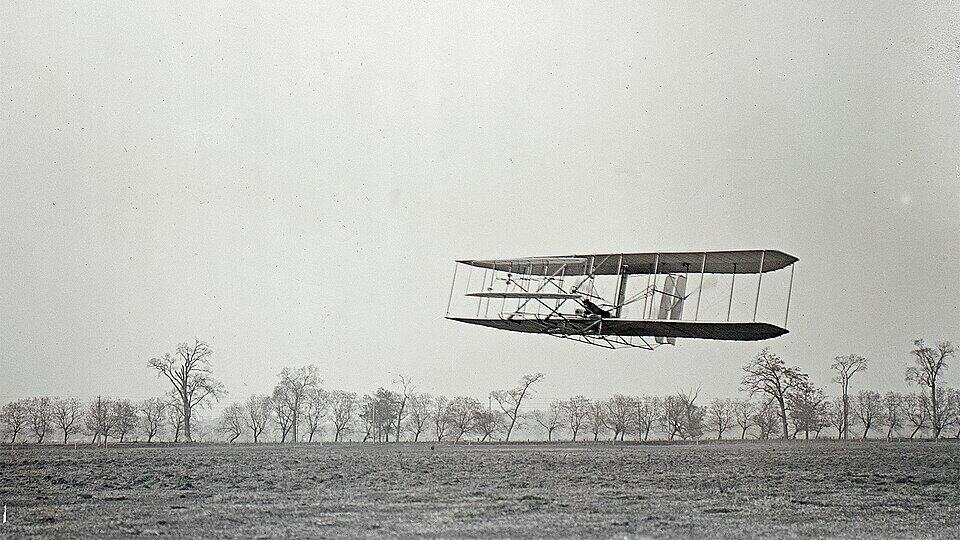
Image credit: Wright Brothers, public domain
Years of Silence: Why Nobody Believed Them
The second Flyer was built and flown on a dairy farm near Dayton. A year after Kitty Hawk, Wilbur and Orville had already taken dozens of flights in their new machine, including two that were five minutes long and reached speeds of 35 miles per hour. Still, the newspapers showed no interest in the Wright Brothers. Puzzled, they released a statement about their achievements to the press. There was hardly a nibble. Other than an article in Popular Science Monthly, the work of the Wright brothers went virtually unnoticed for five years. Most people were still too doubtful about flying machines to take their exploits seriously. Wilbur and Orville worked on, undaunted by the lack of recognition, and convinced that someday airplanes would be an important means of transport for both passengers and mail.
The Wright brothers took their idea to the United States Army, which refused to believe they had something successful enough to merit interest. Frustrated by the indifference of the government, and fearful of industrial espionage, Orville and Wilbur refused to leave the ground for the next two years. They continued to work and build more gliders at home in Dayton, but they worked in quiet and secrecy. Meanwhile, they applied for patents for what they had already accomplished.
The Wright brothers were businessmen, with a practical interest in what they’d discovered. Even when they flew, they wore gray business suits, with high starched collars. Never once did they don overalls or jackets, although they always wore goggles with their suits. Glamour, image, and publicity were never their priorities. After they were famous, they often refused to have their pictures taken and gave interviews begrudgingly. Wilbur said he never opened any of the numerous letters he received because he didn’t want to get into correspondence with anyone. Both men were modest, busy, and indifferent to public reaction to their work. Wilbur was even said to be something of an ascetic – he once commented that it was a mistake to try to be comfortable or happy in life because both would lead to monotony.
Recognition, Demonstrations, and World Fame
Finally, in 1908, Orville and Wilbur were able to make an agreement in Europe for the production of their airplanes. They emerged from their cocoon and began taking their planes on demonstrations throughout the world. Near the Le Mans racecourse in France, they thrilled spectators by performing a figure eight in mid-air. At a military base outside of Washington D.C., they kept a Flyer in the air for one hour and twenty minutes at an altitude of 300 feet. In New York, they flew around the Statue of Liberty, up to Grant’s Tomb, and back. While Wilbur gave exhibitions in Europe, Orville was at home giving exhibitions in the states. By now, the Wrights were famous worldwide, and there was a constant stream of visitors and journalists to their door. After explaining the complicated principles of their machine over and over, the brothers began to answer technical questions with the pat response: “The airplane stays up because it doesn’t have the time to fall.”
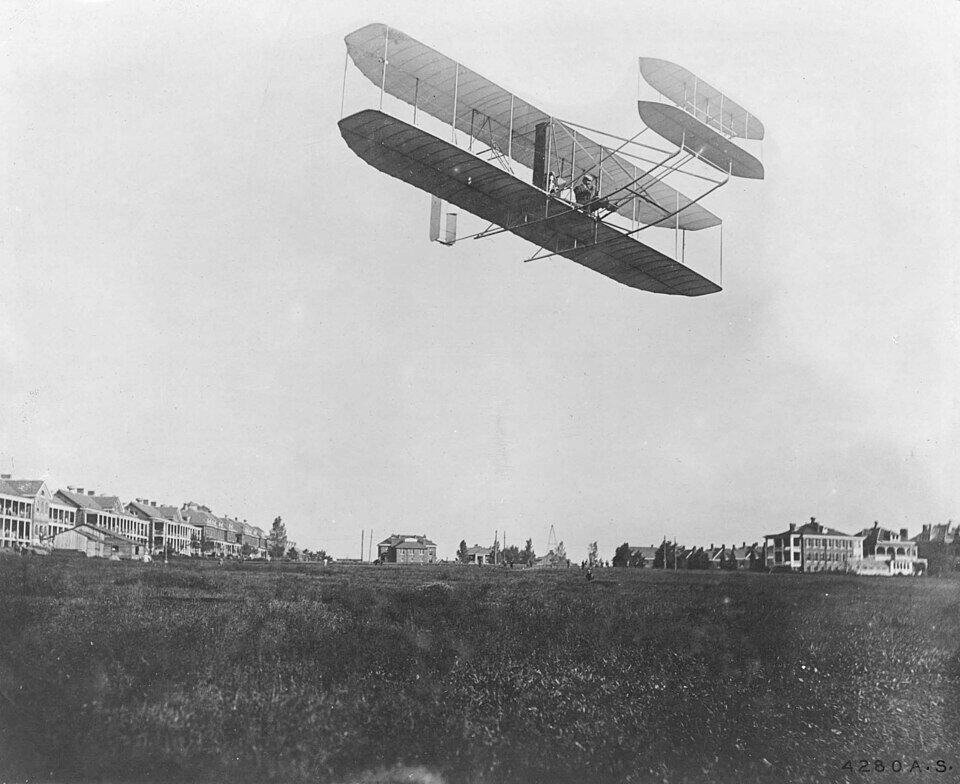
Image credit: Unknown, US Army, public domain
Four years after Kitty Hawk, the Wright brothers contracted with the U.S. Army to build a plane that could carry two passengers, for a flight of 125 miles. By the time they were 42 and 38 years old, they were part owners in airplane manufacturing companies in both France and the United States. Now, whenever they conducted an experiment at Kitty Hawk, there were large numbers of reporters on hand and lengthy articles in the national press.
The Accident That Didn’t Stop Them
Once while Wilbur was in France, Orville was flying at an altitude of 75 feet when a propeller blade struck and loosened a wire of the rear rudder. The wire wrapped around the blade, snapping it in the middle. The machine couldn’t be controlled. It plummeted to the ground, with Orville in the pilot’s seat and Lieutenant Thomas E. Selfridge in the passenger seat. When they were pulled from the wreckage, Orville had a broken thigh and two broken ribs. Selfridge had a skull fracture and died three hours later. The accident – the only serious one in their career – never affected their spirits. Within a year Orville was fully recovered and back in the pilot’s seat, after passing official tests that showed no signs of nervousness.
The only other trouble the Wright brothers had, once they were established, was the constant barrage of lawsuits, infringements on their patents, trouble with imitators, and public claims by people who insisted they had discovered the airplane first. It was a hardship that many inventors, including Alexander Graham Bell, also had to endure. Although others had been working on the invention of the airplane at the same time the Wright brothers were, there was never any serious doubt that they had been the first to build and fly one successfully. They came out victorious in every single claim and lawsuit.
In their later years together, Wilbur and Orville backed off a little on invention and spent much of their time giving flying lessons to others, many of who became famous in the field of aviation and exhibition flying. Through all this Orville and Wilbur had continued to live in the family home in Dayton, along with their father and their unmarried sister Katharine, who was a schoolteacher. But as they became more successful, they hired an architect to design their own house – a large brick mansion on seventeen acres of land in a suburb outside of Dayton. They would, of course, live there together. That, at least, was the plan. But before the house could be finished, Wilbur died of typhoid fever – on May 29, 1912, at the age of 45. There were 25,000 people at the funeral and Wilbur’s father read a eulogy that said in part: “In memory and intelligence, there was none like him. He systemized everything. His wit was quick and keen. He could say or write anything he wanted to…but he was modest.”
Orville moved into the big new house in the suburbs alone. He would continue 36 more years without his brother, conducting experiments on his own flight designs, alone, in his laboratory, and serving as a consultant to manufacturers. He rarely left his home and didn’t answer letters. Reporters who were granted interviews had a hard time – they said he was colorless, flat, and had nothing much to say. It was a different Orville from the man who was known for his chattiness and sociability when his brother was alive.
The Wright Brothers’ Legacy
One of the greatest hopes of Orville and Wilbur Wright had been that their flying machine would put an end to the war. They had imagined that the airplane would enable nations to keep a closer eye on each other, and that war activities would be detected and stopped before they escalated. It was one of the greatest frustrations of Orville’s life to see in both world wars that the airplane had instead become an instrument of destruction. Like Einstein, he suffered the horror of knowing that what he’d invented for the benefit of humanity had become a source of terror instead.
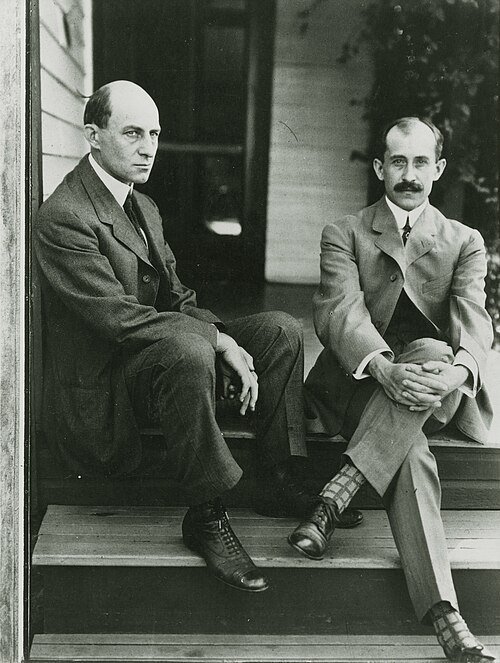
Image credit: Smithsonian’s National Air and Space Museum, public domain
Orville Wright was in his laboratory office on January 27, 1948, when he suffered a heart attack and was rushed to the hospital. He died three days later at the age of 77. As his funeral procession made its way to the cemetery, four jet planes flew overhead in a five-plane formation. The fifth missing plane was a tribute to the loss of the first man who had designed, built, and flown the first true airplane.
The original Flyer – now known as the Kitty Hawk – that carried Orville and Wilbur aloft on that historic day in 1903, is now the property of the Smithsonian Institution. Orville had originally sent it to the Science Museum in London, at its request, and London sent it back to the United States in 1948.
The Smithsonian crafted an exact duplicate of The Flyer, which is now on display in its National Air and Space Museum. Also on display in that museum is the space capsule that landed three men on the moon in July of 1969. In only 66 years, the United States had progressed from a 12-second flight over Kitty Hawk, North Carolina to an eight-day journey to the moon and back. During all those years, between The Flyer and The Eagle, there were other discoveries, new records, and brilliant ideas that built on the foundation lay by Orville and Wilbur Wright. There was the first flight across the ocean, the first across the nation, the first to circumnavigate the globe, the first passenger flight, the first jet, and still more. The spirit of invention and exploration so well embodied by the Wright brothers gained more and more momentum until finally, humanity was flying faster and farther than anyone had ever thought possible.
The monument to the Wright brothers erected at Kitty Hawk says they accomplished their historic feat “by dauntless resolution and unconquerable faith.” To resolution and faith, one could add intensive labor and study. The Wright brothers belonged to that unique category of 20th-century American inventors who, like Edison and Ford, relied little on formal education and training. They educated and trained themselves. If they needed information, they found it in books. If they needed advice, they talked to the experts. If they needed data, they experimented. If they needed materials, they built them. They were resourceful, self-motivated, and completely undeterred by obstacles. But most of all, they were willing to work. They poured huge amounts of time and energy into their ideas, without any thought of rest or escape. Not only did neither of them marry but neither of them even had a romance. Their sole consuming passion was the airplane. Because of that passion, they led humankind into the age that for thousands of years had been one of its fondest dreams and fantasies – the age of flight.
References:
- Anderson, John D. Inventing Flight: The Wright Brothers and Their Predecessors;
- Ash, Russell (1974). The Wright Brothers. London: Wayland;
- “Inventing a flying machine – the breakthrough concept”. The Wright Brothers and the invention of the aerial age. The Smithsonian Institution.
- Hise, Phaedra. “In Search of the Real Wright Flyer.” Air&Space/Smithsonian, January 2003;
- Mikesh, Robert C. and Tom D. Crouch. “Restoration: The Wright Flyer.”
- Padfield, Gareth D.; Lawrence, Ben (December 2003). “The birth of flight control: An engineering analysis of the Wright brothers’ 1902 glider”
- Combs, Harry (1979). Kill Devil Hill: Discovering the Secret of the Wright Brothers. Englewood, Colorado

