

Cover image: Foobar, licensed under CC BY 3.0.
The Discovery of Gallium by Paul Emile Lecoq de Boisbaudran
The chemical element with atomic number 31 was officially discovered in 1875 by the French chemist Paul Emile Lecoq de Boisbaudran, first by a spectroscopic analysis of impurities within the relatively common mineral sphalerite in nature, and then by direct electrolysis of the base containing it. It was named after the old name for France – Gaul – to the delight of the then, predominantly nationalist, French and European public (its first neighbor in atomic number and today’s close relative in the world of semiconductor electronics, germanium, was isolated ten years later, in 1886, of course in Germany). Although it has a relatively low atomic number, gallium is very rare in nature – world production is still, despite the enormous demand for gallium-arsenide chips, only about a few hundred tons a year. Gallium does not exist in the free state, and the concentration in minerals is insignificant (that is the reason for its late discovery). When Mendeleev proposed his periodic table, he noted gaps in the table and predicted that then-unknown Elements existed with properties appropriate to fill those gaps. As with the other five gaps in the table, it was clear to Mendeleev that it was a still undiscovered chemical element. Considering its position just below aluminum, Mendeleev gave it its preliminary name eka-aluminum.
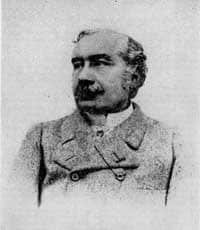
A well-known and very instructive story says Boisbaudran received a letter from distant St. Petersburg just a few weeks after he presented his discovery of a new element to the academic public in Paris. In the letter, Mendeleev personally congratulates him on the discovery of eka-aluminum but warns him that in the announcement of the discovery, he made a mistake in the atomic weight and density of the newly discovered element. Mendeleev then states the exact values of these physical properties of gallium. Boisbaudran was justifiably afraid that Mendeleev had overtaken him and that Mendeleev was the first to isolate gallium. A controversy ensued in the chemical journals in which the Frenchman was eventually forced to admit an error that resulted from insufficient laboratory measurements: gallium had those properties that Mendeleev suggested. However, Boisbaudran’s laboratory (and national) priority in isolating the additional element was not compromised. Mendeleev did not possess a speck of gallium, nor did he try to isolate it at all. And yet, he knew not only the specific weight and density of the unknown element but also its melting point, electrical and thermal conductivity. Also, Mendeleev measured the properties of some of its simpler compounds, such as Ga2O3 oxide!
Pattern Recognition at the Highest Level in Chemistry
Once we emancipate ourselves from naive empiricism, things get simple. Mendeleev was not in vain the most eminent chemist of his time, together with Lavoisier in the 18th and Pauling in the 20th century perhaps, the most significant of all time. He understood the purpose of scientific theory, how every great synthetic discovery, like the periodic table elements, can draw accurate and far-reaching predictions. The power of hypothesis serves to explain the phenomena we see around us and to make predictions of new, as yet unseen phenomena. If the theory is good and its user is capable, there is no reason for the accuracy of the prediction to lag behind the accuracy of laboratory measurements. The elementary parameters of gallium, which were in question, are a consequence of the place where it is placed in the periodic table of elements, that is, in the final analysis of its atomic number. Mendeleev arranged the chemical elements known at that time according to certain regularities. He was not so self-centered as to believe that all the chemical elements discovered by his time were really all that exists and that scientists have isolated. On the contrary, he expected the existence of an undiscovered field in the table, on which gallium was later found. The same regularity that made the table such a grand achievement also dictated its properties.
Mendeleev’s Prediction: Eka-Aluminum and the Unknown Element

Image credit: Best Sci-Fatcs / CC BY-SA 4.0 (via Wikimedia Commons)
And not only that: in developing his theoretical framework, Mendeleev predicted not only the existence of gallium but also 5 other elements, which today bear the names scandium, germanium, technetium, protactinium, and hafnium. Gallium was the first element discovered after the appearance of the periodic table. Technetium, detected in 1937, is a chemical element with the symbol Tc and atomic number 43. It is practically non-existent on our planet. It is a radioactive element with a short half-life period (naturally occurs only as part of a long chain of nuclear reactions of decay of heavier elements, mostly uranium). Mendeleev gave temporary names to all the “not yet found” Elements. Those names indicated their position below some known Elements in the periodic table (by adding the prefix eka for an ordinal number from Sanskrit).
Mendeleev’s predictions are thus among the most spectacular – and therefore insufficiently known outside the world of chemistry – predictions in the entire history of science. Perhaps they are much more impressive than the usually cited cases of predicting celestial phenomena based on classical Newtonian mechanics, and even than Le Verrier’s dramatic prediction of the existence of a new planet, Neptune. Arguments for this assessment can be found in the fact that at the time of the success of celestial mechanics, few suspected the existence of some new physics that would be the foundation of the then-known celestial mechanics. Even, as we saw with the false planet Vulcan, Newtonian ideas led to systematic errors in cases where, as it turned out, “new physics” was necessary. However, Mendeleev himself was among the first to seek – without success – something he even called Newtonian chemistry. He searched for the fundamental dynamic laws that underlie the then-known chemistry, above all his own periodic table. Today we realize the time was simply not yet ripe for that. Almost four years after Mendeleev’s death, Rutherford (1911) performed famous experiments with an alpha-particle scattering in which he showed that atoms comprise negative electrons and a positive nucleus, with a lot of empty space in between. And only a year later, Niels Bohr set up his first model of the atom based on quantum physics, which represented a scientific revolution in full swing. A few decades later, Mendeleev’s twentieth-century successor, the great Linus Pauling, used the ideas of quantum mechanics to offer a modern theory of chemical bonding and thus offer the first thorough explanation of the existence of molecules.
But the fact that only an insight into the structure of atoms that came with the advent of quantum physics made it possible to explain the existence of atoms of various chemical elements seemingly only makes the matter even more mysterious. How was Mendeleev, without understanding the correct dynamics of Atoms, able to make such detailed predictions of the properties of elements? One part of the explanation lies in his great courage, which he also showed on other occasions, in presenting radical hypotheses, opinions, and attitudes (remember his famous and current statement regarding fossil fuels that “burning oil as a fuel is like burning an oven with banknotes”). But that can’t be all.
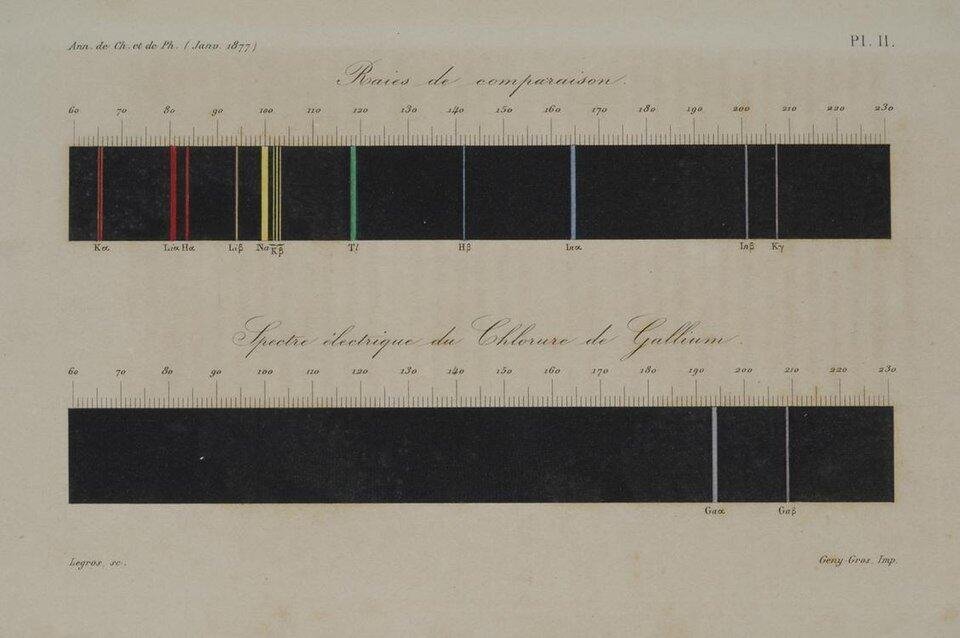
Image credit: Science History Institute. Public domain.
There is another subtle point. Mendeleev was a pioneer of one of the essential concepts of science, which experienced affirmation much later, in the 20th century. It was the concept of effectiveness. Efficiency is one of those crucial scientific concepts, such as symmetry or entropy, which have formal definitions that are extremely difficult to understand but are easily understood by examples. Just as we do not need to understand the interaction between quarks and leptons to understand car behavior on the road, although both the car and the road ultimately consist of quarks and leptons, so the behavior of many other systems in some respects does not depend on deeper dynamic legality. We say that cars on the road are classical mechanical systems, in the same way that blood flow through veins and arteries is a hydrodynamic movement from the point of view of medicine, even though, strictly, approximations built into classical hydrodynamics are not really satisfied for any realistic fluid. The brilliant success of 19th-century science was the reduction of thermodynamic behavior, especially gases and heat engines, to the statistical properties of enormous sets of molecules that are treated as if they were billiard balls moving and colliding under Newton’s laws of mechanics (effective Newtonian behavior). In doing so, there is no real claim to legitimate, in-depth knowledge of the system. It only pretends to be able to separate what is significant for some aspect of the system’s behavior and what is not. What Mendeleev knew was that for a good part of the everyday properties of elements, most of the structure of their atoms was not crucial. The number of electrons in the outer electron shell (valence), and the indicator of that is the position of the element in the periodic table, is of importance. If we establish a connection between the position of an element and its properties, then we can predict its properties, regardless of the unknown internal structure and the correct dynamics of the atom.
Finally, it is worth looking at the specifics of awarding historical merits in different disciplines. No one today seriously disputes Le Verrier’s priority in the discovery of the planet Neptune, despite his famous refusal to even look through the Galle telescope. However, the discovery of gallium is attributed to Boisbaudran, who, concerning the new element, played the same role as Johann Galle with the new planet. Sociologists and historians of science may be able to answer the question of why the attribution of discoveries is so different in the astronomical and chemical traditions. Until then, we can only speculate that, although the greatest revolutionary insights in chemistry, as well as in astronomy or physics, were theoretical, the role of empiricism in chemistry is much greater and much more strongly shapes our notion of cognition than is the case in, say, astronomical disciplines. This must in no way diminish the magnitude of Mendeleev’s contribution to our understanding of the chemical elements and, ultimately, the structure of matter. However, calling it a discovery or a prediction, it shows the central importance and unsurpassed power of theoretical knowledge in the history of any science.
References:
- Greenwood, Norman N.; Earnshaw, Alan (1997). Chemistry of the Elements (2nd ed.);
- Scerri, Eric (2007). The Periodic Table: Its Story and Its Significance;
- Weast, Robert (1984). CRC, Handbook of Chemistry and Physics
- Mendeleev, D. (1871). “The natural system of elements and its application to the indication of the properties of undiscovered elements”. Journal of the Russian Chemical Society (in Russian).

