

Cover Image: Depiction of the burial of bodies during the Black Death, which killed up to half of Eurasia’s population in the 14th century. Pierart dou Tielt (fl. 1340-1360) / public domain
Table of Contents
The coronavirus pandemic serves as a reminder that infectious diseases and pandemics throughout history have accompanied humans and shaped global society for thousands of years. Epidemics of infectious diseases spread around the world long before the rapid migrations and international travel we know today. We’ve come to realize that infectious diseases are the deadliest threat in human history. They have claimed the lives of over 350 million people, with the potential to endanger not only health but also the entire fabric of human societies, change the course of history, and even destroy entire civilizations.

Image credit: Maryland GovPics / licensed under CC BY 2.0.
Pandemics in Ancient Greece and Rome
The earliest recorded epidemic dates back to the Peloponnesian War, which occurred in 430 BC. It had previously swept through Libya, Ethiopia, and Egypt before reaching Athens, which was then under siege by the Spartans. The ancient Greek historian Thucydides described the symptoms of what’s believed to have been typhoid fever. Known as the Great Athenian Plague, it claimed the lives of approximately 100,000 people—roughly two-thirds of the population. Among its victims were the great Athenian statesman Pericles, his wife, and his sons Paralus and Xanthippus. It caused a health and social catastrophe of epic proportions that changed not only the course of the Peloponnesian War but also the history of ancient Greece, and thus world history. It severely weakened Athens, contributed to its defeat by the Spartans, and ultimately led to the collapse of Athenian democracy.
Six centuries later, in 165 AD, a mysterious disease broke out throughout the Roman Empire, called the Antonine Plague after Emperor Marcus Aurelius Antoninus. It’s believed to have been an early appearance of smallpox, which began among the Huns. The Huns infected the Germans, who then transmitted the disease to the Romans, so the Antonine Plague spread throughout the Roman Empire with the return of Roman troops. Its symptoms included fever, sore throat, diarrhea, and, in patients who survived long enough, pus-filled ulcers. The Antonine Plague raged until 180 AD and proved more destructive to the Roman Empire than enemy armies. It nearly shattered the empire, decimating both the population and the Roman army. Historians claim that among its roughly five million victims were emperors Marcus Aurelius and Lucius Verus.
The First Bubonic Plague: From Cyprian to Justinian
Less than a century later, around 250 AD, another pandemic hit the Roman Empire. This was the Plague of Cyprian, named after the bishop of Carthage at the time, an early Christian writer who mentioned the disease in his writings. We know little about what caused Cyprian’s plague, but based on rare descriptions of symptoms, we assume it was smallpox or a viral hemorrhagic fever similar to Ebola. Residents of towns fled inland to avoid infection, but this only spread the disease further. Historians speculate that the epidemic most likely originated in Ethiopia, then spread to North Africa and Egypt, and subsequently moved north. Over the next three centuries, it reappeared frequently. In 444 AD, it struck Britain, hindering its defense against the Picts and Scots, which led the British to seek assistance from the Saxons, who would soon gain control of the British Isles.
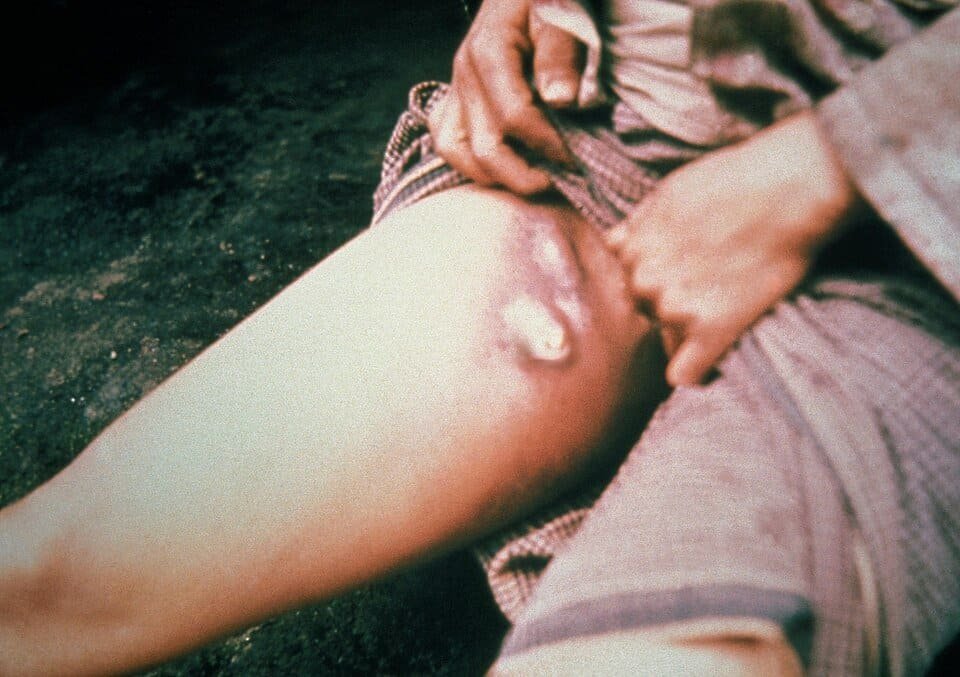
Image credit: Centers for Disease Control and Prevention Public Health Image Library / public domain
The forerunner of the infamous bubonic plague that killed a third of the world’s population in the Middle Ages was Justinian’s Plague in 541 AD. The plague first appeared in Egypt and then spread across Palestine and the Byzantine Empire to the entire Mediterranean. Bubonic plague is caused by the bacterium Yersinia pestis, transmitted by rodents. This contagious disease was the first in a series of three plague pandemics that rank among the deadliest biological events in human history. The term “bubonic” comes from the Greek word “bubon,” meaning swollen lymph gland, which is one of the characteristic symptoms of the plague. Although some recent opinions suggest the consequences of Justinian’s plague are exaggerated, most historians believe it was still one of the deadliest pandemics. Through several outbreaks from the sixth to eighth centuries, it killed almost a third of the population of Asia, North Africa, the Arabian Peninsula, and Europe—between 30 and 50 million people total. This first bubonic plague also had catastrophic economic consequences and changed the course of Roman Empire history, disrupting Emperor Justinian’s plans to reunify it. Scientists credit the bubonic plague with creating an apocalyptic atmosphere that favored the rapid spread of Christianity.
The Origin of Quarantine
During the Justinian plague pandemic in the 6th century, people didn’t know how to fight the disease and could only assume that survivors would develop resistance. However, they noticed that the disease’s spread was related to physical proximity, so officials in the Venetian port city of Ragusa decided to isolate newly arrived sailors until they could prove they weren’t infected with plague. Initially, sailors were isolated on their ships for 30 days. The Venetian Code referred to this isolation as “trentino.” They later decided that forced isolation should be extended to 40 days—”quarantino”—hence the origin of the word quarantine and the beginning of quarantine practices in the Western world.
Leprosy in Medieval Europe
Although it appeared centuries earlier on the Indian subcontinent around 2000 BC, leprosy became pandemic in medieval Europe. The enormous number of victims required the construction of hospitals specifically for leprosy patients. By 1200, there were 19,000 such hospitals across Europe.
This bacterial disease, which develops slowly and causes skin changes and body deformities, spread from the 11th to 13th centuries along European trade routes and in the Holy Land areas occupied by European crusaders and pilgrims. Its most famous victim was King Baldwin IV of Jerusalem, the “leper king” who had suffered from leprosy since childhood. Although leprosy is a chronically contagious disease with low mortality, the disfigurement it caused made it extremely painful and full of suffering. People with leprosy—lepers—were either wealthy enough to isolate themselves in their own homes or were housed in institutions called leprosaria. Outside of leprosariums, people often excommunicated lepers and condemned them to wander the roads carrying warning signs and bells so healthy people would avoid them. Leprosy was called “living death” because people treated its victims as if they were already dead.
Except for Scandinavia, leprosy disappeared abruptly and for unknown reasons in Europe during the 13th century. It persisted in Norway until the 20th century, then disappeared. Today, it’s known as Hansen’s disease, named after a Norwegian doctor who discovered the leprosy bacillus in the 19th century. However, leprosy continues to affect tens of thousands of people annually and can be fatal if not treated with antibiotics.
The Black Death Pandemic of 1347
Eight centuries after the first appearance of bubonic (Justinian’s) plague, the disease returned to Europe in 1347. Known as the “Black Death,” it claimed about 200 million lives in just four years. This second bubonic plague killed a higher percentage of the population than any other known event. As one chronicler wrote, “there were hardly enough living people to bury the dead.” Cities had a constant smell of human corpses left on the streets.
Responsible for the deaths of almost one-third of the world’s population, this second major bubonic plague epidemic probably began in Asia. From there, it spread to Western Europe via trade caravans. Arriving in Sicily in 1347 with infected people who came by ship to the port of Messina, it quickly spread throughout Europe. In 1348, it reached Britain, from where it spread to Scandinavia and Russia. England and France were so weakened by the plague pandemic that they declared a truce in their ongoing war. The pandemic also drastically changed Britain’s economic circumstances and demographics, destroying its feudal social system. The Viking population in Greenland was also decimated, and the Vikings no longer had the strength to continue their exploration and perhaps conquest of the American continent.
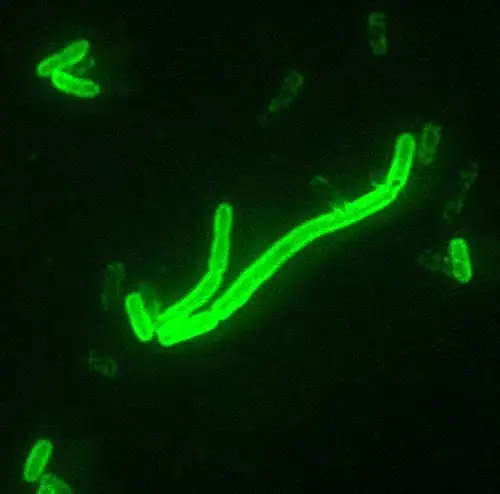
Image credit: Centers for Disease Control and Prevention Public Health Image Library / public domain
After this onset of the “Black Death,” the British capital had almost no respite from the plague. For the next three centuries, from 1348 to 1665, plague broke out in London every 20 years—40 times total. With each new epidemic, about 20 percent of Londoners died from the plague. It wasn’t until the early 1500s that England introduced the first legal measures to isolate the sick; houses affected by plague were marked with bales of hay. People whose families were infected had to carry white canes in public places. People believed cats and dogs transmitted the disease, so they killed hundreds of thousands of domestic animals.
The last episode of plague in that centuries-long series was the Great London Plague of 1665. It was one of the worst, killing 100,000 city residents in just seven months. All public gatherings were banned, and victims were forcibly confined to their homes to prevent the spread of the disease. The peak of that epidemic wave occurred in the fall of 1666, at the same time as another great catastrophe—the Great Fire of London. When the fire, which fortunately didn’t claim many human lives, finally died down, it turned out that about four-fifths of London’s houses and churches had been destroyed. But that fire actually saved many lives since it killed the rats that spread the plague, causing plague deaths to drop significantly.
Devastation of the New World
During the age of great geographical discoveries in the 15th and 16th centuries, when European explorers arrived in the Americas and the Caribbean, they brought contagious diseases with them. The indigenous population, which had never been exposed to diseases like smallpox or plague, was quickly decimated.
Smallpox had been an endemic disease for centuries in Europe, Asia, and the Arabian Peninsula, where it killed about 30 percent of those infected. But the death rate in the “Old World” was nothing compared to the destructive power of the disease among indigenous populations of the “New World.” The native peoples of what’s now Mexico and the United States had zero natural immunity against smallpox, and the disease wiped them out. After Christopher Columbus arrived in 1492, the native Taíno people on the island of Hispaniola numbered 60,000, but by 1548, smallpox had reduced their population to only 500. This catastrophic scenario played out across the Americas. Smallpox infection weakened the Aztec Empire, which had a population of about 16 million in 1520. In just one year, 40 percent of the Aztec population died, which definitely worked in favor of European colonizers. According to a 2019 study, the deaths of 56 million indigenous people in the 16th and 17th centuries probably even affected the planet’s climate. The unchecked growth of vegetation on previously cultivated land led to a decrease in atmospheric carbon dioxide, which had a cooling effect on the planet.
Edward Jenner and the First Life-Saving Vaccine
Humanity had lived in fear of smallpox for thousands of years—a deadly disease that killed an average of three out of ten people it infected. To prevent the spread of the disease, ancient medicine looked for ways to prevent it, including something called variolation (inoculation), a type of immunization that involved putting ground smallpox scabs into healthy people’s nostrils to help them develop resistance through a milder form of the disease.
Centuries later, with the development of modern medicine, smallpox would become the first viral disease to be completely eradicated through vaccination. The “father of immunization,” British doctor Edward Jenner, who developed a successful smallpox vaccine in 1796, made this possible. Jenner designed his vaccine based on a local observation—dairy workers who often caught “cowpox,” which was relatively common in the 18th century, also seemed to be immune to smallpox. When testing his vaccine, Jenner used cowpox for inoculation. The preventive method got its name “vaccination” from the Latin word for cow—”vacca.” However, it took over 200 years for the disease to be eradicated through a worldwide vaccination program. The last known case of smallpox was diagnosed on October 26, 1977, in Merca, Somalia. The World Health Organization declared smallpox eradicated in 1980.
The Seven Cholera Pandemics
Over the past two centuries, there have been seven cholera pandemics. Cholera is a disease caused by acute intestinal infection with the bacterium Vibrio cholerae through contaminated water. The first cholera outbreak in 1817, though initially limited, spread from Bengal throughout India by 1820, killing hundreds of thousands of Indians and about 10,000 British soldiers stationed there. The disease then spread to China, Japan, Indonesia (where over 100,000 people died on the island of Java alone), and reached Europe via the Caspian Sea. Because it affected both British soldiers and naval forces in India, it had an easy path to both European countries and America.
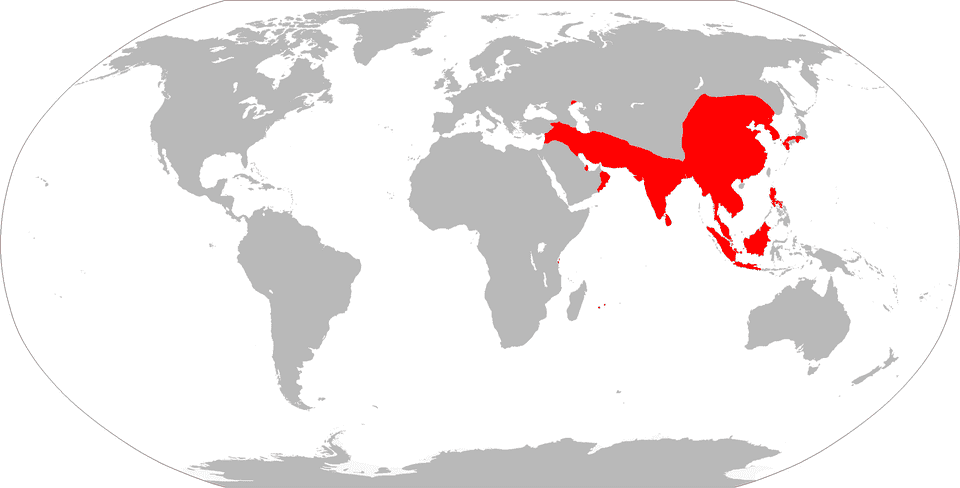
Image credit: שועל / CC BY-SA 4.0 (via Wikimedia Commons)
The first six cholera pandemics occurred continuously between 1816 and 1923, spread by trade, migration, and religious pilgrimages. We estimate that over 15 million people died in India during the first three pandemics, and another 23 million died in the next three pandemics, from 1865 to 1917. In Tsarist Russia during the same period, over two million people died of cholera.
However, this was also a time of great scientific and medical discoveries. In the 1920s, cholera largely disappeared thanks to the use of antibiotics — a revolution made possible by Alexander Fleming’s accidental discovery of penicillin. The seventh pandemic occurred after a long break in the 1970s. It began in Indonesia in 1961 and, thanks to modern transportation and mass migration, spread worldwide. By 1991, it had affected 570,000 people globally. The typical cholera mortality rate, which had reached 50 percent, was reduced to 10 percent by the 1980s and to less than 3 percent by the 1990s.
The Third Plague Pandemic
In the mid-19th century, the third and final major plague pandemic took place. It spread from China’s Yunnan province, where it had caused multiple epidemics since 1772. During the 1850s, this contagious disease killed tens of thousands of Chinese citizens, and in the late 19th century, it spread to Hong Kong and Guangzhou, coastal cities with major seaports. The world was already well-connected, so the infection spread easily across the planet—to Bombay (India), Cape Town (South Africa), Guayaquil (Ecuador), San Francisco (USA), Sydney (Australia), and Rio de Janeiro (Brazil). It reached Japan, Singapore, Taiwan, and Europe by ship, killing about 12 million people.
Historians recorded the earliest known European cases of plague in September and October 1896, after ships from Bombay arrived at London’s Thames port with two infected sailors. Altogether, between 1899 and 1947, 1,692 plague cases were reported in 11 European countries, with 457 deaths, most occurring between 1899 and 1920. Many cities—Lisbon, Marseille, Paris, Piraeus, and others—experienced multiple plague epidemics. Interestingly, though, the Nordic countries, which had dealt with infectious diseases like polio and cholera, didn’t report any cases during the third plague pandemic. According to the World Health Organization (WHO), this final plague pandemic remained active until 1960, when the number of victims worldwide dropped to about 200 per year.
The Importance of Scientific Research
At the beginning of the 19th century, the prevailing theory about deadly cholera was that contaminated air spread the disease. British doctor John Snow suspected that this mysterious disease, which killed victims just a few days after symptoms appeared, was actually lurking in London’s drinking water. By examining hospital records and morgue reports and creating a map that showed how the infection spread, Snow discovered that all cases from the 1854 London cholera epidemic were clustered around a heavily used city well. Through his documented research, Snow convinced local officials to remove the pump from a well on London’s Broad Street and prevent people from using that water, after which the infection suddenly subsided. The British doctor’s work didn’t eradicate cholera overnight, but it led to global improvements in sanitary hygiene and protecting drinking water from contamination — laying the groundwork for the germ theory revolution that Louis Pasteur would soon complete. His scientific study “On the Mode of Communication of Cholera” is considered one of the first papers in what we now know as epidemiology.
The Spanish Flu of 1918
The last pandemic of the 19th century, in 1889 and 1890, claimed about a million lives. The “Asian (or Russian) flu” first appeared in Siberia and Kazakhstan, then reached Finland via Moscow, then Poland, from where it moved to other parts of Europe. In the pandemic’s second year, it crossed the ocean and spread to North America, then Africa.
The “Russian flu” was one of the first flu epidemics to occur during the rapid development of bacteriology, and the first epidemic to be extensively covered in daily newspapers, which were then growing rapidly. Daily newspapers in Poznań, a Polish city then under Prussian rule, played a major role in reporting on the epidemic. Newspaper reports covered not only the local spread of the disease but also wrote about the situation in other major European cities like Paris, London, Vienna, and Berlin. Besides data on where and when the disease appeared, newspaper reports also described symptoms, treatment methods, illness and death rates, infections among public figures, government activities, and the epidemic’s impact on daily life.
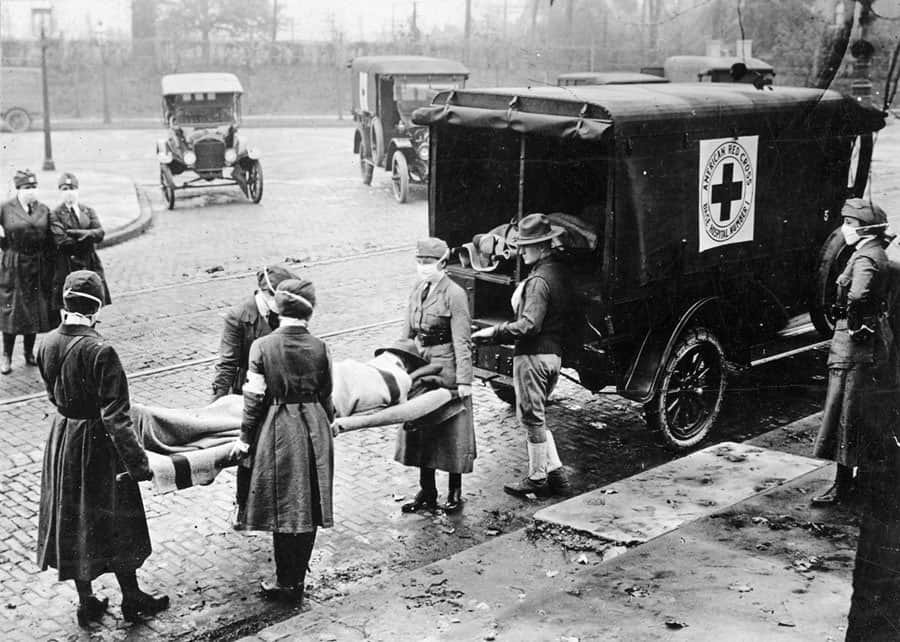
Image credit: Uncredited photographer for St. Louis Post Dispatch / public domain
However, the first flu pandemic of the 20th century would become one of the greatest health catastrophes in human history. In the fall of 1918, when World War I (the Great War) was ending, and peace seemed within reach, people began suffering from what appeared to be a common cold. But the flu, which appeared in different parts of the world at the same time that season—called “Spanish” because the first reports came from Madrid—turned into one of the deadliest pandemics in history. Between 1918 and 1919, 40 to 50 million people died. In three pandemic waves during those two years, it claimed more lives than the Great War itself. Its consequences were especially severe because it hit the young adult population hardest—people aged 20 to 40. Patients died quickly and painfully, their lungs destroyed and unable to breathe. There were so many victims that fellow citizens couldn’t remove corpses from houses for days. Cities passed laws requiring face masks in public places, but the virus overcame that barrier. The pandemic traveled the world, covering North America, Europe, Asia, Africa, Brazil, and the South Pacific. The Great War, with its massive movement of armies and ships, probably helped its rapid spread. The war’s end in November 1918 and mass gatherings to celebrate Armistice Day allowed the flu to return in another wave, leading to a complete public health catastrophe. Millions became infected, and thousands more died.
The origin of the influenza virus strain that caused the “Spanish flu” in 1918 isn’t entirely known. Scientists believe it originated in China as a rare genetic mutation of the flu virus into something completely unknown, for which there was no immunity anywhere on the planet. We now know it was the H1N1 flu virus, which has been proven to have jumped from pigs to humans. Based on that, we can consider it the first strain of swine flu virus to cause a pandemic in recent times, though the 2009 version was much milder.
HIV and AIDS: A Modern Pandemic
The 1957/1958 influenza pandemic was the second major flu pandemic of the 20th century. Scientists identified “Asian flu” in February 1957, with its epicenter in Singapore, after which it spread to many countries worldwide and claimed nearly two million lives.
The Influenza A H2N2 virus, which originated from bird flu strains, caused the outbreak. In the 1960s, the human H2N2 strain underwent minor genetic changes, producing periodic epidemics. After 10 years of evolution, the 1957 flu virus disappeared but was replaced by a mutated Influenza A subtype, H3N2, which caused the 1968 flu pandemic (Hong Kong flu).
In the first months of the 1957 flu pandemic, the virus spread to China and surrounding regions. It reached the United States in mid-summer, where it initially seemed to infect relatively few people. A few months later, many infection cases were reported, especially among young children, the elderly, and pregnant women, as a result of a second pandemic wave in the Northern Hemisphere in November 1957. By then, Asian flu had already reached Britain, causing 3,500 deaths. The second wave was devastating overall—it caused about 1.1 million deaths globally, with 116,000 people dying in the United States alone. This pandemic was eventually controlled with an effective vaccine.
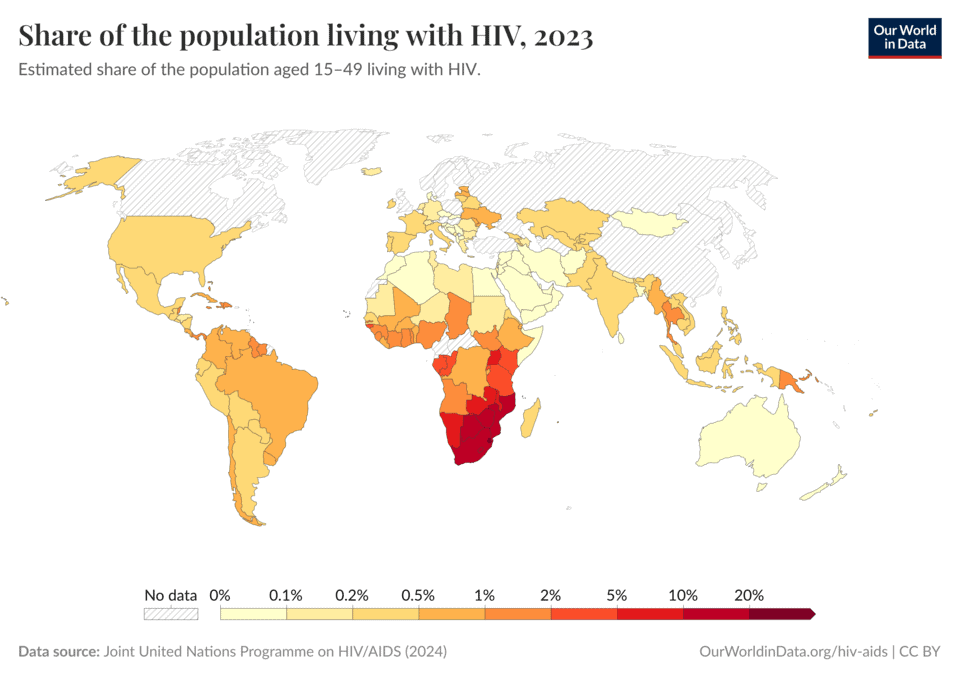
Image credit: Our world in data / CC BY-SA 4.0 (via Wikimedia Commons)
In the early 1980s, another pandemic hit the world. And it continues today. Back then, in June 1981, when the US Centers for Disease Control (CDC) reported five cases of Pneumocystis carinii pneumonia in young gay men in Los Angeles, few experts suspected an AIDS pandemic was beginning. In 1983, scientists isolated the retrovirus later called human immunodeficiency virus (HIV) from a patient with AIDS (Acquired Immunodeficiency Syndrome), a syndrome of acquired immune deficiency. It’s a chronic, potentially life-threatening condition caused by HIV. By damaging an infected person’s immune system, the virus interferes with the body’s ability to fight infections and diseases and is transmitted from person to person through body fluids (blood, semen, vaginal and rectal fluids, and breast milk).
Over the past four decades, 75 million people worldwide have been infected with HIV, and about 32 million have died of AIDS. Over 40 percent of new infections affect young people between the ages of 15 and 24. Globally, at the end of 2018, there were 37.9 million people living with HIV—0.8 percent of adults aged 15 to 49—but the epidemic’s burden still varies significantly by country. The African region remains hardest hit, with almost every 25th adult (3.9 percent of the population) living with HIV, and where over two-thirds of all global infections occur.
Effective HIV prevention and treatment with antiretroviral therapy (ART) is now available even in countries with limited resources. We need comprehensive programs to reach everyone who needs treatment and to prevent new infections.
21st Century Pandemics: SARS and Swine Flu
A disease that popularized wearing surgical masks on Asian streets caused the first pandemic of the 21st century. The outbreak of Severe Acute Respiratory Syndrome (SARS) in 2003 frightened the world with its rapid spread from continent to continent. Among the 8,096 infected, the death rate was as high as 10 percent (774 deaths), with devastating effects on local and regional economies. Three laboratories—in Hong Kong, Germany, and the United States—almost simultaneously isolated what seemed to be a new coronavirus as the cause of SARS. Scientists believe the virus originated in bats, spread to civets, then jumped to humans in China before spreading to 26 other countries. The disease was transmitted through droplets, sneezing, and coughing, and was accompanied by respiratory problems, dry cough, high fever, and head and body aches.
The World Health Organization quickly recognized SARS’s potential for global spread, so it issued recommendations for controlling the epidemic and preventing its spread. Some important lessons from fighting this disease include real-time information about rapidly spreading epidemics, constantly updating infected person registries, controlling international passengers, and applying home quarantine. Quarantine proved very effective, and by July 2003, the virus had disappeared completely. Lessons from fighting SARS were later used to control the swine flu pandemic and the Ebola and Zika epidemics.
What Pandemics Throughout History Teach Us
Less than 100 years after the infamous 1918 Spanish flu pandemic caused by the H1N1 virus, a strain of the same pathogen led to another pandemic in 2009 that lasted about 20 months. First identified in April of that year, a new H1N1 strain that resulted from the previous triple recombination of bird, swine, and human flu viruses, additionally combined with the Eurasian swine flu virus, caused a disease called “swine flu.” The source of the 2009 pandemic was pigs from a small region in central Mexico, according to a research team from New York’s Mount Sinai Hospital, reported in eLife magazine. Scientists noted this was the first time in history that a pandemic virus’s origin had been located so precisely.
The number of confirmed swine flu cases worldwide was about 1.6 million. However, some research estimates the actual number could have been between 700 million and 1.4 billion people—11 to 21 percent of the total population of 6.8 billion. The number of officially confirmed deaths was 18,449, but estimates suggest the actual number of swine flu deaths was around 284,000. A study conducted immediately after the epidemic in fall 2010 showed, however, that the risk of serious complications from H1N1 flu was no higher than the risk from annual seasonal flu. By comparison, the WHO estimates that between 250,000 and 500,000 people die each year from seasonal flu.
References:
- Centers for Disease Control and Prevention, National Center for Immunization and Respiratory Diseases (NCIRD), WHO
- Rosenwald MS (7 April 2020). “History’s deadliest pandemics, from ancient Rome to modern America”
- Roychoudhury S, Das A, Sengupta P, Dutta S, Roychoudhury S, Choudhury AP, et al. (December 2020). “Viral Pandemics of the Last Four Decades: Pathophysiology, Health Impacts and Perspectives”
- Porta M, ed. (2008). Dictionary of Epidemiology. Oxford University Press.

