

Table of Contents
Since the space age kicked off, different types of spacecraft have been built for different missions. But if you asked me what spacecraft best represents the workhorses that carved their path into space and truly delivered on their purpose, the answer would be the Soviet-Russian “Soyuz” (Russian: Союз, meaning “Union”). Designed in the 1960s by Sergei Korolev’s design bureau—what we now know as Energia—the Soyuz series has racked up over 140 crewed flights and is still going strong. Launched from the Baikonur Cosmodrome in Kazakhstan atop its namesake rocket, Soyuz was initially developed as part of the Soviet lunar program before finding its true calling as the ultimate spacecraft for orbital missions.
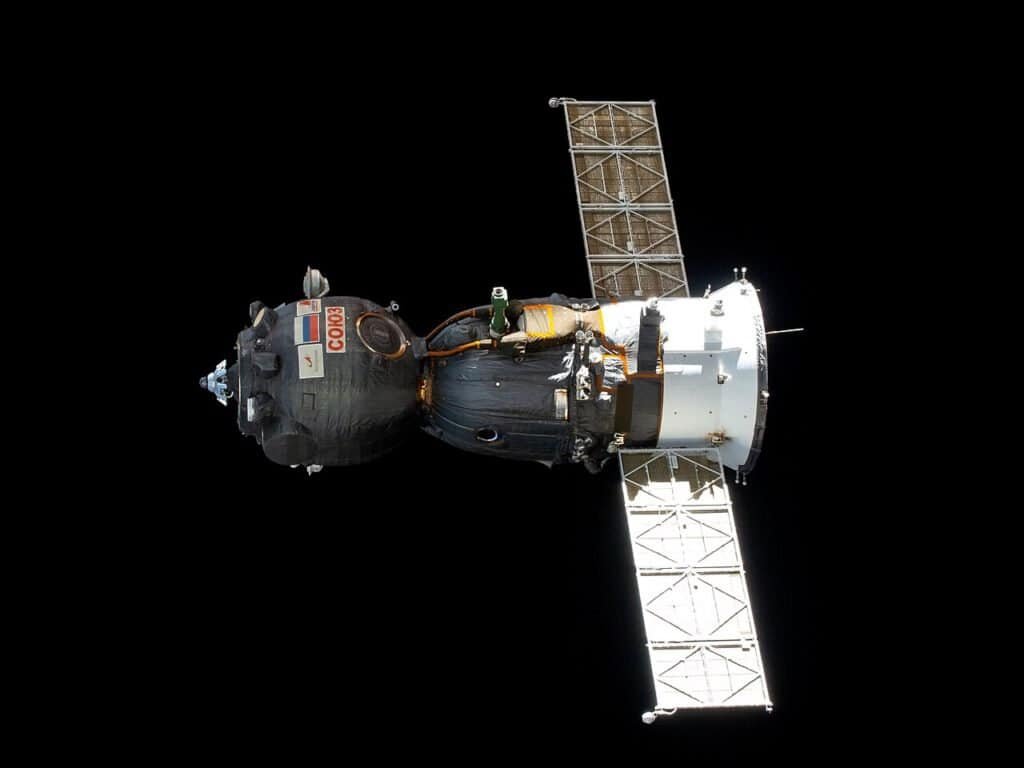
Image courtesy of NASA. Public domain image provided via Wikimedia Commons.
The ball-shaped “Vostok” and “Voskhod” capsules were meant for pioneering flights, and the distinctly cone-shaped American “Mercury” and “Gemini” capsules were the first real tests of U.S. technology in space. Both designs didn’t allow for controlled atmospheric reentry—just a ballistic trajectory, with cosmonauts enduring loads of up to 10 Gs. Then the plans for future space missions split. In the U.S., landing on the Moon became the main goal, leading to the development of the “Apollo” spacecraft with modules for lunar landings and returning astronauts to Earth. In the USSR, they took a more cautious approach. First came the development of a spacecraft for orbital flights around Earth with a docking system that could connect with other spacecraft, with the possibility of eventually going to the Moon—though the main goal was sending cosmonauts to orbital stations. In the USSR, after the “Vostok” program ended, they started designing and building the “Soyuz” spacecraft, which could be launched into Earth orbit by a modified R-7 rocket with an upgraded third stage (also called the “Soyuz launch vehicle”).
Soyuz Spacecraft Design: Modules, Systems, and Structure
When designing a spacecraft, you start with the only part that comes back to Earth—the reentry capsule. It holds the cosmonauts’ seats, which need to handle massive G-forces from the rocket’s acceleration when reaching orbital velocity and altitude—and even higher G-forces during atmospheric reentry and aerodynamic braking. That means you need a super solid structure. The capsule gets exposed to temperatures up to 3000°C and is covered with an ablative heat shield that prevents heat from damaging its structure or getting inside. It also contains systems for maintaining the internal atmosphere in terms of pressure, composition, and temperature, which all adds to its total weight. The Soyuz spacecraft was designed at Sergei Korolev’s design bureau based on the concept that the capsule should be just big enough to hold cosmonauts during launch and landing, with other systems and living space in separate sections—modules. The Soyuz consists of the capsule (designated SA—descent module) in the middle, the rear section (PAO—service module), and the front section (BO—orbital module) with the docking system. The total length of the spacecraft is 7.1 meters, with a mass of 6.5-7.2 tons, depending on the version. Inside the BO and the capsule is a standard O2-N2 atmosphere at 1 bar pressure.
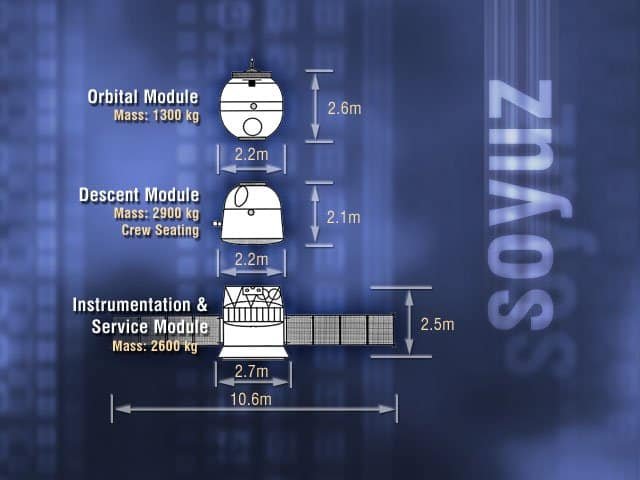
Image courtesy of NASA. Public domain image provided via Wikimedia Commons.
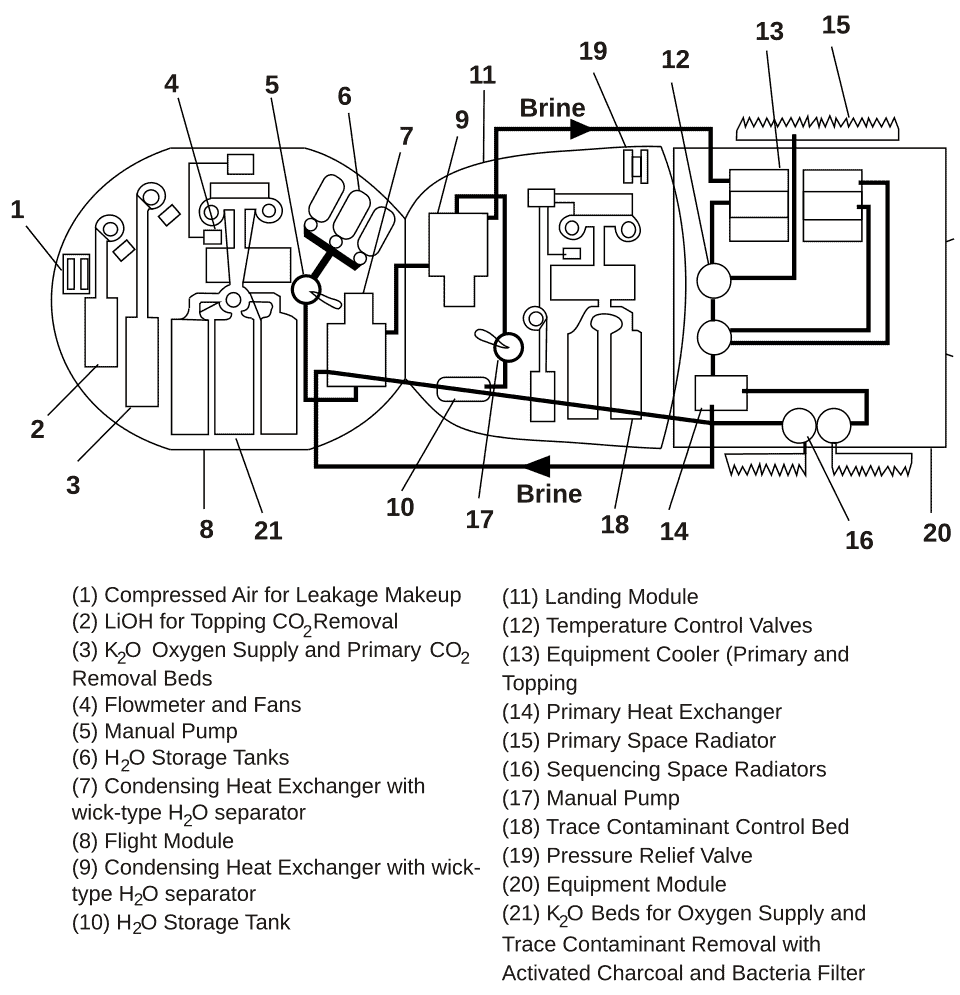
The orbital module is roughly spherical, 2.65 meters long and 2.3 meters wide, weighing up to 1.45 tons. At the front is the docking mechanism for connecting to orbital stations; the back connects to the capsule, but the rear hatch is actually part of the capsule. The total volume is 6.5 m³, with 5 m³ available to the cosmonauts. It can also work as an airlock. Cosmonauts can go through the side exit hatch without depressurizing the capsule; that hatch is also used for crew entry before launch. The BO module includes systems for temperature control, water vapor removal, CO2 scrubbers that release oxygen using potassium peroxide and LiOH, food and water storage, sanitary facilities, electronic guidance systems for docking, etc. The capsule—the SA section—is complex. The front is rounded, continuing into the main compartment, and the rear is a slightly curved dome. This shape allows the capsule to glide during atmospheric reentry with some control, which reduces the G-load. The SA measures 2.2×2.2m and weighs 2.6-3 tons. The internal volume is 4m³, with 2-3 cosmonauts having 2.9m³ of space. On the outside is a folding periscope because the BO blocks the view of the orbital station during docking. Life support systems work during launch and landing. The capsule has its own maneuvering system with 8 low-thrust hydrogen peroxide engines for attitude control during atmospheric entry and gliding. The service module (PAO) is a cylinder with a conical end, 2.3m long, 2.7m wide at its widest point, and weighs 2.7-2.9 tons. It has solar panel wings with a 10m span, generating about 500W. It consists of a pressurized section containing temperature control systems, a radiator, electrical power system and electronics, radio telemetry, and communications. The propulsion system includes a primary rocket engine with 3.9kN thrust and two chambers for the backup engine with a combined 3.8kN thrust. Four orbital maneuvering engines have 107 N thrust each; they’re fed UDMH fuel and N2O4 oxidizer from four tanks. At the junction with the capsule and at the rear of the PAO is a maneuvering system with 18 small thrusters, each providing 14.7N thrust; it connects to the capsule with a clamp system that’s blown apart by explosives when the section separates.
Soyuz Launch, Docking, and Reentry: How It Works
During launch, the Soyuz sits inside an aerodynamic shroud topped by a launch escape system (SAS), which is jettisoned 2.5 minutes after liftoff. After separating from the third stage, with two burns of the primary engine, the Soyuz gets on course for the orbital station, and docking can be done automatically, manually, or by remote command from mission control. When the mission’s done and it separates from the orbital station, the primary engine fires retrograde to slow down, and the Soyuz heads toward the atmosphere. It jettisons the PAO and BO modules, and the capsule enters the atmosphere at about 8 km/s. Braking starts at around 120 km altitude and lasts about 8 minutes. Speed drops to 226 m/s, and at 8.8 km altitude, two small pilot chutes pull out a drogue parachute (24 m²), which slows it to about 68 m/s so that when the main parachute (968 m²) opens, the speed finally drops to 7.2 m/s. One second before touchdown, six solid-fuel rocket engines in the rear of the capsule fire, reducing the speed to 1.5 m/s when it hits the ground—impact that’s cushioned by shock absorbers on the cosmonauts’ seats. And that’s it—the Soyuz mission is complete. So far, the capsules and all their systems have been single-use.
Soyuz Spacecraft Development History: From First Flight to Proven Reliability
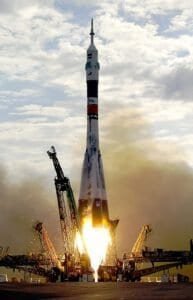
Over five decades of use, Soyuz spacecraft have been through all kinds of trials. Small technical errors led to fatal accidents, but there were also major malfunctions that ended well. After each incident, safer solutions were implemented.
The first Soyuz was launched unmanned on November 28, 1966, as “Cosmos 133.” Although it didn’t meet expectations, the capsule made it back to Earth successfully. The second flight was more successful, launched in February 1967 as “Cosmos 140.”
The first crewed flight came on April 23, 1967—Soyuz 1 with cosmonaut Vladimir Komarov. During the mission, there were control system problems, so it was cut short. Atmospheric reentry went fine, but the main parachute failed and the capsule hit the ground at about 50 m/s, killing Komarov.
At that speed, any skydiver could bail out and open their chute (if they could get the top hatch open), but Komarov didn’t have a personal parachute. The parachute and other systems were improved, followed by unmanned flights that automatically docked, like “Cosmos 186 and 188” and “Cosmos 212 and 213.”
Soyuz 2 launched without a crew in October 1968, and Soyuz 3 was piloted by cosmonaut Georgy Beregovoy, but their docking failed. Finally, in January 1969, Soyuz 4 with cosmonaut Shatalov successfully docked with Soyuz 5, from which cosmonauts Yeliseyev and Khrunov, in spacesuits, transferred to Soyuz 4 and, after undocking, successfully landed back on Earth in that capsule. Boris Volynov, who stayed in Soyuz 5 (he didn’t have a spacesuit), had a really serious problem during reentry. The BO orbital module separated successfully, the rocket engine fired for deceleration and it entered the atmosphere—but the system for jettisoning the PAO service module failed. The capsule entered the atmosphere front-first, where the hatches for the BO are located—hatches that weren’t designed to handle the thermal and mechanical loads of aerodynamic braking. Luckily, although badly damaged, the hatch held until the clamps connecting the capsule and PAO section broke and it finally separated.
Then the capsule immediately flipped so the bottom part (where the heat shield is thickest) faced forward and aerodynamic braking worked properly. It missed the landing site and the capsule, with a partially tangled parachute, landed in the Urals. The impact was so hard that Volynov broke free from his harness, hit the instrument panel, and knocked out his front teeth. He got out of the capsule and, trudging through deep snow at -39°C, made it to a cabin. A rescue helicopter found him and everything ended okay. Cosmonaut Boris Volynov flew into space again in 1976 on Soyuz 21, when he docked with the Salyut 5 orbital station. Soyuz TMA-10 and Soyuz TMA-11 had similar problems—failed PAO module separation during atmospheric entry, meaning the capsule entered front-first. In these cases, the separation from the PAO was partial, and the connections broke faster so the capsules oriented properly and the landings weren’t as rough. Soyuz 6, 7, and 8 made the first three-spacecraft flight in October 1969, with 7 cosmonauts in space—but they failed to dock. Soyuz 9 flew an 18-day mission in 1970, with the established practice that cosmonauts didn’t wear spacesuits. This was followed in 1971 by the Soyuz 10 flight, which approached the Salyut 1 orbital station, but the attempt to hard-dock and let the crew enter the station failed due to damage to the docking system.
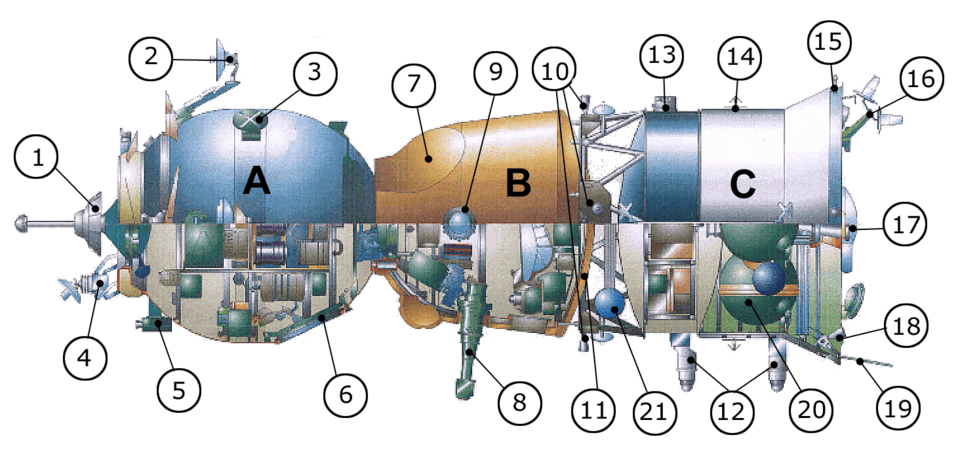
Orbital module (A)
- 1: SSVP docking mechanism
- 2, 4: Kurs rendezvous radar antenna
- 3: television transmission antenna
- 5: camera
- 6: hatch
Descent module (B)
- 7: parachute compartment
- 8: periscope
- 9: porthole
- 11: heat shield
Service module (C)
- 10, 18: attitude control engines
- 12: Earth sensors
- 13: Sun sensor
- 14: solar panel attachment point
- 15: thermal sensor
- 16: Kurs antenna
- 17: main propulsion
- 19: communication antenna
- 20: fuel tanks
- 21: oxygen tank
Docking with the orbital station also failed on Soyuz 15, 23, and 25 because of docking system failures. Soyuz 33, besides not being able to dock with the orbital station in April 1979, also had a primary engine failure, so it returned from orbit using the backup engine. These failures led to improvements in the docking system and that issue was solved. However, in 1983, Soyuz T-8 didn’t make the connection because of a broken antenna—making it six failed dockings total. After that, connections with orbital stations were successful.
Soyuz Spacecraft Accidents and Failures: Lessons That Made It Safer
The worst accident happened in 1971. The three-person crew successfully launched (following the standard practice of not wearing spacesuits), docked with the Salyut 1 orbital station, and spent 24 days on it doing planned experiments. After separating from Salyut 1, during Soyuz 11’s atmospheric reentry, air escaped—the capsule depressurized, killing Viktor Patsayev, Vladislav Volkov, and Georgy Dobrovolsky. The capsule landed automatically but with the cosmonauts’ lifeless bodies. If they’d had spacesuits, they would have survived.
This was followed by a two-year pause in crewed flights, during which unmanned Soyuz spacecraft called “Cosmos 496 and 573” with modified systems were launched. More importantly, a lightweight spacesuit—the so-called soft “Sokol” type—was developed, and the cabin was adapted for only two cosmonauts. A test flight of Soyuz 12 with cosmonauts Vasily Lazarev and Oleg Makarov followed in 1973, then several more unmanned Soyuz called “Cosmos.” Finally, successful docking with the Salyut orbital station began with Soyuz 14, followed by Salyut 4/Soyuz 17, and preparations for the Soyuz-Apollo mission. The mission to dock Soyuz 19 and Apollo was successful in July 1975. After the independent mission of Soyuz 22, they were used only as a transport system for crews going to orbital stations.
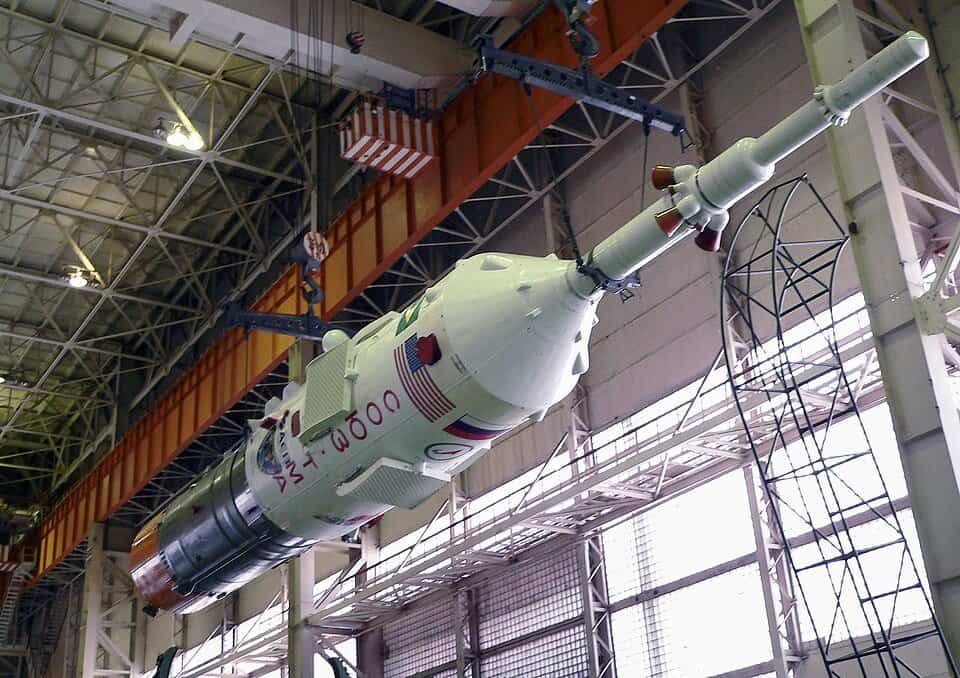
Image courtesy of NASA. Public domain image provided via Wikimedia Commons.
That things can always go wrong in unexpected ways was shown by the flight of Soyuz 18A (A meaning abort) on April 5, 1975. During launch, the third-stage engines fired without the spacecraft separating from the second stage of the rocket, causing it to tumble and make a sudden return to the atmosphere, exposing the capsule to 21 Gs. Cosmonauts Vasily Lazarev and Oleg Makarov were injured. The Soyuz successfully completed all landing procedures, and the capsule landed in a mountainous area, proving it could handle higher loads than designed for. Makarov flew into space again in 1978 on Soyuz 27, docked with Salyut 6, and returned in the Soyuz 26 capsule, then again in 1980 on Soyuz T-3 to Salyut 6.
During the launch of Soyuz T-10 (later marked T-10A) in 1983, there was a fire on the launch vehicle. A command from mission control triggered the launch escape tower to separate the capsule 2 seconds before the rocket exploded. It landed by parachute with no harm to cosmonauts Vladimir Titov and Gennady Strekalov, who later made successful flights on Soyuz T missions.
The launch vehicle problem came back on October 11, 2018, during the launch of Soyuz MS-10, when it seemed like such accidents were ancient history. Two minutes after launch, one of the four side boosters failed to separate, so the escape system separated the Soyuz from the third stage at about 90 km altitude, and the capsule with Alexei Ovchinin and Nick Hague landed safely. Soyuz once again proved its safety, and those cosmonauts later flew to the ISS on Soyuz MS-12.
Soyuz Upgrades and Variants: Six Decades of Continuous Improvement
Over more than five decades of flight history, the Soyuz has been continuously improved—guidance and docking systems, all internal life support systems, computer systems, and communication systems. The first variant, 7K, was used with sub-variants through Soyuz 40. Then came the T variant, which went back to three-person crews starting with Soyuz T-3. The TM variant followed from 1986, then TMA from 2002 to 2012, which finally got digital display screens and bigger, more comfortable seats.
The TMA-M version has been in use since 2010; with an improved rendezvous system for the orbital station, it arrives in 6 hours after launch instead of two days like before. The latest MS version has been in use since 2016. Besides backup computer systems and solar panels, it also has a satellite communication system and GPS navigation for the capsule to guide recovery teams after landing. The modernization of the Soyuz has kept pace with technology, but its basic external design has stayed almost the same.
Soyuz Spacecraft: The Most Reliable Crewed Vehicle in Space History
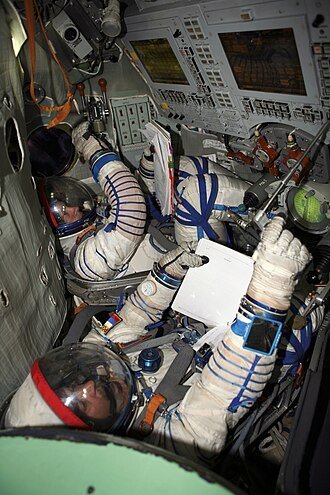
Image courtesy of NASA. Public domain image provided via Wikimedia Commons.
A total of 153 crewed Soyuz have been launched, including the most recent Soyuz MS-27. Three launches were unsuccessful due to various rocket failures, but the crews were saved. Two missions at the very beginning of the program ended fatally for the crews due to major errors that can’t be blamed on the Soyuz spacecraft concept and which were never repeated, so it remains the most reliable system for launching crews into Earth orbit. Five spacecraft were launched with the “unmanned” designation into Earth orbit, and about 20 under the “Cosmos” designation. Unmanned Progress cargo spacecraft that resupply orbital stations are also Soyuz variants—they use the BO and PAO sections, but instead of a capsule there’s a section carrying rocket fuel to maintain the station’s altitude and position. Progress carries about 2.5 tons of cargo in the BO section for crew needs, and 165 have been launched so far. About 330 spacecraft based on Soyuz have been launched into Earth orbit, which is an absolute record for using one system in space.
Soyuz was supposed to serve as the command and service module in the abandoned Soviet Moon landing project. During preparations for such a mission, a Soyuz variant was launched without a BO section, using a Proton rocket, called “Zond.” Of five unmanned missions, four successfully flew around the Moon in 1968-70 and returned to Earth’s atmosphere at lunar return velocity. Four experimental launches from 1969-1972 failed with the giant N1 rocket due to those rockets crashing. The capsules were reportedly saved twice.
Other types of spacecraft were bigger and more complex than the Soyuz, but it stayed in use while they became history. The 1975 mission to dock Soyuz 19 and Apollo (where Soviet cosmonauts visited Apollo and American astronauts visited Soyuz) was the last time Apollo entered orbit—it had been to the Moon and back. On the Soyuz mission and missions to the Skylab orbital station, the Apollo service module carried about 10 tons less fuel than on Moon missions—because it wasn’t designed for Earth orbital missions.
During Soyuz missions to the Salyut 7 orbital station, TKS-type spacecraft called Cosmos 1443 and 1686 docked with it. Three times more massive than Soyuz, with a larger capsule, 50 m³ of internal space, and large fuel reserves, TKS spacecraft never carried cosmonauts or returned them to Earth because they weren’t safe enough.
During missions to the Mir and ISS orbital stations, Soyuz was always present, while the Space Shuttle occasionally docked with the stations or delivered modules. Over ten times more massive than Soyuz, the Space Shuttle, after 37 flights to orbital stations, was retired because it was very expensive and risky (fourteen astronauts were killed in two accidents).
Since 2011, Soyuz has been the only transport system for sending crews to the ISS and, if necessary, can be used for emergency crew evacuation to Earth (like a lifeboat). China adopted the Soyuz concept and built its own Shenzhou spacecraft based on it, which it uses to send crews to its own orbital station.
The new U.S. spacecraft Dragon 2 and Starliner, which should soon be carrying crews into Earth orbit, have yet to prove they’re more efficient than the proven Soyuz. Russia is developing a new spacecraft for 4-6 crew members called “Federation” (it won’t have an orbital BO section and doesn’t look like Soyuz) that’s supposed to fly in 2024. Given that recent projects usually run late, and it takes time to prove their reliability and efficiency, Soyuz will probably finish out its sixth decade of spaceflight.
References:
- Wade, Mark. “Encyclopedia Astronautica”
- “Science: Triumph and Tragedy of Soyuz 11”. Time Magazine. 12 July 1971.
- Bruno Venditti (27 January 2022). “The Cost of Space Flight”
- Hollingham, Richard. “Soyuz: The Soviet space survivor”. www.bbc.com.
- Shayler, David J. (2009). Space Rescue: Ensuring the Safety of Manned Spacecraft. Springer-Praxis Books in Space Exploration.
- Hollingham, Richard. “Soyuz: The Soviet space survivor”. www.bbc.com.

