

Cover image: Музей Космонавтики from Россия, public domain
Table of Contents
Konstantin Tsiolkovsky and the Origins of Soviet Rocketry
The whole theoretical foundation for space travel using rockets actually goes back to Tsarist Russia, before World War I even happened. A scientist and inventor named Konstantin Tsiolkovsky (1857–1935) laid the groundwork for basically everything that came after. Back in the late 1800s, he was already deep into studying how rockets work — vehicles that move by shooting high-speed gas out of them as a reaction force. In 1896, he worked out the math behind rocket propulsion and came up with what we now call the Tsiolkovsky rocket equation. He then wrote up his ideas about how a rocket would move outside a gravitational field in a paper called “Exploration of Outer Space with the Help of Jet Devices.” He wrote it in 1898, but it didn’t get published until 1903. That paper was the first real proof that rockets could actually be used for space travel, which is why Tsiolkovsky is considered the father of theoretical cosmonautics and the intellectual godfather of the entire Soviet space program.
Even after the October Revolution, Tsiolkovsky kept on working, thinking through the possibilities of space exploration using reactive propulsion. In 1929, he introduced the idea of a multistage rocket — which is basically the core concept behind every modern spacecraft. Practical rocket work in the USSR kicked off in the 1920s, with members of a group called GIRD (Group for the Study of Jet Propulsion, founded in 1931) running experiments. Some real pioneers worked there, including Sergei Korolev, who had dreams of one day flying to Mars, and German engineer Friedrich Zander. On August 18, 1933, GIRD launched the first Soviet liquid-fueled rocket, the GIRD-09, and then on November 25, 1933, came the first hybrid rocket, the GIRD-X. By the mid-1930s, Soviet rocket technology was roughly on par with what the Germans were doing. But then Stalin’s Great Purge came along and killed that momentum — a lot of the leading engineers were either executed or shipped off to the gulags, including Sergei Korolev himself.
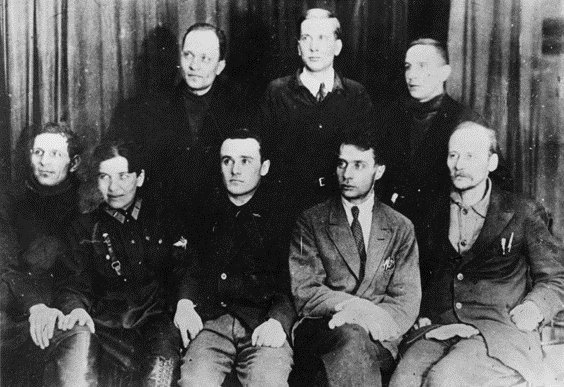
Image credit: Anonymous Soviet photographer, public domain
Then in the 1940–1941 period, things picked up again in jet propulsion. The Soviets developed and mass-produced the Katyusha multiple rocket launcher, which turned out to be incredibly effective on the Eastern Front during World War II. After the war ended, the sites at Mittelwerk and Peenemünde — where Wernher von Braun had developed and tested the V-1 and V-2 rockets — ended up in the Soviet occupation zone. Soviet engineers went through all the documents and blueprints they found there and quickly realized the German rocket program was way ahead of theirs. Since the main V-2 production plant in Nordhausen was under their control, they managed to assemble around 30 V-2 rockets there by September 1946. Soviet leadership also knew full well that the Americans had pulled off Operation Paperclip at the end of the war — secretly moving most of the top German rocket scientists, led by von Braun, plus about 100 V-2 rockets to the United States. The Americans ran their first static tests in mid-March 1946 and launched their first rocket in mid-April of that same year.
Dogs in Space: The Soviet Animal Spaceflight Program
Stalin decided that ballistic rocket development was going to be a top priority for the USSR. So on May 13, 1946, the Scientific Research Institute NII-88 (also known as OKB-1) was set up in the suburbs of Moscow specifically for that purpose. Dmitry Ustinov was named director, and Korolev became chief designer of long-range rockets. Under Ustinov’s leadership, Sergei Korolev and other Soviet engineers started digging into V-2 technology. With help from German rocket scientist Helmut Gröttrup and other captured German engineers who’d worked on the V-2 project, they began flight tests in September 1948 on a copy of it they called the R-1. The Soviet army officially adopted the R-1 in November 1950, and from there they built a whole series of specialized rockets based on it, which were used for scientific experiments at high altitudes.
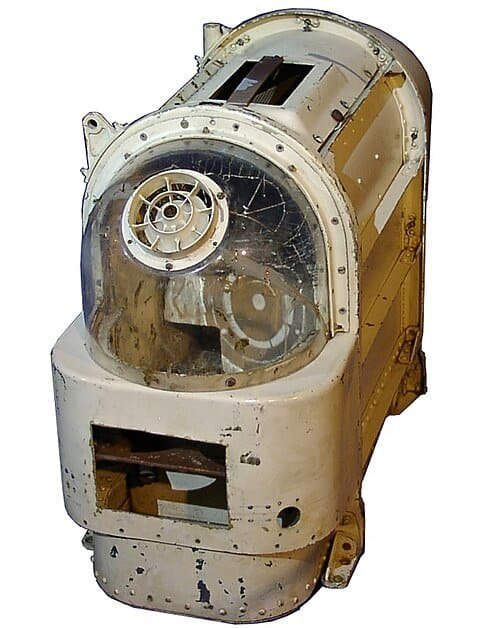
Image credit: Benutzer:HPH, licensed under CC BY 3.0.
An improved version, the R-2, was developed from the R-1. Its first test flight happened in September 1949, and it entered service in November 1951. Even though both rockets were designed with German help, they were manufactured entirely in Soviet factories, and the whole process gave engineers at OKB-1 the hands-on experience they needed to start an independent program developing intercontinental ballistic missiles. These were the improved “R-series” rockets with cryogenic fuel propulsion — specifically liquid hydrogen, which Korolev had actually been experimenting with back in the late 1930s. After the USSR tested its first atomic bomb in 1949, there was a whole lot more focus on developing rockets that could carry a nuclear warhead all the way to the United States.
At that point, there was no separate Soviet space program — it wasn’t in the state’s five-year plan, so everything relied on the military program, which had the government’s full attention. A lot of people in the USSR thought space flights and launching satellites were ridiculous ideas. But Sergei Korolev, driven by his personal dream of putting humans in space, quietly kept working on the space program on the side while also doing military work. Using the R-1 and R-2 as a base, they developed a series of specialized rockets for high-altitude vertical sounding flights where they could run scientific experiments. Thanks to those, in July 1951, the Soviets launched their first rocket carrying living beings — two dogs — beating the Americans to it by about two months. Both dogs came back alive after a flight that took them up to roughly 101 km. After that, throughout the 1950s and into the 1960s, the Soviet space program sent up several missions using dogs and other animals on suborbital and orbital flights. They were studying the effects of acceleration, weightlessness, and the stress of leaving and re-entering the atmosphere on living organisms — all to figure out whether human spaceflight was actually doable. Between 1951 and 1956, they completed 14 more scientific flights with dogs reaching altitudes of about 100 km using R-1 rockets. Then from 1957 to 1960, they ran 11 flights with dogs on R-2A rockets, going up to around 200 km.
Sputnik 1: The Launch That Shocked America and Started the Space Race
In July 1955, the United States publicly announced plans to launch satellites during the International Geophysical Year (July 1, 1957 to December 31, 1958). That announcement actually helped Sergei Korolev make his case to Soviet leader Nikita Khrushchev, and in January 1956 he got approval to move forward with plans for launching satellites into Earth orbit — what they called “Sputnik.” The idea was that these satellites would push scientific knowledge about space further, and four military reconnaissance satellites (called Zenit) would outpace whatever the Americans were doing.
All the work on cryogenic engines and new rocket designs led to the development of the R-7 — a two-stage intercontinental ballistic missile that was successfully tested in August 1957. With a range of roughly 7,000 km and a payload of about 5 tons, this rocket wasn’t just a solid weapon for carrying nuclear warheads across long distances — it was also a perfect vehicle for putting cargo into space. Since he already had a working rocket, Sergei Korolev pulled together the artificial satellite program in just one month. On October 4, 1957, a small, ball-shaped satellite called Sputnik 1 was successfully launched into Earth orbit from the Baikonur Cosmodrome in Kazakhstan.
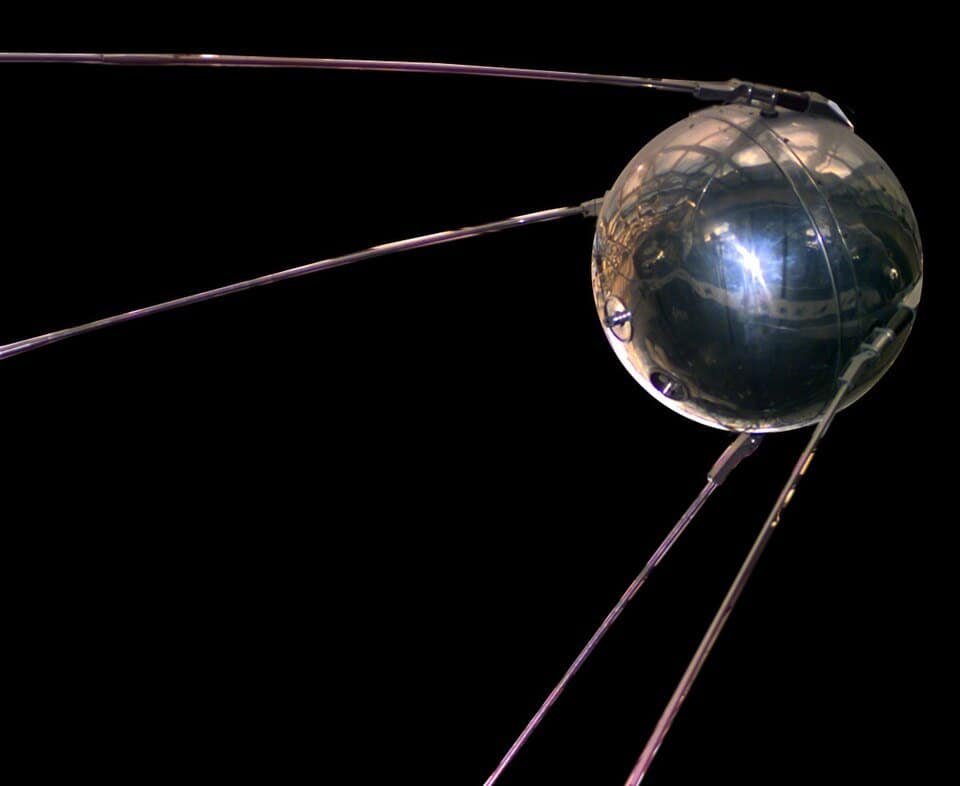
Image credit: NSSDC, NASA, public domain
The launch hit the United States like a cold bucket of water. It was a massive shock and a serious motivator to push harder in the space race — the unofficial competition between the US and USSR covering everything from launching satellites to sending humans into space and eventually to the Moon. That competition ran roughly from 1957 to 1975, basically until the end of the Cold War. After months of debate back home, the US decided to create a new federal agency that would handle all civilian space activities. On June 29, 1958, President Eisenhower signed the act, and on October 1, 1958, NASA — the National Aeronautics and Space Administration — officially opened its doors.
Just a few weeks after Sputnik 1, on November 3, 1957, Sputnik 2 launched from Baikonur carrying the first living creature into orbit — a dog named Laika. She died after just a few hours because there was no system in place to bring her safely back to Earth. Then on August 19, 1960, the satellite Sputnik 5 launched carrying two dogs, Belka and Strelka. They spent a full day in space and came back safely — becoming the first living beings to orbit the Earth and return home alive.
Yuri Gagarin and the Vostok Program: First Humans in Space
While all this was happening, Sergei Korolev had already started working on something new at the end of 1959 — a series of unmanned spacecraft headed for the Moon, called “Luna.” That program ran all the way until 1976. Through it, the Soviets accomplished a lot of firsts: studying the Moon up close, analyzing its chemical composition, gravity, temperature, and radiation. The very first spacecraft in the series, Luna 1, launched in January 1959. It missed the Moon but ended up in a heliocentric orbit, making it the first man-made object to orbit the Sun. In September 1959, Luna 2 successfully hit the Moon’s surface and became the first man-made object to reach the Moon. Then Luna 3, launched in October 1959, flew around the Moon and sent back the very first photographs of the Moon’s far side — the side you can never see from Earth.
After Sputnik’s big propaganda win, the next major goal for the Soviet space program was putting the first human in space. On January 11, 1960, Chief Marshal of Aviation Konstantin Vershinin signed off on plans to establish the Cosmonaut Training Center. It started with around 250 staff and was set up specifically to get cosmonauts ready for their upcoming flights. Sergei Korolev and his team modified the R-7 rocket into a new vehicle called Vostok 1, and on April 12, 1961, the first cosmonaut, Yuri Gagarin, was successfully launched into Earth orbit. After completing several orbits, he returned to Earth by parachute — he actually ejected from the capsule at an altitude of about 7 km and parachuted down separately.
From there, the Vostok program kept going. In Vostok 2, Gherman Titov spent several days in orbit around the Earth. Then on June 16, 1963, the first woman in space, cosmonaut Valentina Tereshkova, launched aboard Vostok 6. She spent close to three days up there, completing 48 orbits around Earth. After that flight, the whole Vostok program got shut down under pressure from Khrushchev in 1964. The push was to move quickly to the more advanced Voskhod program, which would carry a multi-person crew — since the United States was already rolling out a similar program called Gemini. Because a multi-person crew couldn’t safely bail out of the capsule and parachute down, the new spacecraft was fitted with several large parachutes designed for a soft landing. But with the limited space inside, the crew ended up flying without spacesuits. After one unmanned test flight, the seventh crewed Soviet spaceflight took place on October 12, 1964, aboard Voskhod 1, with cosmonauts Komarov, Yegorov, and Feoktistov. They circled the Earth 16 times.
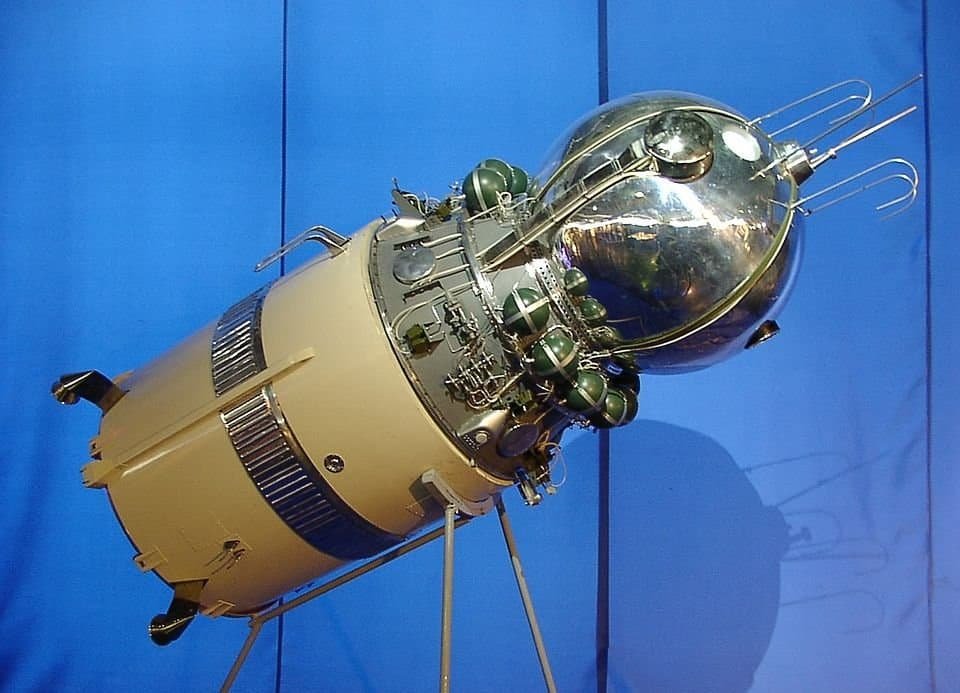
Image credit: HPH at German Wikipedia, licensed under CC BY 3.0.
That flight went into the history books as the first to carry more than one crew member into orbit, the first crewed flight without spacesuits, and the first in which both an engineer and a doctor flew to space. They also set an altitude record of 336 km. Then came Voskhod 2 — and on March 18, 1965, cosmonaut Alexei Leonov stepped outside the spacecraft in a spacesuit and spent 12 minutes and 9 seconds floating in open space, connected to the ship by a 5.3-meter cable. He became the first human being to ever do a spacewalk.
The Soviet Lunar Program: N-1 Rocket, Luna Missions, and the Race to the Moon
By the mid-1960s, the Soviet space program had racked up way more successes than the American one, and the government and Communist Party were milking it for all the propaganda value they could get. Failures, naturally, were kept quiet. The thing is, missions were mostly planned around whatever rocket happened to be available at the time and whatever the current political needs were. Actual systematic planning based on science was pretty rare — though political stunts like sending the first woman astronaut did happen.
Back in 1960, Sergei Korolev’s design bureau had gotten approval to design a series of super-heavy rockets designated “N” (from the Russian “Ракета-носитель,” meaning rocket carrier). These were going to be powered by high-thrust liquid-fuel booster engines called NK-15 and would be capable of lifting around 80 tons of payload into Earth orbit by 1967. But the purpose of the whole series was kind of fuzzy for a long time: military applications, a permanent crewed space station, a mission to the Moon, maybe Mars?
Because of tight funding, Khrushchev was more interested in developing new intercontinental ballistic missiles with nuclear warheads — keeping the Soviet military ahead of the US strategically — than pouring money into the space program. At that point, he wasn’t particularly fired up about competing with NASA’s Apollo program or racing to put a man on the Moon. That said, in September 1962, a plan was adopted to send a 75-ton payload into Earth orbit using the N-1 rocket, and serious work began. But even so, the rocket still didn’t have a clearly defined purpose for years, unlike NASA’s Saturn V. It wasn’t until July 1963 that Korolev first publicly stated that a human lunar landing should be the priority and asked his engineers to draw up a comprehensive roadmap to get there.
Sergei Korolev vs. Glushko and Chelomei: The Rivalry Behind the Soviet Space Program
Unlike the American space program, where NASA played a central coordinating role and was run by administrator James Webb from 1961 to 1968, the Soviet space program was a mess from a management standpoint. It was split between several competing design bureaus and constantly got bogged down in bureaucratic standoffs and the personal agendas of powerful individuals. Despite the remarkable run of successes from Sputnik (1957–1961) and Vostok (1961–1964) — both designed by Sergei Korolev, who also ran the biggest design bureau, OKB-1 — he was facing growing competition from former associates who had gone off and built their own bureaus: Mikhail Yangel, Valentin Glushko, and Volodymyr Chelomei.
Yangel had been Korolev’s assistant, but with the backing of the military, he set up his own design bureau in 1954, focused mainly on military space applications. He had a stronger rocket engine design team than Korolev and worked with hypergolic fuels. After 1960, most of his work shifted toward developing intercontinental ballistic missiles. He also developed his own heavy booster similar to the N-1, intended for military use and potentially for launching cargo to a future space station.
Sergei Korolev and Glushko went way back — they’d known each other since their early thirties. Glushko was the top rocket engine designer in the USSR, but in 1960 and 1961 he redirected all his resources toward developing engines that used liquid fuels and oxidizers that could be stored — which made a lot more sense for military ICBMs that needed to be ready to launch at any moment. That put him on a collision course with Korolev. He refused to develop the large, single-chamber cryogenic engines running on liquid hydrogen that Sergei Korolev needed for a Moon mission — engines that would have produced much greater thrust. Glushko had powerful friends in the Communist Party and allies in the space program, including Chelomei, who oversaw several bureaus working on ICBMs and cruise missiles. With Khrushchev’s backing, Glushko and Chelomei got Politburo approval to run a parallel project — the UR-700 rocket — which would compete directly with Korolev’s N-1 for the Moon mission. At one point in the early 1960s, the Soviet space program was simultaneously developing around 30 different spacecraft launch projects, burning through already-limited financial resources. Things were incredibly stretched, since the same factories producing parts for strategic weapons and electronics were also supplying the space program.
The Soviet Moon Landing Program: Too Late, Too Disorganized
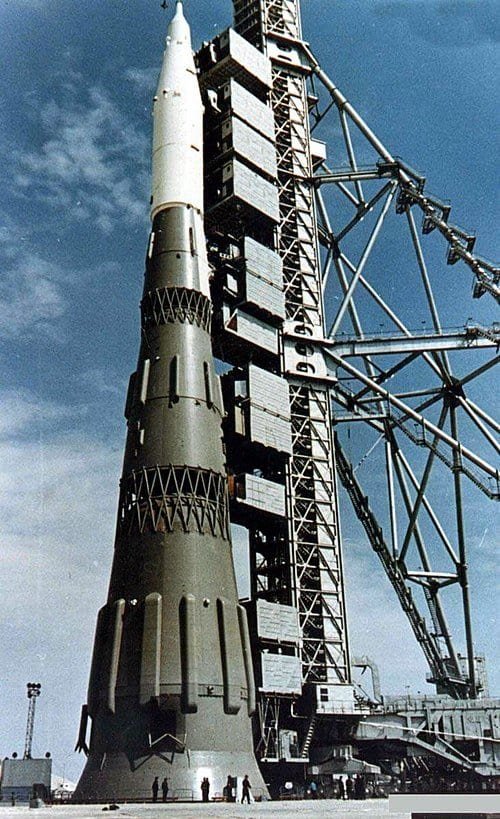
Image credit: National Reconnaissance Office, public domain
The successful launch of NASA’s Saturn I in May 1964, carrying Apollo command and service module prototypes, was a serious wake-up call for Soviet leadership to start taking the Moon mission more seriously. Thanks in large part to Sergei Korolev pushing hard, the USSR finally put together its own official human lunar program in August 1964 — more than three years after the United States had already started theirs. With Khrushchev’s fall and the change in Soviet leadership in October 1964, Sergei Korolev finally got full control of the space program and the mandate to beat the Americans to the Moon. His plan was to land on the Moon in 1967 — the 50th anniversary of the October Revolution — or at the latest, 1968.
But that still didn’t end the organizational chaos. From the very beginning, Sergei Korolev himself believed the mission to fly cosmonauts around the Moon should be kept separate from actually landing on it, even though it would have made a lot more sense to integrate both into a single program. There were still two parallel programs running — Korolev’s approach using N-1 rockets and Chelomei’s using UR-500 Proton rockets — even though that clearly made no sense. Finally, in October 1965, Korolev and Chelomei agreed to work together on a joint program called L-1 (often referred to as the Soyuz 7K-L1 probe), which aimed to fly two cosmonauts around the Moon and bring them back to Earth safely. That project ultimately failed because Chelomei’s new Proton-K rocket couldn’t make it to Earth orbit during three launch attempts in 1967 and 1968.
Luna Robotic Missions: Soviet Sample Return and Lunar Rovers
Beyond the Moon missions, Sergei Korolev was also planning a new spacecraft called Soyuz, which would ferry cosmonauts into low Earth orbit. The N-1 rocket would then be used to establish a permanent crewed space station. Influenced by Tsiolkovsky, who had always seen Mars as the most important destination for human spaceflight, the Soviet program under Sergei Korolev had plans to attempt a Mars trip somewhere between 1968 and 1970, along with development of electric rocket engines that would be launched from large orbital space stations. These plans were honestly a lot more ambitious than NASA’s goal of simply landing on the Moon.
Sergei Korolev also designed a new Luna robotic spacecraft program for soft landings on the Moon, as well as robotic missions to Mars and Venus. But he never got to see any of it come together. He died unexpectedly in January 1966, following what was supposed to be a routine operation. Just a month later, in February 1966, the Luna 9 mission successfully landed a probe on the Moon — the first probe ever to make a soft landing on another celestial body. It then sent back five black-and-white stereoscopic panoramic images to Earth, the first-ever close-up photos of the Moon’s surface. The next spacecraft, Luna 10, launched in March 1966, became the first artificial satellite to orbit the Moon. Later, Luna 17 (November 1970) and Luna 21 (January 1973) delivered the first Lunokhod rovers, which drove around independently on the lunar surface. Then Luna 16 (September 1970), Luna 20 (February 1972), and Luna 24 (August 1976) each landed on the Moon, scooped up soil samples, and brought them back to Earth — a total of about 0.326 kg. Those missions were the first sample-return missions in history to rely entirely on advanced robotics.
The N-1 Rocket: Four Failed Launch Attempts and the End of the Soviet Moon Race
After Sergei Korolev’s death, Kerim Kerimov — who had previously worked on Soviet ICBMs — took over leadership of the space program. He was appointed to head the State Commission for Human Space Flight and held that role for 25 full years, from 1966 to 1991. In that time, he had hands-on involvement in every step of developing and commissioning crewed spacecraft and unmanned interplanetary missions to Venus and Mars. Among his biggest achievements were overseeing the launch of the Salyut space stations starting in April 1971, and Mir in 1986.
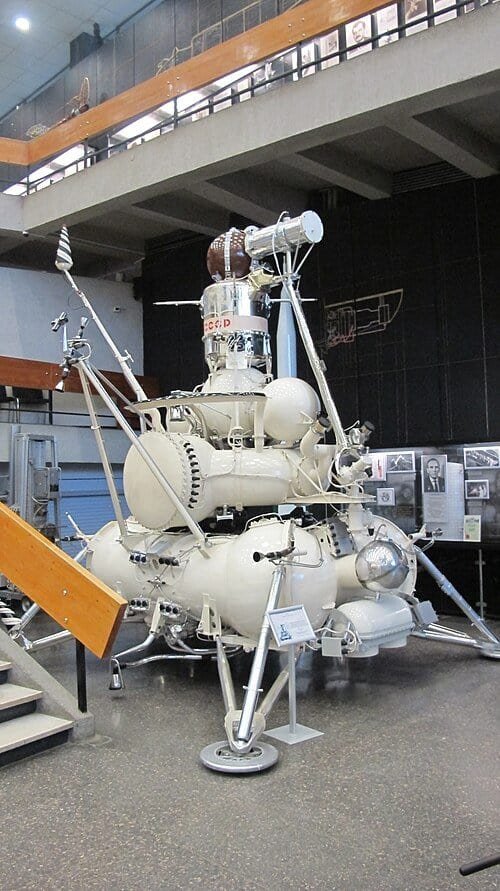
Image credit: Krassotkin, Creative Commons CC0 1.0 Universal Public Domain Dedication.
Vasily Mishin took over management of the OKB-1 design bureau, with the assignment of getting a cosmonaut around the Moon by 1967 and a cosmonaut onto the Moon by 1968. Sergei Korolev had already set a precedent of skipping standard ground testing — partly to save money on building the necessary test facilities, and partly to get flight testing started sooner. The engine designer for the N-1 rocket, Nikolai Kuznetsov, was using a very advanced and risky process known as the pre-combustion cycle. Because of that, each of his kerosene engines — the NK-33 — had a relatively modest thrust of about 150 tons at sea level, compared to the F-1 engines on the Saturn V, which produced around 670 tons each. To get enough power to reach the Moon, Sergei Korolev and Kuznetsov had to put 30 NK-33 engines in the first stage alone. That created a serious challenge: how do you synchronize the thrust and direction of 30 engines all firing at the same time? Sorting out all those potential problems would have required a new, expensive ground test facility, but building one would have cost a lot of money and taken a lot of time — so they just never built it.
Although the Americans beat the Soviets to flying around the Moon with Apollo 8 on December 24, 1968, Mishin kept pushing forward with the troubled N-1, hoping the Americans would fall behind schedule and leave enough time for the Soviets to pull off the first lunar landing with the N-1. But Mishin didn’t have much political clout, he still faced fierce competition from other design bureaus, and money was always tight. So, just like Sergei Korolev had done in the N-1 program, he decided to skip first-stage testing at a ground test facility before launching. All four N-1 launch attempts — between February 1969 and 1972 — were made without any first-stage ground testing, which even at the time was widely considered absolute madness given how the rocket was built. As a result, all four attempts failed, with none of the first stages successfully separating. After the Americans successfully landed on the Moon in July 1969 with Apollo 11, and after the string of N-1 failures, the Soviet crewed lunar program was put on hold. The Zond program using Proton rockets was canceled in 1970, and the N-1/L-3 program was shut down in 1974.
Soyuz 1 and Soyuz 11 Disasters: The Human Cost of the Soviet Space Program
The Soviet space program had other painful failures too. One of the worst was the first flight of the new crewed spacecraft Soyuz 1, which launched on April 23, 1967, carrying cosmonaut Vladimir Komarov — even though it had never been successfully tested without a crew aboard. Mishin approved the launch under pressure from the political leadership, even though there were serious technical problems (203 separate issues had been reported on the spacecraft before launch). Because of those problems, the mission was cut short to just 18 orbits. Then, during re-entry, the parachute lines got tangled and the parachute didn’t fully open. The capsule slammed into the ground at about 140 km/h, killing Komarov. He is considered the first person to die in a spaceflight accident.
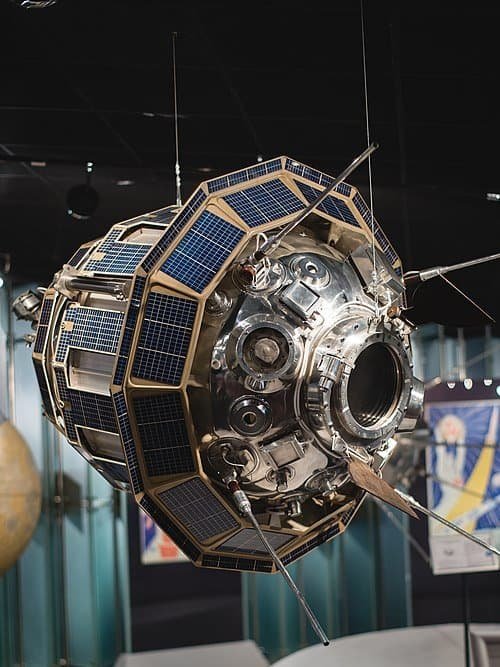
Image credit: Музей Космонавтики from Россия, Creative Commons CC0 1.0 Universal Public Domain Dedication.
Mishin also stayed in charge of the Soyuz program and made the decision in June 1971 to fly Soyuz 11 with a three-person crew — and without pressure suits — instead of a two-person crew wearing pressure suits. On June 7, 1971, the spacecraft successfully docked with Salyut, the first space station, and the crew spent 22 days aboard. The mission ended in disaster on the way back: a sudden pressure drop in the capsule killed all three crew members, since none of them had spacesuits. They became the first people to die in space. Some of the failures that happened under Mishin’s watch probably could have been avoided with proper testing in the early phases.
Despite all those setbacks, the Soviet space program chalked up some genuinely historic firsts in space exploration: the world’s first intercontinental ballistic missile (1957), the first satellite (Sputnik 1), the first animal in space (the dog Laika on Sputnik 2), the first human in space and in Earth orbit (cosmonaut Yuri Gagarin on Vostok 1), the first woman in space and in Earth orbit (cosmonaut Valentina Tereshkova on Vostok 6), the first spacewalk (cosmonaut Alexei Leonov on Voskhod 2), and the first space station, Salyut.
On the robotic side, unlike their crewed lunar program, the USSR had a really strong track record. They pulled off the first study of the Moon’s gravitational influence (Luna 2), the first photographs of the Moon’s far side (Luna 3), the first unmanned soft landing on the Moon (Luna 9), and the first vehicle to drive on the surface of another world (Luna 17).
References:
- Brzezinski, Matthew: Red Moon Rising: Sputnik and the Hidden Rivalries that Ignited the Space Age;
- Siddiqi, Asif A.: The Red Rockets’ Glare: Spaceflight and the Soviet Imagination, 1857–1957;
- Andrews, James T.; Siddiqi, Asif A. (2011). Into the Cosmos: Space Exploration and Soviet Culture. University of Pittsburgh Press
- Reichl, Eugen (2019). The Soviet Space Program: The Lunar Mission Years: 1959–1976. Atglen, PA: Schiffer Publishing
- Burgess, Colin; French, Francis: Into That Silent Sea: Trailblazers of the Space Era, 1961–1965. (University of Nebraska Press, 2007)
- Brian Harvey; Olga Zakutnyaya (2011). Russian Space Probes: Scientific Discoveries and Future Missions. Springer Science & Business Media

